

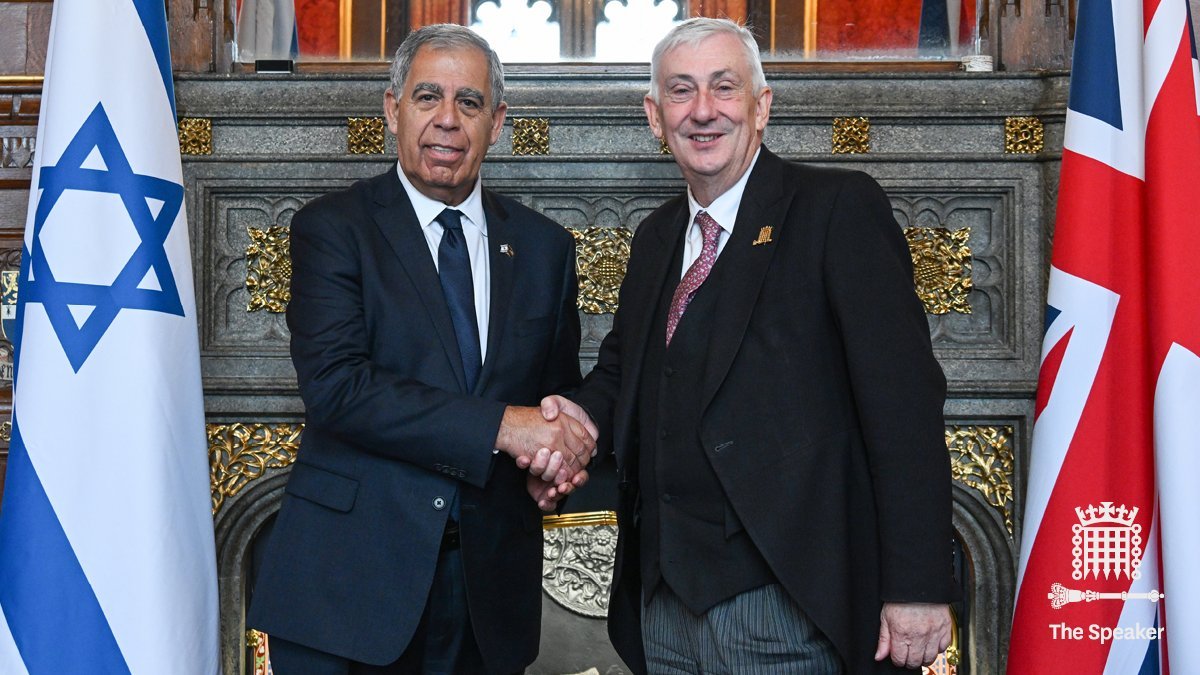
House of Commons Speaker Sir Lindsay Hoyle has refused to release email correspondence with Israeli politicians, citing a specific exemption under the Freedom of Information (FOI) Act. The withheld material reportedly includes emails with the Israeli embassy, the Knesset, and Labour Friends of Israel.
Hoyle made a “solidarity visit” to Israel in November 2023, during which he was photographed with Israeli ambassador to the UK, Tzipi Hotovely. The FOI request was submitted by investigative outlet Declassified, which appealed against the refusal. In response, the House of Commons confirmed Hoyle had maintained his decision not to disclose the correspondence.
According to the FOI response, Hoyle used Section 36(2)(c) of the FOI Act, which allows withholding information if its disclosure would be “likely to prejudice the effective conduct of public affairs.” The exemption is absolute when applied by a “qualified person”, and does not require a public interest test. In this case, Hoyle, as Speaker, is the sole qualified person for such decisions within the House of Commons.
Declassified had requested emails sent between Hoyle and the Israeli embassy, as well as any correspondence with Labour Friends of Israel and the Knesset. Hoyle has previously stated that his father was among the founding members of Labour Friends of Israel in the 1950s.
In February 2024, Hoyle was involved in a separate controversy when he broke with parliamentary procedure to block a Scottish National Party motion calling for an immediate ceasefire in Gaza. That motion also condemned collective punishment of Palestinians and led to calls for his resignation. Reports at the time alleged that Labour MPs had pressured Hoyle by threatening to remove him from his role.
Responding to questions from Declassified, a House of Commons spokesperson denied that Hoyle had personally intervened in the FOI process, stating that approval for exemptions under Section 36 requires the Speaker’s consent but is based on advice from senior officials, including legal advisors.
The spokesperson also defended the confidentiality of parliamentary correspondence, stating it was necessary to preserve “a free and frank exchange of views.” Declassified has referred the case to the Information Commissioner’s Office, which regulates FOI compliance.