

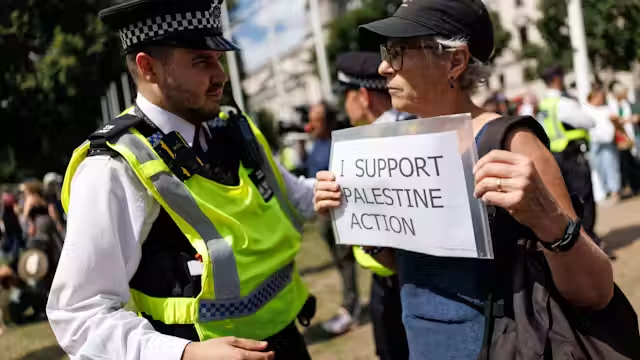
The Metropolitan Police have announced that a further 60 individuals are set to be prosecuted for showing support for Palestine Action, the activist network proscribed as a terrorist organisation earlier this year. The force confirmed that the cases are among the first significant wave of prosecutions since the group’s ban on 7 July, following its involvement in direct action campaigns including the sabotage of aircraft at RAF Brize Norton.
Since the proscription came into force, more than 700 arrests have been made, with 522 carried out during a large-scale protest in central London last Saturday. The demonstrations were among the biggest in recent decades, drawing comparisons to the 1990 poll tax riots in which 339 people were detained in Trafalgar Square.
Stephen Parkinson, the Director of Public Prosecutions, said the Crown Prosecution Service was prepared to act decisively. “The decisions that we have announced today are the first significant numbers to come out of the recent protests, and many more can be expected in the next few weeks. We are ready to make swift decisions in all cases where arrests have been made.”
The Met Police confirmed that structures had been put in place to manage large volumes of prosecutions efficiently. “We have put arrangements in place that will enable us to investigate and prosecute significant numbers each week if necessary,” the force said in a statement.
Those found guilty of supporting or attempting to garner support for a proscribed organisation under the Terrorism Act face a maximum sentence of six months in prison and a £5,000 fine. Legal experts noted that even an arrest, without a conviction, could have serious consequences, including preventing an individual from travelling to the United States or working in sensitive professions such as education.
Palestine Action supporters described the move as a “gross abuse of power” designed to suppress solidarity with Palestinians and dissent over the ongoing war in Gaza. Critics of the ban have argued it criminalises political expression and blurs the line between protest and terrorism legislation.
Mr Parkinson added that the CPS recognised the public’s right to protest peacefully but stressed that legal boundaries were clear. “The public has a democratic right to protest peacefully in this country and I understand the depth of feeling around the horrific scenes in Gaza. However, Palestine Action is now a proscribed terrorist organisation, and those who have chosen to break the law will be subject to criminal proceedings under the Terrorism Act.”
Metropolitan Police Commissioner Sir Mark Rowley insisted that the measures did not outlaw wider demonstrations in support of Palestine or any other political cause. “To be clear, these arrests and prosecutions do not outlaw people’s right to demonstrate in support of Palestine or any other cause. They are simply the enforcement of a specific provision under the Terrorism Act in relation to a specific proscribed terrorist organisation, Palestine Action.”