

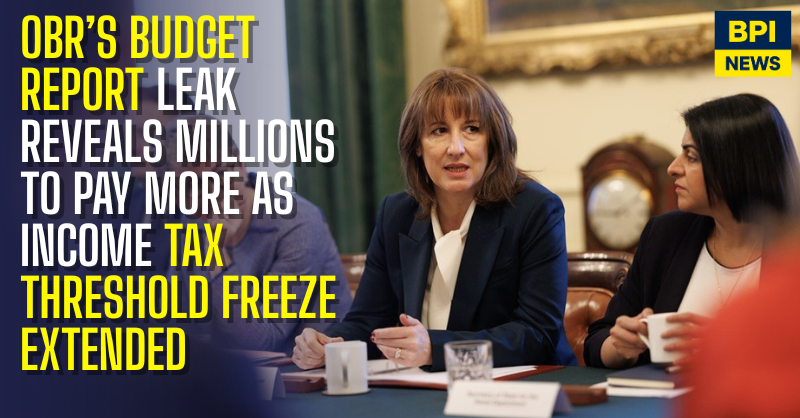
Rachel Reeves first full budget as Chancellor has been overshadowed by a major leak revealing that millions of workers will pay more in income tax over the next three years.
The Office for Budget Responsibility’s (OBR) report, published online ahead of her Commons address, confirmed that the freeze on income tax thresholds will be extended until 2029 pulling more earners into higher tax brackets as wages rise.
According to the leaked document, the fiscal headroom available to the government has doubled to £22bn in 2029–30, despite the OBR downgrading its economic growth forecast by 0.3 percentage points.
Among the key measures revealed in the leak:
- Income Tax: Threshold freeze extended for three more years, increasing the overall tax burden on middle-income households.
- Mansion Tax: A new levy introduced on properties valued over £2 million.
- Child Benefit: The two-child cap to be scrapped from April next year.
- Pensions: Salary-sacrifice pension contributions above £2,000 will now be taxed.
- Electric Vehicles: A new mileage tax will apply from April 2028.
- Fuel Duty: Frozen until September 2026.
- Savings: The annual cash ISA limit will be reduced by £8,000, except for over-65s.
- Regional Funding: £13bn allocated to seven metro mayors for investment in infrastructure, business, and skills; £370m for Northern Ireland, £505m for Wales, and £820m for Scotland.
The leak comes as Reeves delivers her Budget speech in the Commons, in what had been expected to be one of the most closely watched fiscal events since Labour returned to power.
Critics have called the leak an “extraordinary failure” of Treasury security, though government sources insist the final Budget details were “not materially different” from what was revealed.
The extended tax threshold freeze a policy first introduced under Conservative chancellor Rishi Sunak means millions of Britons will move into higher tax bands as their wages increase, a process economists call fiscal drag.