

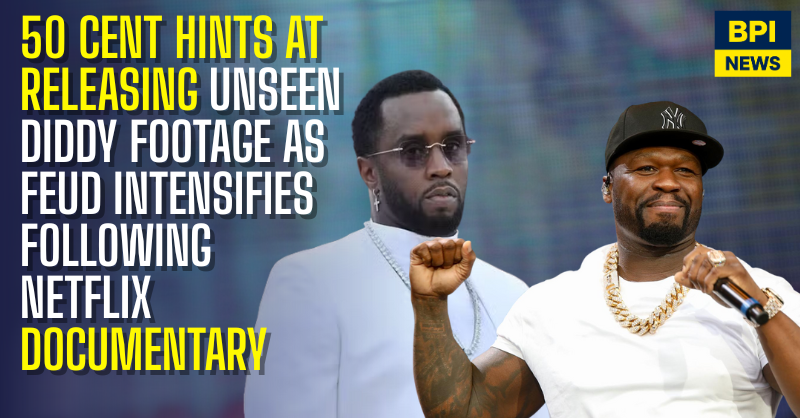
The long-running conflict between Curtis “50 Cent” Jackson and Sean “P Diddy” Combs has intensified after Jackson suggested he may release hours of previously unseen footage directly to YouTube. The comments followed the widespread success of the Netflix documentary Sean Combs: The Reckoning, which he executive produced.
The four-part series, released while Combs is serving a four-year sentence for two counts of transportation to engage in prostitution, has become one of Netflix’s most-watched titles. Appearing on The Sherri Shepherd Show, Jackson said the documentary surpassed expectations and even claimed it was outperforming the streaming platform’s major drama productions.
Jackson confirmed that a vast quantity of material had been excluded from the series due to time constraints. He said the decision to withhold some footage was editorial rather than legal, hinting that its release on a public platform remained a real possibility. Shepherd asked whether he had more unreleased material, prompting Jackson to say his team had been forced to “pick and choose” from an extensive archive.
One detail mentioned by Jackson but omitted from the documentary involved personal revelations that producers judged too extensive for inclusion in the four-episode structure. When Shepherd raised the possibility of a second season, Jackson responded that he could “just put it on YouTube”, suggesting a shift from controlled documentary storytelling to an open-ended public release.
The documentary has raised questions about how the production team obtained the deeply personal footage. Journalist Rob Shuter alleged that Combs had once intended to create his own documentary but failed to pay the videographer or formalise contracts, resulting in the footage being sold when allegations emerged. Director Alexandria Stapleton said the material was obtained legally and that the filmmaker’s identity had been protected. She added that Combs frequently recorded himself and that his legal team had been contacted multiple times without responding.
Representatives for Combs have rejected these claims, describing the documentary as a “hit piece” and accusing Netflix of relying on “stolen footage”. They said Combs had recorded material since his youth to control his own narrative and that releasing it without his approval was fundamentally unfair.