

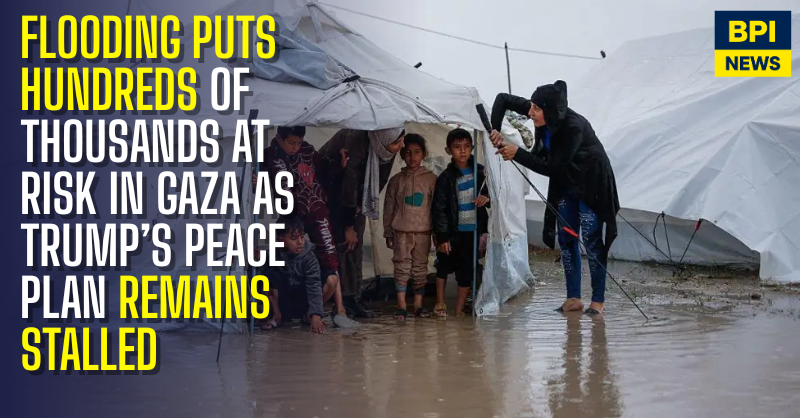
A powerful winter storm has caused severe flooding across Gaza, worsening conditions for families still displaced two months into the US-imposed ceasefire. Heavy rainfall has swept through shelters and low-lying areas, destroying tents, damaging buildings and placing hundreds of thousands at further risk.
In Gaza City, Ghadir al-Adham described water pouring through her family’s tent as they waited for reconstruction to begin. She said they were living “a life of humiliation”, longing for proper shelter as the rain continued to overwhelm makeshift camps.
The UN has warned that more than 800,000 people are vulnerable to flooding after storms battered the Strip this week. Several structures collapsed under the strain of rising water levels, deepening the humanitarian pressure on residents already displaced by the conflict.
Reconstruction remains halted as Trump’s Gaza peace plan struggles to move beyond its first phase. Gaza is currently divided by a “yellow line” separating Israeli and Hamas-controlled areas, with the next stage of the agreement on hold while Israel continues its search for Ran Gvili, the final missing hostage from the 7 October attacks.
Plans for new housing and a new governing framework are frozen until the hostage issue is resolved. Israel has said it will not advance the agreement until all hostages, living or dead, are returned. Searches have so far found no trace of Gvili, whose parents insist that no further step should be taken without confirmation of his fate.
Hamas denies withholding information about Gvili, saying Israel is delaying implementation of the deal. Retired Israeli general Israel Ziv said both sides have strategic reasons to proceed slowly, with Hamas reluctant to surrender authority and Israeli leaders facing political constraints over withdrawing forces from parts of Gaza.
Meanwhile, flooding has made living conditions more precarious for displaced families as they wait for reconstruction that cannot begin until the second phase of Trump’s plan proceeds. Temporary housing projects under discussion would be located in Israeli-held areas of Rafah, though many Gazans say they will not move into zones controlled by Israel.