

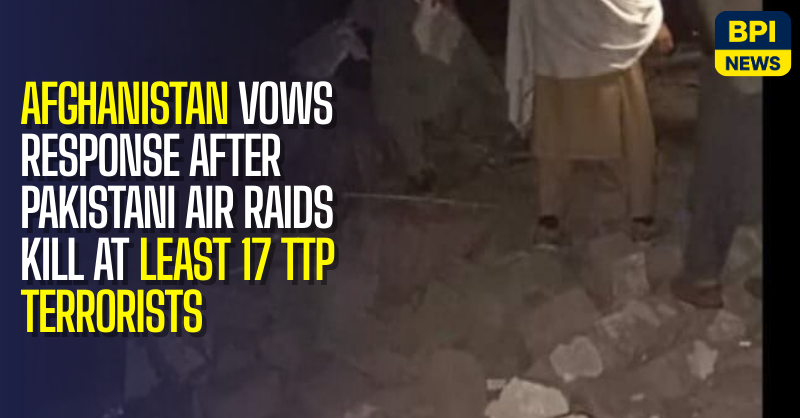
Afghanistan has warned of an “appropriate response” after Pakistani air strikes reportedly killed at least 17 people and left six missing in eastern Afghanistan, in what Islamabad described as intelligence-led operations against militant groups.
Pakistan’s Ministry of Information and Broadcasting said early Sunday that its military carried out “intelligence-based, selective operations” targeting seven camps and hideouts belonging to Tehreek-i-Taliban Pakistan (TTP), also referred to by Islamabad as Fitna al Khwarij, as well as affiliates including Islamic State-Khorasan Province (ISKP).
The strikes followed a series of deadly attacks inside Pakistan, including a suicide bombing at a Shia mosque in Islamabad and separate attacks in Bajaur and Bannu. Islamabad said it had conclusive evidence that the attacks were orchestrated by Afghanistan-based leadership and handlers linked to the TTP and ISKP.
Afghanistan’s Ministry of Defence condemned the air raids, stating they struck a religious school and residential homes in the border provinces of Nangarhar and Paktika. Afghan officials said the attacks resulted in dozens of casualties, including women and children.
Reporting from Nangarhar’s Bihsud district, local sources confirmed at least 17 deaths, with six people missing and feared trapped beneath rubble. Casualty figures from Paktika have not yet been confirmed.
Kabul described the strikes as a breach of international law and the principles of good neighbourliness, warning that the Pakistani military would be held responsible for civilian casualties. The Afghan government said it would respond “in due course with a measured and appropriate response”.
Pakistan maintains that it has repeatedly urged Afghanistan’s Taliban-led government to prevent its territory from being used by armed groups to launch attacks into Pakistan. It has referenced the 2020 Doha Agreement, under which the Taliban committed to preventing Afghan soil from being used against other states.
The strikes come amid already strained relations between the two countries. A fragile ceasefire brokered in October following deadly border clashes has largely held, though tensions remain high. Islamabad has blamed a resurgence in violence on TTP fighters allegedly operating from Afghanistan, while the Taliban authorities have consistently denied providing safe haven.