

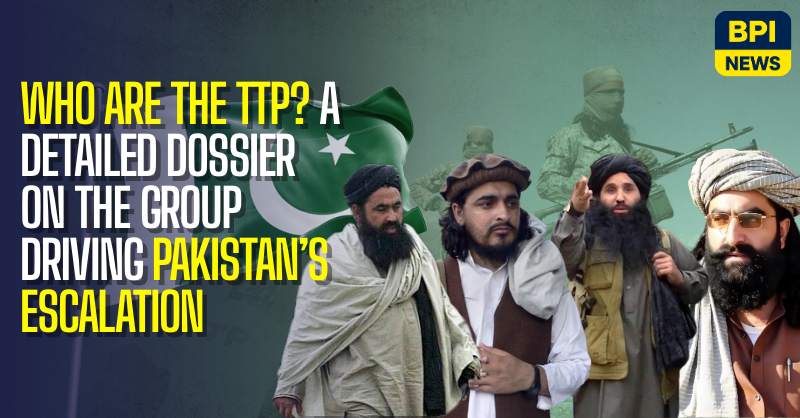
Pakistan’s strikes across Afghanistan overnight including reported hits on Taliban government-linked military positions are being justified in Islamabad through a single, persistent argument: Pakistan cannot achieve peace or security while the Tehreek-e-Taliban Pakistan (TTP) retains sanctuary, mobility, and operational depth across the border. Reuters described the current escalation as the most serious in years, with Pakistan framing the Afghan Taliban’s failure to act against militants as a central grievance.
To understand why last night’s conflict has escalated so sharply, it is essential to understand what the TTP is, how it evolved, who led it, what it has done, and why repeated deals have collapsed. The TTP is not a single monolithic army; it is an insurgent umbrella that has survived for nearly two decades by splitting, merging, relocating, and regenerating often under intense military pressure.
What the TTP says it wants
The US National Counterterrorism Center describes the TTP as seeking to remove the Pakistani government from Pashtun tribal areas (the former FATA and parts of Khyber Pakhtunkhwa), impose its interpretation of Islamic law, and ultimately turn Pakistan into an Islamic state on its terms.
The UN lists the TTP for its association with Al-Qaida-linked networks, reflecting the group’s long-standing positioning within the broader militant ecosystem rather than as a purely local insurgency.
Why “sanctuary” is the core of the dispute
The modern Pakistan–Afghanistan crisis revolves around geography and jurisdiction. Pakistan argues the TTP operates from Afghan soil; the Afghan Taliban denies responsibility and calls it Pakistan’s internal problem. UN monitoring in recent years has repeatedly flagged the TTP’s significant presence and activity linked to Afghanistan, intensifying Pakistani claims that the problem cannot be solved purely within Pakistan’s borders.
A Chronological TTP Timeline (2007–February 2026)
2007: Formation
The TTP formally coalesced in December 2007 as several Pakistani militant factions unified under one banner, creating a coordinating structure for insurgency and mass-casualty attacks.
2008–2009: Expansion and state confrontation
As militant violence surged nationally, Pakistan’s overall terrorism-related fatalities rose dramatically in these years, reflecting the intensity of the insurgent period in which the TTP was a central actor among multiple militant outfits. (These figures cover broader terrorism violence, not solely TTP attacks.)
In 2009, Pakistan launched Operation Rah-e-Nijat in South Waziristan against the TTP and allied militants an early major attempt to dismantle its strongholds.
August 2009: First leader killed
The TTP’s founding emir Baitullah Mehsud was killed in a US drone strike on 5 August 2009.
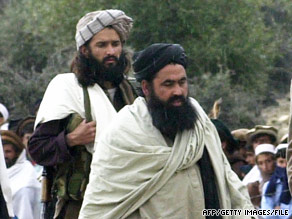
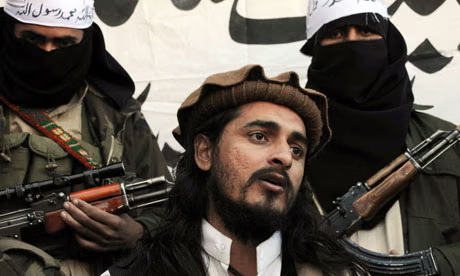
He was succeeded by Hakimullah Mehsud, who would become one of the group’s most notorious leaders.
2010: Suicide infrastructure and militant training
The TTP’s suicide bombing capacity became a defining characteristic of its violence. Qari Hussain, widely described as a key organiser of the TTP’s suicide bomber squads, was killed in October 2010.
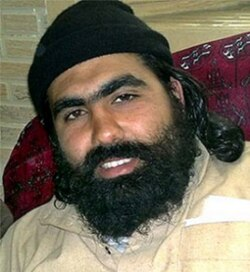
This period matters because it shows the TTP’s violence was not only opportunistic; it was systematised through training pipelines and specialised roles.
2011: High-profile military targeting
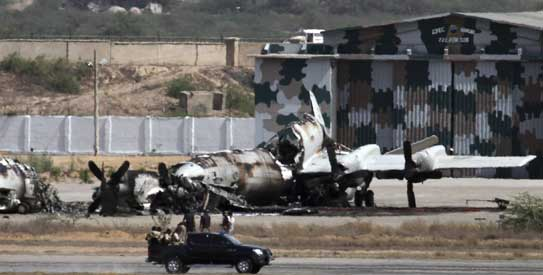
In May 2011, militants attacked PNS Mehran naval base in Karachi, destroying surveillance aircraft and killing security personnel an illustration of the TTP’s ability to mount complex assaults on hardened sites.
2013: Second leader killed; leadership churn continues
Hakimullah Mehsud was killed in a US drone strike in November 2013. Leadership attrition did not collapse the movement; instead, it triggered succession and internal rebalancing one of the TTP’s recurring survival traits.
Mullah Fazlullah nicknamed “Mullah Radio” for his radical sermons on a Pakistan-based local radio station becomes the leader of the Tehreek-i-Taliban Pakistan (TTP).

2014: Karachi airport attack and Zarb-e-Azb
On 8 June 2014, militants attacked Jinnah International Airport in Karachi, with the TTP initially claiming responsibility; the assault involved automatic weapons, grenades, and suicide vests, and killed dozens.
Days later, Pakistan launched Operation Zarb-e-Azb in North Waziristan, explicitly targeting militant sanctuaries including the TTP and allied groups.
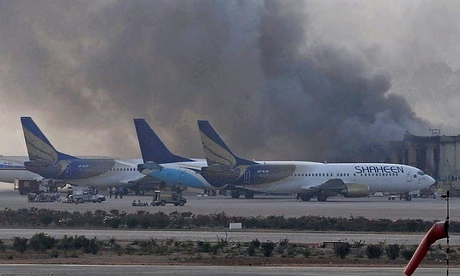
This phase is widely seen as a turning point that degraded militant infrastructure inside Pakistan while also pushing fighters to relocate, including across the border.
December 2014: Army Public School massacre
The TTP claimed responsibility for the Army Public School attack in Peshawar, describing it as revenge for Zarb-e-Azb; 145 people were killed, almost all children.
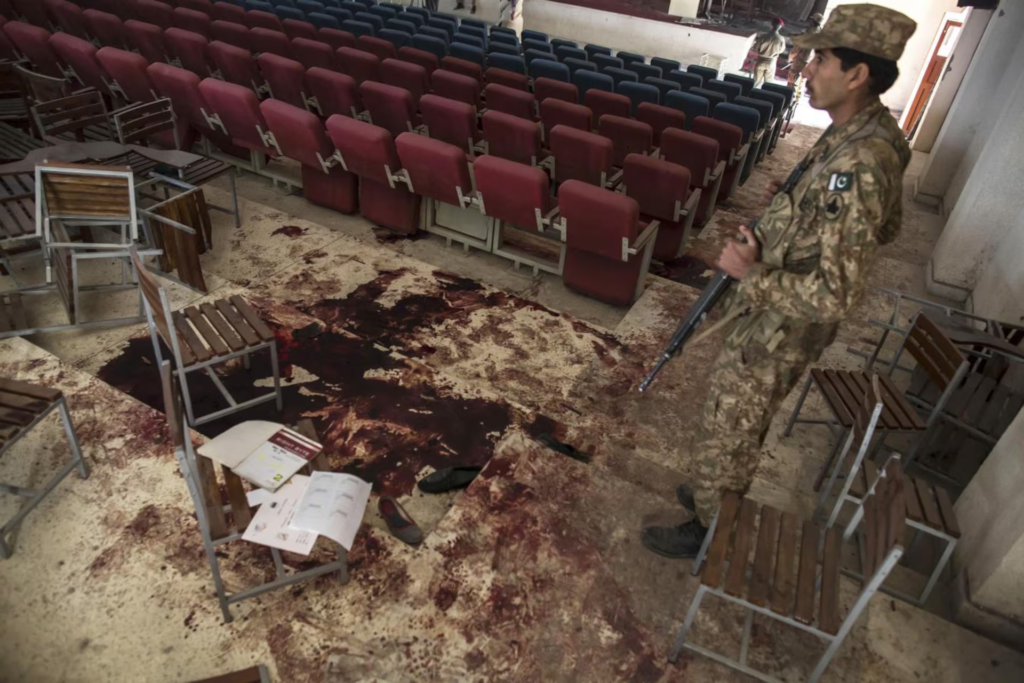
This event remains the defining moral and political line in Pakistan’s public memory of the TTP and is central to why negotiations are so controversial.
2014–2017: Splinters, propaganda, and internal churn
The TTP fragmented in this period, with splinter groups such as Jamaat-ul-Ahrar emerging in 2014.
One figure who illustrates the TTP’s media strategy is Ehsanullah Ehsan, a former spokesman for TTP and later Jamaat-ul-Ahrar, who publicly claimed attacks and ran media outreach. He later surrendered (as Pakistan announced in 2017), then escaped custody in 2020 an episode that became a major controversy.
In 2017, Pakistan launched Operation Radd-ul-Fasaad, a nationwide counterterror campaign aimed at dismantling residual cells and weapons networks.
2018: Third leader killed; Noor Wali Mehsud takes over
Mullah Fazlullah (the TTP’s third emir) was killed in June 2018 in a US drone strike in Afghanistan’s Kunar province.
He was succeeded by Mufti Noor Wali Mehsud, who has led the TTP since June 2018 and is listed by the UN sanctions regime.
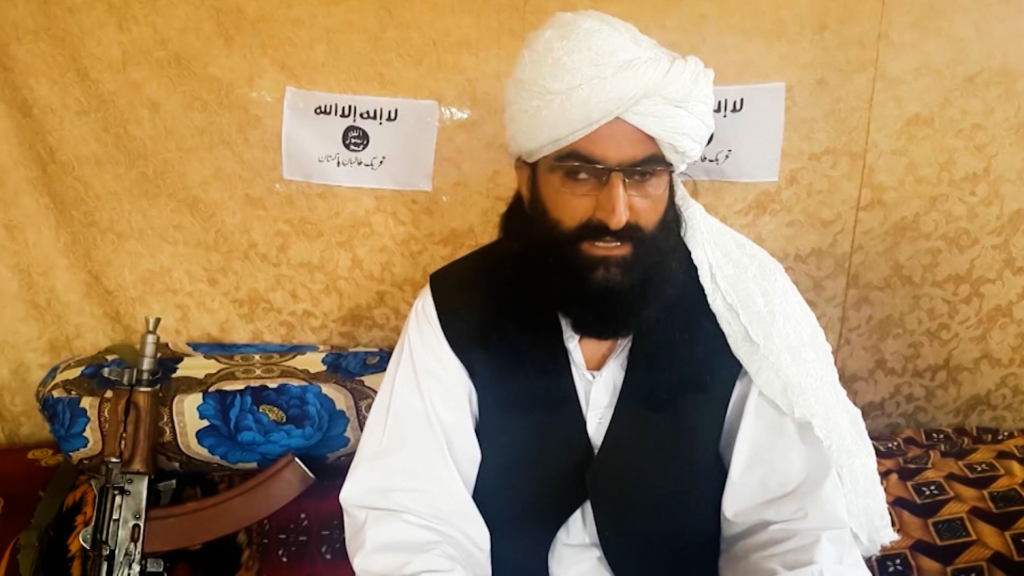
Reuters has reported that under Noor Wali, the TTP sought to unify factions and recalibrate its targeting approach, emphasising security forces while still remaining an insurgent threat.
2020: Reunification push
In August 2020, Jamaat-ul-Ahrar merged back into the TTP, consistent with Noor Wali’s drive to consolidate fractured networks.
2021: Taliban return in Afghanistan and renewed TTP momentum
After the Afghan Taliban took power in 2021, multiple analysts and monitors observed that TTP mobility and operational space increased, sharpening Pakistan’s accusation that militants were benefitting from sanctuary.
2021–2022: Ceasefires and talks — then collapse
Pakistan entered talks with the TTP with Afghan Taliban mediation; a ceasefire was announced in late 2021, but the TTP ended it in December 2021, and later cycles of negotiation failed to produce durable outcomes.
A key reason talks repeatedly collapse is the incompatibility of demands: the TTP has historically insisted on measures that would effectively roll back the state’s post-2001 security posture in former tribal areas, while Pakistan has demanded disarmament and acceptance of constitutional order.
2023–2025: Escalating attack tempo and new tactical tools
Security reporting has noted rising militant violence in Pakistan, particularly in Khyber Pakhtunkhwa and Balochistan; PIPS reported a sharp increase in attacks in 2024.
Recent AP reporting also indicates militants suspected to be linked to the TTP have used explosive drones and conducted complex assaults, while Pakistani officials have claimed some weapons recovered were US-made and sourced via Afghanistan claims that add political heat to the sanctuary dispute.
Internationally, UN-linked reporting in 2024 described the TTP as a major terrorist presence in Afghanistan and alleged growing support from Taliban authorities claims that Kabul rejects.
In late 2025, Reuters profiled Noor Wali Mehsud as a central figure “stirring conflict” between Pakistan and Afghanistan, underlining how the TTP’s leadership has become intertwined with state-to-state crisis dynamics.
February 2026: Escalation becomes interstate
This week’s crisis Pakistan striking targets in Afghanistan’s major cities and Afghanistan responding reflects a shift where Pakistan is no longer treating the TTP issue as purely counterterrorism but as a matter of deterrence against the Taliban government itself. Reuters described the strikes as a major escalation in the bilateral conflict narrative.
How the TTP fights: weapons, methods, and why “deterrence” is difficult
The TTP’s violence has historically mixed guerrilla warfare with terrorism: ambushes on security forces, IEDs, assassinations, and periodic spectacular attacks designed for shock and political messaging. The Karachi airport attack description illustrates the group’s arsenal in complex operations automatic weapons, grenades, rocket launchers, and suicide vests while the PNS Mehran assault showed planning against high-value military assets.
Their suicide capability has been sustained by specialised networks and training culture, as documented in analyses of suicide-bomber infrastructure in Waziristan-era militancy.
In the most recent phase, reporting indicates experimentation with drones and multi-stage attacks, widening the tactical problem for Pakistani forces even where fencing, checkpoints, and intelligence operations have tightened.
Alleged Taliban Support and Safe Haven: What’s Claimed, What’s Documented, What’s Denied
The most politically explosive dimension of the TTP problem is the allegation that Taliban-ruled Afghanistan provides sanctuary and, at minimum, tolerance and at worst active assistance to the TTP. Pakistan’s case for escalation rests heavily on this premise. The Afghan Taliban’s defence rests on rejecting responsibility and insisting the TTP is Pakistan’s internal insurgency. Between those positions sits a growing body of international monitoring and open-source reporting that points to Afghan territory as a key operating environment for the TTP, even if the precise level of Taliban “support” is contested and difficult to prove publicly.
1) The core allegation: sanctuary, not necessarily command
Pakistan’s primary accusation is that the TTP uses Afghan soil to plan and stage attacks into Pakistan, and that Taliban authorities have not dismantled these networks. This claim is often framed less as the Taliban “ordering” TTP attacks and more as the Taliban allowing an enabling environment: safe areas, freedom of movement, and limited interference.
This distinction matters. In practice, an insurgent group does not require direct command-and-control from a host authority to become strategically dangerous; it needs what militants have historically sought in border conflicts: space, time, and protection from constant pursuit.
2) What international monitoring has said
UN-linked monitoring has repeatedly referenced the TTP’s presence and operational activity connected to Afghanistan. While such reports are cautious in language, they have helped solidify the perception that the TTP is not simply “inside Pakistan” but operates as a cross-border actor with functional rear areas.
Separately, reporting based on UN assessments in 2024 characterised the TTP as among the largest terrorist groupings present in Afghanistan and alleged increasing backing or tolerance from Taliban authorities claims Kabul disputes. These assessments matter because they reflect structured collection rather than social media assertion, even though many details are not publicly disclosed. (voanews.com)
A later UN Security Council document in 2025 referenced the TTP’s continued operational capability and attacks linked to Afghan territory. While such documents often avoid making direct intent claims about Taliban leadership, they reinforce Pakistan’s central point: the TTP’s cross-border capability remains intact. (docs.un.org)
3) Why the Taliban are repeatedly accused of tolerance
There are several reasons analysts cite for why the Taliban might tolerate the TTP’s presence even if they deny enabling its operations:
Ideological proximity and historic ties
The Afghan Taliban and the TTP share similar ideological DNA and have long-standing interpersonal relationships forged over years of insurgency. That creates political and social constraints on the Taliban’s ability to move decisively against the TTP without provoking internal backlash.
A “guest” dynamic in militant culture
In Pashtun borderland norms, hospitality and protection can become politically charged, particularly when fighters are framed as comrades from a shared jihadist struggle. That does not equal state policy, but it can shape enforcement on the ground.
Utility as leverage
Even without directing attacks, a tolerated TTP can act as a form of leverage over Pakistan: a pressure point that can be tightened or loosened depending on Islamabad’s behaviour.
4) The Taliban’s denial and the political logic behind it
The Taliban’s official line is that Pakistan’s conflict with the TTP predates the Taliban’s return and is therefore not Afghanistan’s responsibility. In its public statements, the Taliban have repeatedly framed Pakistani accusations as an attempt to externalise an internal security failure and justify pressure on Afghanistan.
This denial has strategic value for Kabul. If the Taliban concede that Afghan soil is being used for attacks on a neighbour, they invite both international scrutiny and pressure from regional powers while also exposing internal fractures if they are seen as betraying allied militants.
5) The practical issue: state control versus state responsibility
Even if one accepts Taliban denials of “support”, the harder question remains: what does the Taliban government control, and what do they allow? State responsibility in international relations often rests not on whether the state “orders” violence, but on whether it prevents its territory from being used to harm neighbours.
Pakistan’s argument is that the Taliban are failing this test and that the failure is not accidental. The Taliban argument is that they should not be held accountable for a war Pakistan has fought for two decades.
The result is a classic frontier dispute: each side frames the same facts differently. Pakistan sees sanctuary and complicity. Kabul sees scapegoating and blame-shifting. But the continuing operational relevance of Afghan territory to the TTP repeatedly referenced in international monitoring is why this issue has become the core driver of escalation.
6) Why this feeds the cycle of war
This alleged sanctuary dynamic explains why ceasefires and border de-escalation deals repeatedly collapse. Even if Islamabad and Kabul pause direct clashes, a single major TTP attack inside Pakistan can trigger retaliatory action, because Pakistan believes the launchpad remains across the border. Meanwhile, the Taliban can respond to Pakistani strikes as aggression against Afghan sovereignty, regardless of the TTP issue.