

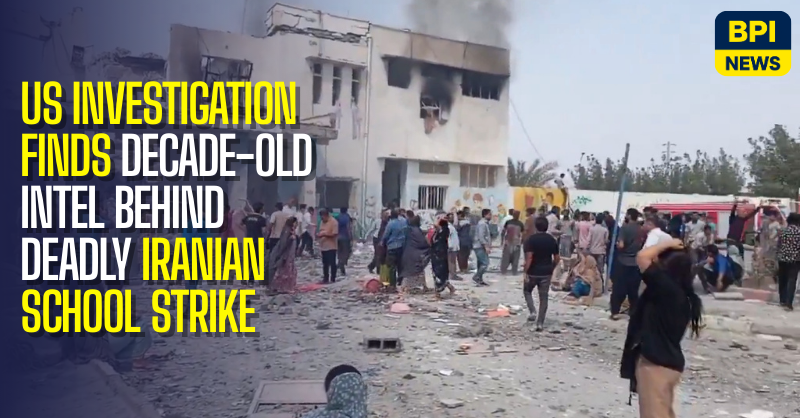
A preliminary United States military investigation has concluded that a Tomahawk missile strike that destroyed an elementary school in southern Iran was caused by outdated intelligence data, raising serious questions about the reliability of US targeting systems during the current conflict.
According to officials familiar with the inquiry, the 28 February strike on Shajarah Tayyebeh Elementary School in the town of Minab resulted from a targeting error after US forces used intelligence that still classified the building as part of an Iranian military installation.
Iranian authorities say at least 175 people were killed, the majority of them children.
Decade-old targeting data
Investigators have determined that officers at US Central Command (CENTCOM) generated the strike coordinates using old targeting data supplied by the Defense Intelligence Agency (DIA).
The data reportedly still labelled the building as a military facility connected to a nearby base used by Iran’s Islamic Revolutionary Guards Corps Navy (IRGC-N).
However, visual analysis and satellite imagery show that the site had been converted into a school years earlier.
Imagery reviewed during the investigation indicates the building was separated from the naval base sometime between 2013 and 2016, when fencing was installed and several changes consistent with a civilian school were made.
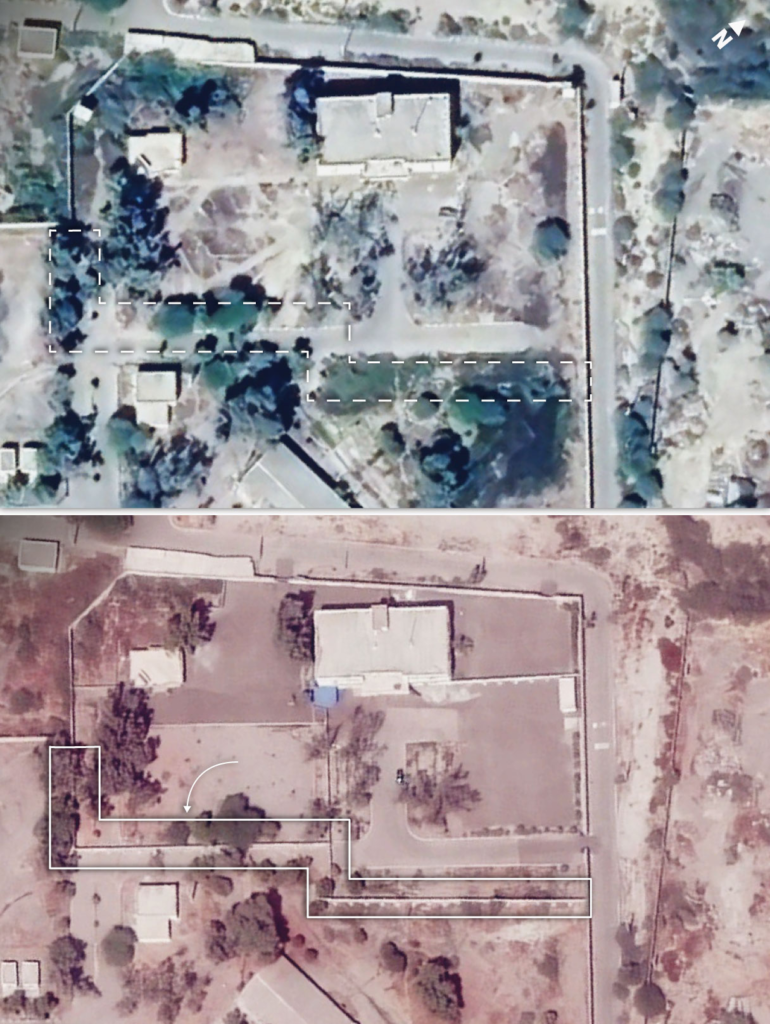
These included:
- Removal of military watchtowers near the building
- Creation of multiple public entrances
- Development of playgrounds and sports areas
- Painting of school buildings in bright colours associated with educational facilities
Despite these changes, the building remained classified as a military target within the US targeting database used to plan strikes.
Officials involved in the inquiry said investigators are attempting to determine why the outdated intelligence had not been verified before the strike was authorised.
Multiple intelligence agencies involved
Military targeting typically involves coordination between several US intelligence and defence agencies.
The investigation is examining the role of multiple organisations, including:
- The Defense Intelligence Agency, which helps generate target data
- US Central Command, responsible for operational planning and strike authorisation
- The National Geospatial-Intelligence Agency (NGA), which analyses satellite imagery and mapping data
When older intelligence is used in targeting databases, analysts are expected to verify the information using updated satellite imagery and other intelligence sources.
Officials say investigators are still determining whether updated imagery existed but was not consulted, or whether the outdated data remained uncorrected across multiple intelligence systems.
Human error suspected
Although investigators initially reviewed whether artificial intelligence systems may have contributed to the targeting error, officials now believe the mistake was more likely the result of human error and outdated database records.
Modern intelligence systems sometimes use machine-learning tools to help identify points of interest in satellite imagery, but officials familiar with the investigation say there is no evidence that automated targeting technology directly selected the school as a target.
Instead, the error appears to have originated from incorrect legacy data that was not updated or verified during strike planning.
One of the deadliest targeting errors in recent decades
The strike occurred during a series of US attacks against Iranian naval infrastructure, which Washington has prioritised to prevent Iranian forces from disrupting global shipping routes in the region.
The school was located on the same block as buildings used by the IRGC Navy, which were among the intended targets.
However, the use of outdated targeting data meant the school building itself was mistakenly identified as part of the military compound.
Military analysts say the incident could become one of the most significant targeting failures involving US forces in decades.
The case has already drawn comparisons with the 1999 NATO airstrike on the Chinese Embassy in Belgrade, which was also caused by outdated maps and intelligence errors.
Political fallout and questions about intelligence reliability
The findings have also complicated the political response in Washington.
President Donald Trump initially suggested that Iran might have been responsible for the strike, saying Tehran’s weapons were “very inaccurate”.
However, officials familiar with the investigation say the preliminary findings clearly indicate US responsibility, as the United States is the only military involved in the conflict known to use Tomahawk cruise missiles.
The White House has said the investigation is ongoing and that the administration will review the final conclusions once the inquiry is completed.
Officials involved in the review say several key questions remain unanswered, including:
- Why decade-old intelligence remained in the targeting database
- Whether updated satellite imagery was available but not used
- Which agencies were responsible for verifying the target data