

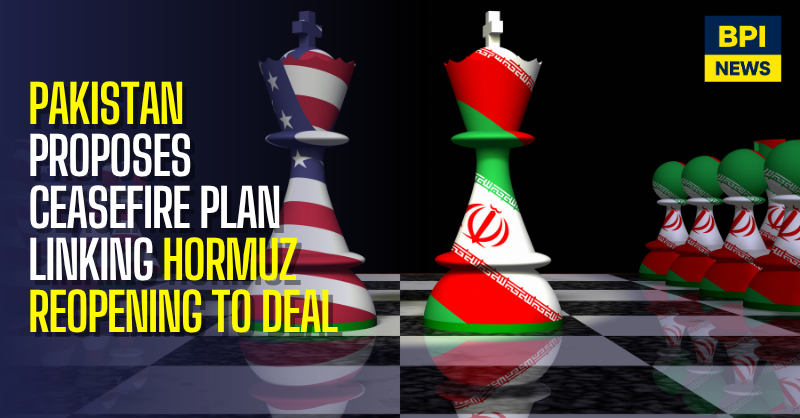
Pakistan has put forward a time-sensitive ceasefire proposal aimed at halting the ongoing US-Iran conflict, linking an immediate truce to the reopening of the Strait of Hormuz and a phased path towards a broader agreement, according to Reuters and officials familiar with the discussions.
The framework, shared overnight and discussed on Monday, sets out a structured two-stage plan designed to rapidly de-escalate the conflict while creating a pathway towards a longer-term settlement.
This follows escalating tensions in the region and the closure of the Strait of Hormuz, a key global oil transit route, which has intensified pressure on global energy markets.
Phase 1: Immediate Ceasefire
• Ceasefire to take effect immediately (potentially within hours)
• Agreement formalised via electronic memorandum of understanding
• Pakistan acts as the sole communication channel between parties
• Strait of Hormuz expected to reopen as part of early implementation
A source said “all elements need to be agreed today”, highlighting the urgency behind the diplomatic push.
Phase 2: Comprehensive Agreement (15–20 Days)
• Full peace framework negotiated within 15–20 days
• Tentative name: “Islamabad Accord”
• Final in-person talks expected in Islamabad
• Regional security framework for Strait of Hormuz
Axios separately reported discussions around a possible 45-day ceasefire window as part of the wider phased deal.
Proposed Final Deal Components
• Iran commits to limits on nuclear programme (no weapons development)
• Sanctions relief for Tehran
• Release of frozen Iranian assets
• Potential guarantees against future US/Israeli military action
Diplomatic Activity and Mediation
Pakistan’s army chief, Field Marshal Asim Munir, has been in continuous contact with US Vice President JD Vance, envoy Steve Witkoff, and Iranian Foreign Minister Abbas Araghchi, according to officials.
Mediators including Pakistan, Türkiye and Egypt have transmitted proposals to Tehran, while China is also reported to be backing elements of the ceasefire effort.
Iran’s Position
An Iranian official told Reuters that Tehran has received the proposal and is reviewing it, but will not accept deadlines imposed under pressure.
The official added that Iran would not reopen the Strait of Hormuz in exchange for a temporary ceasefire, signalling a key sticking point in negotiations.
Why This Matters Now
This comes after previous diplomatic efforts failed to secure a sustained pause in hostilities, with the closure of the Strait of Hormuz placing significant strain on global oil supply chains.
US President Donald Trump has pushed for a rapid ceasefire, warning of consequences if no agreement is reached within a short timeframe.
The outcome now depends on whether Tehran formally engages with the framework, as diplomatic channels narrow and market pressures continue to intensify.