

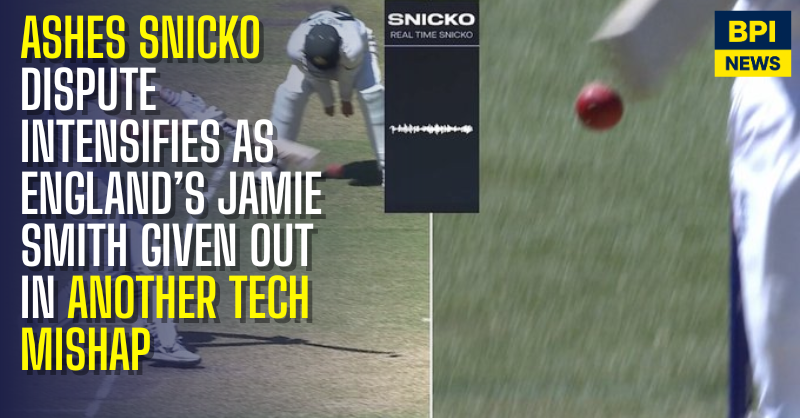
Ashes tensions grew on the second day of the third Test in Adelaide as Real-Time Snicko came under renewed scrutiny following two contentious decisions involving England batsman Jamie Smith, one of which resulted in his dismissal.
The controversy followed the earlier incident involving Alex Carey, whose edge was not upheld after an operator error caused Snicko’s audio spike to appear before the ball reached the bat. Match referee Jeff Crowe later reinstated England’s lost review.
On Thursday, Smith became the central figure in the escalating dispute. In the first incident, Australia appealed for a catch after the ball looped towards slip, and replays suggested possible glove contact. However, Snicko displayed a spike as the ball passed Smith’s helmet rather than his glove. Third umpire Chris Gaffaney ruled it was helmet contact, prompting frustration from the fielding side. A player was heard saying: “Snicko needs to be sacked.”
Later in the session, Smith was given out after Snicko showed a faint spike within a frame of the ball passing the toe of his bat. Smith appeared certain he had not edged it and reacted visibly as the decision was upheld. Ben Stokes also expressed dissatisfaction as the ruling was delivered.
The incidents renewed debate over the accuracy and reliability of Snicko, which relies on manual audio selection rather than automated synchronisation used in other cricketing jurisdictions. Commentators noted that the technology has not been used in UK coverage since 2016 due to concerns about precision.