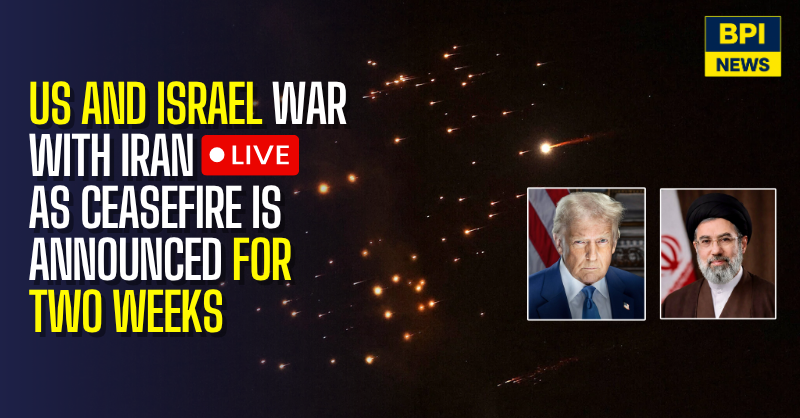
Key Developments Over The Past 24 Hours
- The US tightened economic pressure by warning shipping firms they could face sanctions for paying Iran any tolls for passage through the Strait of Hormuz, while also sanctioning additional Iranian-linked financial networks and a tanker.
- Diplomacy remains stuck: Trump said he is dissatisfied with Iran’s latest proposal, and Reuters reported the rift with allies is widening as Washington and Tehran remain far apart on the terms of any deal.
- The military standoff is still centred on Hormuz, with Iran warning of a “painful response” if US attacks resume and Reuters reporting the US is seeking international help to reopen the strait as oil prices stay under pressure.
Live Updates
Iran’s foreign minister Abbas Araghchi is heading to Beijing for talks with his Chinese counterpart Wang Yi, according to Iran’s Foreign Ministry.
Tehran said the visit will include discussions on bilateral ties as well as regional and international developments.
The meeting comes as negotiations between the United States and Iran remain deadlocked over efforts to end the war launched on Iran by Israel and the US on 28 February.
China has sought to position itself as a diplomatic player in the crisis, maintaining relations with all sides while stressing its policy of noninterference.
The UAE has said it reserves its “full and legitimate right” to respond after condemning what it called “treacherous” Iranian missile and drone attacks.
Abu Dhabi said the strikes marked a serious escalation and posed a direct threat to the country’s security. Earlier reports said the UAE intercepted Iranian missiles and drones and that a drone strike caused a fire at Fujairah’s petroleum industrial site.
Flights bound for Dubai and Sharjah are in holding patterns after Iranian attacks triggered air defence activity in the UAE, according to local reports.
The disruption follows missile and drone alerts across the UAE, with authorities previously saying air defence systems were responding to threats from Iran.
The UAE later issued the all clear after saying interceptions had taken place.
Reuters reported today that UAE airspace has now been fully restored and Dubai Airports is ramping operations back up after the latest disruptions.
A cargo vessel has reported a fire in its engine room about 36 nautical miles north of Dubai, according to the United Kingdom Maritime Trade Operations.
UKMTO said the cause of the fire is unknown, but added that all crew members are safe and accounted for.
In a separate update, the agency said it had also received a report of an incident involving a vessel 14 nautical miles west of Mina Saqr.
A large fire has broken out at Fujairah’s petroleum industrial site after what the emirate’s media office described as a drone attack from Iran. Civil defence teams are responding at the scene.
The UAE said four missiles were launched from Iran. The defence ministry said three were intercepted and one fell into the sea.
The UAE also issued a new missile alert, saying air defence systems were responding to a threat. It followed an earlier alert, the first of its kind since the US-Iran ceasefire came into effect.
The UAE has issued the all clear after saying its air defences engaged missile attacks and incoming drones from Iran.
The Defence Ministry said the sounds heard in different parts of the country were caused by air defence systems intercepting ballistic missiles, cruise missiles and drones.
Authorities later said the situation was over, indicating the immediate threat had ended.
Iran’s military has warned it will attack any foreign armed force that approaches or enters the Strait of Hormuz, “especially” the US military, after Donald Trump announced a US operation to help move stranded ships through the waterway.
Major General Ali Abdollahi said Iran considers the strait to be under the control of its armed forces and that safe passage must be coordinated with Tehran “under all circumstances”, according to reports citing Iranian state media.
The warning follows Trump’s announcement of “Project Freedom”, which US Central Command said will involve guided-missile destroyers, more than 100 land and sea-based aircraft, multi-domain unmanned platforms and 15,000 service members.
Reuters reported that the US presented the mission as a defensive effort to help commercial vessels trapped by Iran’s near-total blockade of the Gulf, while Iran said any uncoordinated foreign military presence in Hormuz would be met with force.
Pete Hegseth faced sharp questioning early in his House hearing as Democrats challenged the administration’s case for the Iran war.
Representative Adam Smith pressed Hegseth over what he described as a contradiction in the US position, saying the administration had justified the war by calling Iran’s nuclear threat “imminent” but was now saying Iran’s nuclear facilities had been “completely obliterated”.
According to AP, the hearing quickly shifted away from the defence budget and onto the war’s objectives, costs and justification, with lawmakers also questioning the $25bn spent so far.
Hegseth responded by arguing Iran had not abandoned its nuclear ambitions, even after the strikes, as scrutiny intensified over the administration’s explanation for launching the war.
The United States has spent approximately $25bn on its military campaign in Iran, according to Jay Hurst, the War Department’s chief financial officer.
Hurst told the House Armed Services Committee that most of the spending has gone on munitions.
A White House official also said President Donald Trump is prepared to keep the naval blockade of Iran in place for months if needed.
The official said Trump discussed steps to sustain the blockade and limit the impact on American consumers during a meeting with energy executives.
Treasury Secretary Scott Bessent hosted the meeting, with Vice President JD Vance and Chief of Staff Susie Wiles also attending.
The White House has said US negotiators are continuing to engage with Iran despite ongoing tensions.
Spokesperson Anna Kelly said communication remains active, while claiming Iran is “struggling to sort out their leadership situation” during the conflict.
She added that President Donald Trump would only agree to a deal that “puts US national security first”.
The statement follows Trump’s recent warning urging Iran to “get smart soon” and sign an agreement on nuclear issues.
Efforts to reach a deal between the United States and Iran remain stalled as tensions continue to escalate on multiple fronts.
US President Donald Trump has told aides to prepare for an extended blockade of Iranian ports, according to reports, despite indicating he does not want to resume military strikes.
Iran has rejected proposals to separate nuclear issues from a deal on the Strait of Hormuz, complicating diplomatic progress.
In Lebanon, fighting has continued despite a broader ceasefire, with two Israeli strikes on a building in the south killing five people, including three rescuers, according to Lebanon’s health ministry.
Iran has said it will not enter negotiations unless a ceasefire in Lebanon is upheld.
Russian President Vladimir Putin has met Iran’s foreign minister Abbas Araghchi, pledging support for efforts to secure peace in the Middle East.
Russian state media reported Putin said Moscow would do “everything” to support Iran’s interests and broader regional stability.
He also praised what he described as Iran’s resilience and reaffirmed Russia’s commitment to maintaining and strengthening its strategic relationship with Tehran.
Araghchi said Iran’s partnership with Russia would continue to deepen, according to Iran’s state news agency IRNA.

Iran has delivered a new proposal to the United States through Pakistani mediators aimed at reopening the Strait of Hormuz and ending the war, according to Axios.
The proposal reportedly suggests postponing nuclear negotiations to a later stage as part of a broader agreement.
US President Donald Trump is expected to meet his top national security and foreign policy team on Monday to review the proposal.
Trump has signalled he intends to maintain the US naval blockade of the Strait of Hormuz, a key sticking point in negotiations.
The report adds that the Iranian position contributed to Trump’s decision to cancel a planned trip by envoys Steve Witkoff and Jared Kushner to Pakistan.
Indirect communication between Washington and Tehran continues through Pakistani mediators.
Pakistan has lifted traffic restrictions around the Serena Hotel and the Red Zone in Islamabad following days of heightened security.
Deputy Prime Minister and Foreign Minister Ishaq Dar thanked residents of Islamabad and Rawalpindi for their patience and cooperation during the lockdown.
UK Prime Minister Keir Starmer and US President Donald Trump have discussed the need to restore shipping through the Strait of Hormuz.
A Downing Street spokesperson said the leaders highlighted the urgent need to get vessels moving again due to the impact on the global economy and cost of living.
Starmer also updated Trump on joint efforts with French President Emmanuel Macron aimed at restoring freedom of navigation in the waterway.
Iran’s Foreign Minister Abbas Araghchi is expected to return to Islamabad after consultations in Oman, Pakistani officials say, as sources tell BPI News Tehran has delivered its views and talks remain part of a continuing diplomatic process, not a collapse.
Indirect communication between the United States and Iran is continuing through Pakistani mediators, with most diplomacy taking place behind closed doors.
Sources say messages from Tehran are passed to Islamabad and then relayed to Washington, with the same channel used in reverse.
Iran’s foreign minister Abbas Araghchi, who recently visited Pakistan, held meetings with Field Marshal Asim Munir, Prime Minister Shehbaz Sharif and Foreign Minister Ishaq Dar before departing.
Araghchi is now expected to return from Muscat, while members of his delegation have travelled back to Tehran for consultations.
The delegation is expected to rejoin him in Islamabad with updated instructions, which could determine the direction of the next phase of talks.
Iran’s foreign minister Abbas Araghchi is expected to return to Pakistan after concluding a trip to Oman, before travelling on to Russia, according to Iranian state media.
IRNA reported that part of the Iranian delegation has returned to Tehran to consult on issues related to ending the war.
The report said the team will later rejoin Araghchi in Islamabad, with his return expected on Sunday night.
Araghchi only left Pakistan hours earlier, describing talks with Pakistani officials as “very fruitful” while questioning whether the United States is serious about diplomacy.

US President Donald Trump has said cancelling the planned trip by US envoys to Pakistan does not signal a return to war with Iran.
Speaking to journalist Barak Ravid, Trump said “we haven’t thought about it yet” when asked if the decision meant a resumption of hostilities.
He added there was no need to send officials on an “18-hour flight” given the current state of negotiations, suggesting talks could continue remotely.
Trump said Iran could initiate contact, stating the United States would not travel “just to sit there”.
The comments follow his earlier decision to cancel the trip by Steve Witkoff and Jared Kushner to Islamabad.
US President Donald Trump has said he has cancelled the planned trip by envoy Steve Witkoff and adviser Jared Kushner to Pakistan for talks with Iran.
Speaking to Fox News, Trump said he called off the visit shortly before departure, saying the US would not send officials on a long flight for talks he described as unproductive.
He said the United States “has all the cards” and added that Iran can initiate contact if it wants negotiations to proceed.
Iran’s foreign minister Abbas Araghchi has presented Tehran’s demands and reservations regarding US proposals during talks in Islamabad, according to a Pakistani source cited by Reuters.
Araghchi met Pakistan’s Prime Minister Shehbaz Sharif in the presence of Foreign Minister Ishaq Dar and Field Marshal Asim Munir, where they discussed the regional situation and ongoing diplomatic efforts.

Uncertainty surrounds US-Iran talks in Islamabad after Tehran said no direct meeting is planned, despite the White House sending Steve Witkoff and Jared Kushner to Pakistan.
BPI News has also spoken to residents affected by the capital lockdown.
Iran’s foreign minister Abbas Araghchi is expected to bring a written response to the US peace proposal to Islamabad, the New York Times reports.
Iran’s foreign minister Abbas Araghchi is expected to arrive in Islamabad tonight with a small delegation, according to government sources.
Officials say there is a “high likelihood of a breakthrough” as preparations intensify for a second round of US-Iran talks.
Earlier, Araghchi held a telephone call with Pakistan’s Deputy Prime Minister and Foreign Minister Ishaq Dar, with both sides confirming discussions on regional developments, the ceasefire and ongoing diplomatic efforts.
Pakistan said Dar emphasised continued dialogue, while Araghchi praised Islamabad’s mediation role.
Iran’s IRNA news agency also reported a separate call between Araghchi and Pakistan’s army chief Asim Munir, though this has not been independently confirmed.
A US logistics and security team is already present in Islamabad, with earlier arrivals including aircraft carrying communications equipment, vehicles and personnel.
Iran’s supreme leader Mojtaba Khamenei has suffered severe injuries following a strike at the start of the war, according to a report by the New York Times.
The report, citing Iranian officials, says Khamenei underwent multiple surgeries on one leg and is now awaiting a prosthetic.
It adds he sustained severe burns to his face and lips, making speech difficult, and also required surgery on one hand.
Iranian President Masoud Pezeshkian is reported to be personally involved in his treatment alongside senior medical staff.
The report says Khamenei remains mentally sharp but is being kept under strict security, with communications handled through handwritten messages and couriers.

US President Donald Trump has claimed the United States has “total control” over the Strait of Hormuz.
In a post, Trump said no vessel can enter or leave the waterway without approval from the US Navy, describing the strait as “sealed up tight” until Iran agrees to a deal.
He also criticised Iran’s leadership, claiming the country is divided and “doesn’t know” who its leader is.
In a separate post, Trump said he has ordered the US Navy to “shoot and kill” any boats laying mines in the strait.
He added that US minesweeping operations are continuing at an increased level to clear the waterway.
Lebanon’s Health Ministry has condemned the killing of journalist Amal Khalil in the southern town of Al-Tayri.
In a statement, the ministry said Israeli forces pursued Khalil to a house where she had sought shelter before she was killed.
The ministry described her as a “martyr” and extended condolences to her family and the wider media community in Lebanon.
It added that the circumstances surrounding her death “shame human conscience”.

Iran’s President Masoud Pezeshkian has said breaches of commitments, the naval blockade and threats are the main obstacles to negotiations with the United States.
In a statement, Pezeshkian said Iran continues to welcome dialogue and agreement despite the current tensions.
He criticised what he described as contradictions between US claims and actions, saying the international community could see the disparity

The Government of Pakistan has ordered all ministries, divisions and federal offices within Islamabad’s Red Zone to work from home on Thursday, according to an official notification issued by the Cabinet Division.
The directive instructs all officers and staff to remain available and report to offices at short notice if required, indicating that full operational readiness is being maintained despite the closure.
The move marks a further escalation of security measures in the capital, with authorities effectively reducing physical presence in key government areas while preserving the ability to rapidly mobilise.
The decision aligns with wider restrictions already in place across Islamabad, including road closures, suspension of transport and the clearing of key facilities ahead of expected high-level diplomatic activity.
BPI News has previously reported, based on Pakistani sources with knowledge of the security arrangements and negotiations, that preparations have been made on the expectation that Iran will attend talks this week, despite ongoing sticking points — particularly the US blockade on Iranian shipping.
Iran’s Islamic Revolutionary Guard Corps (IRGC) has targeted multiple commercial vessels in and around the Strait of Hormuz, according to Iranian media and maritime security reports.
The UK Maritime Trade Operations (UKMTO) said an IRGC gunboat opened fire on the container ship Epaminondas around 15 nautical miles northeast of Oman, causing significant damage to the vessel’s bridge.
A second vessel, the Panama-flagged Euphoria, owned by a UAE-based company, was also targeted west of Iran. Reports indicate the crew are safe and the vessel sustained no major damage.
A third ship, MSC Francesca, was hit while exiting the Strait into the Gulf of Oman, with maritime intelligence firm Vanguard reporting damage to the hull and accommodation areas.
Iranian media, citing IRGC naval sources, said MSC Francesca and Epaminondas were seized and directed towards Iranian waters, alleging they were operating without permits and interfering with navigation systems.
US President Donald Trump has said he will extend the ceasefire with Iran following a request from Pakistan’s Field Marshal Asim Munir and Prime Minister Shehbaz Sharif.
In a post on Truth Social, Trump said the decision was taken to allow time for Iran’s leadership to present a unified proposal for negotiations.
He stated that US forces have been directed to continue enforcing the naval blockade of Iranian vessels while remaining prepared for further action.
Trump described the Iranian government as “seriously fractured” and said the extension would remain in place until Iran submits a proposal and discussions are concluded.
US Vice President JD Vance’s planned trip to Pakistan has been placed on hold after Iran failed to respond to US negotiating terms, according to the New York Times.
Ceasefire talks are now paused, with the deadline set to expire within hours.
Pakistani sources with knowledge of the negotiations told BPI News they have consistently expected Iran to attend and have already made arrangements for the talks.
They said the main sticking point remains the US blockade of Iranian vessels in the Strait of Hormuz, which Iran has linked to its participation.
Field Marshal Asim Munir raised the issue directly with Donald Trump, asking for the blockade to be eased to allow negotiations to proceed, with Trump saying he would consider the request.
US Vice President JD Vance and envoy Steve Witkoff have not yet departed Washington for Pakistan ahead of planned talks with Iran.
Flight tracking data shows a scheduled aircraft linked to Witkoff and Jared Kushner has not departed as expected, while Witkoff’s personal jet is now set to travel to Washington from Florida.
Earlier timelines suggested a midday departure would see Witkoff arrive in Rawalpindi by Wednesday evening, with talks beginning shortly after.
The delay comes as the original ceasefire is set to expire within hours, with a separate US deadline for negotiations extending into Wednesday evening.
Pakistan is still awaiting formal confirmation from Iran on whether it will send a delegation to Islamabad for talks with the United States, according to Information Minister Attaullah Tarar.
Tarar said Pakistan remains in constant contact with Iranian officials and is continuing efforts to facilitate dialogue between the two sides.
He added that the current ceasefire is set to expire at 04:50 PST on 22 April, making Iran’s decision on attending the talks critical.
Pakistan has been pushing for Iran to take part in the second round of negotiations, with diplomatic efforts ongoing.
Pakistani security officials familiar with the planning have told BPI News that preparations have been made with the understanding that the Iranians will attend.

Axios reports Iranian negotiators have approval from the Supreme Leader to travel to Islamabad for US talks.
After speaking to Pakistani sources with knowledge of the negotiations BPI News understands that Pakistan expects and always has expected Iran to attend.
Iran’s Parliament Speaker Mohammad Ghalibaf has said the country will not enter negotiations under pressure from the United States.
In a statement, Ghalibaf said Iran rejects talks conducted under “the shadow of threats” and accused Washington of violating the ceasefire through its naval blockade.
He said the US was attempting to turn negotiations into what he described as a “table of surrender”.
Ghalibaf added that Iran has been preparing new military capabilities over the past two weeks, signalling potential escalation if talks fail.
US Vice President JD Vance set to land in Pakistan within hours for talks, according to President Trump, despite Iran saying no decision has been made.
Security lockdown in Islamabad signals preparations are underway, BPI News understands.
Japanese authorities have downgraded tsunami warnings along the country’s northeastern coast to advisories following the earlier earthquake.
A tsunami advisory is the lowest alert level and applies to waves expected below one metre, though officials still advise people to leave coastal areas and avoid the sea.
Emergency alerts continue to warn residents not to return to the coast or approach large bodies of water until advisories are fully lifted.
Earlier evacuation orders affected around 156,000 people across five prefectures after higher-level warnings were issued.
Japan has downgraded tsunami warnings to advisories along its northeast coast after a 7.7 quake.
— BPI News (@BPINewsOrg) April 20, 2026
Authorities still warn people to stay away from coastal areas, with around 156,000 earlier told to evacuate. pic.twitter.com/0fhOfrRPlb
Iran says no decision has been made on talks, but Islamabad is under heavy lockdown with 20,000+ personnel deployed, hotels cleared and roads shut, BPI News has been told my multiple sources.
Activity on the ground points to talks still being prepared.
Iran has informed the United States through Pakistani mediators that it will not take part in another round of talks in Islamabad while the naval blockade remains in place, according to Reuters.
Iranian officials have made lifting the blockade a condition for any further negotiations.
Iran has said it has no plans for a second round of negotiations with the United States, according to foreign ministry spokesman Esmail Baghaei.
Baghaei said there is currently no plan for further talks, as tensions remain over the US naval blockade and ceasefire violations.
The statement follows earlier reports in Iranian state media that Tehran would not attend talks under current conditions.
US President Donald Trump has said a delegation led by Vice President JD Vance will travel to Pakistan for negotiations, with Steve Witkoff and Jared Kushner also expected to attend.
Iran has “no plan” for the next round of negotiations with the US, foreign ministry spokesman Esmail Baghaei said.
— BPI News (@BPINewsOrg) April 20, 2026
The statement comes as Trump confirms JD Vance will lead a US delegation to Pakistan for planned talks. pic.twitter.com/3BtMbtH1jM
US Central Command said American forces boarded and seized an Iranian-flagged cargo vessel, Touska, in the Sea of Oman after it failed to comply with blockade orders.
CENTCOM said the vessel ignored repeated warnings over six hours before a US destroyer fired on it, disabling its engine, after which US Marines boarded and took control.
Iran’s Hazrat Khatam al-Anbiya headquarters confirmed the incident, accusing the US of “maritime piracy” and saying the ship was attacked and seized.
Iranian state media reported the vessel was targeted near the port of Chabahar and said Iranian forces responded, including claims of drone activity against US warships.
Iran warned its armed forces will retaliate “soon”.
US seizes Iranian vessel as Tehran vows retaliation
— BPI News (@BPINewsOrg) April 19, 2026
US Central Command said American forces boarded and seized an Iranian-flagged cargo vessel, Touska, in the Sea of Oman after it failed to comply with blockade orders.
CENTCOM said the vessel ignored repeated warnings over six… pic.twitter.com/Hnfc7hyJqS
Iran has rejected participation in a second round of negotiations with the United States, citing a lack of trust, according to Iranian state media.
Officials said Tehran will not send a delegation to Pakistan while the US naval blockade remains in place.
A Pakistani source with knowledge of the talks told BPI News that Iran’s position is shaped by repeated mistrust, with negotiations previously coinciding with military action.
Iranian officials have previously accused the United States of using diplomatic talks as cover for strikes, describing such actions as a “betrayal to diplomacy”.
US Vice President JD Vance will travel to Islamabad to lead the American negotiating team for talks with Iran, a White House official has told the BBC.
Vance is expected to be joined by Donald Trump’s advisers Steve Witkoff and Jared Kushner.
It remains unclear whether Iran will participate in the talks or who would form its delegation if it attends.
Iran has not decided to send a negotiating delegation to Pakistan while the US naval blockade remains in place, according to Tasnim News Agency.
Tasnim reported that Iranian officials said there will be no negotiations as long as the blockade announced by Donald Trump continues.
US Middle East envoy Steve Witkoff and Jared Kushner are set to travel to Pakistan to restart negotiations with Iran, according to President Donald Trump.
Trump said Witkoff will arrive in Islamabad on Monday night, with talks expected to take place on Tuesday.
Vice President JD Vance, who led the previous round of negotiations, will not attend this round.
The talks come as the current two-week ceasefire between the US and Iran approaches its expiry, with both sides yet to confirm whether it will be extended.
US President Donald Trump has accused Iran of violating the ceasefire in the Strait of Hormuz and warned of potential military action.
In a post, Trump said Iranian forces fired on vessels, including a French ship and a UK-linked freighter, describing it as a “total violation” of the agreement.
He said US representatives are travelling to Islamabad for negotiations, expected to take place imminently.
Trump also warned that if Iran does not accept a deal, the United States could target key infrastructure, including power plants and bridges.
A US Air Force C-17 cargo aircraft has landed at Nur Khan Airbase in Pakistan, according to footage reviewed by BPI News.
The aircraft was previously used during the last round of talks to transport armoured vehicles, trucks and equipment linked to security and logistical preparations.
Three Pakistani security sources told BPI News that a second round of US-Iran negotiations is likely to take place before Friday.
View on Threads
Iran’s parliament speaker Mohammad Bagher Ghalibaf has said the Strait of Hormuz remains under Iran’s control and warned movement will be restricted if the US does not lift its naval blockade.
Ghalibaf said Iranian forces confronted a US minesweeper in the strait, describing the incident as a near engagement that ended after the vessel withdrew.
He said Iran considers US mine-clearing efforts a violation of the ceasefire and criticised the blockade, saying it would not allow others to pass freely while Iran is restricted.
Ghalibaf added that any continued blockade would lead to limits on traffic through the waterway.
Ghalibaf warns Hormuz traffic will be restricted
— BPI News (@BPINewsOrg) April 18, 2026
Iran’s parliament speaker Mohammad Bagher Ghalibaf said Tehran controls the Strait of Hormuz and warned traffic will be restricted if the US does not lift its blockade. pic.twitter.com/qkgHpbwc0B
Iran’s Islamic Revolutionary Guard Corps has said the Strait of Hormuz will remain closed from this evening.
The IRGC said the move follows what it described as a US violation of ceasefire conditions, citing the continued naval blockade of Iranian vessels and ports.
It said several vessels had passed through the strait previously, but warned that no ships should now leave anchorage or approach the waterway.
The IRGC added that any vessel moving towards the Strait of Hormuz would be considered cooperating with the enemy and could be targeted.
It also instructed ship operators to follow updates only from official IRGC naval channels.
The United States is preparing to board and seize Iran-linked oil tankers in international waters in the coming days, according to the Wall Street Journal citing US officials.
At the same time, Iran has tightened its control over the Strait of Hormuz, with reports of attacks on commercial vessels as it declared the waterway under “strict control”.
The developments come a day after Iran’s foreign minister said the strait was fully open to commercial traffic, creating confusion for shipping companies operating in the region.
Iranian Revolutionary Guard Corps naval units fired on two Indian-flagged vessels in the Strait of Hormuz, according to Channel 16 maritime radio recordings.
The vessels, Sanmar Herald and Jag Arnav, were forced to turn back westbound out of the strait.
Sanmar Herald is a very large crude carrier transporting approximately 2 million barrels of Iraqi oil.
IRGC naval forces fired on Indian-flagged tankers Sanmar Herald and Jag Arnav in the Strait of Hormuz, forcing both vessels to turn back.
— BPI News (@BPINewsOrg) April 18, 2026
Sanmar Herald is a VLCC carrying around 2 million barrels of Iraqi crude. pic.twitter.com/ZVInkiODJS
Iran has said access through the Strait of Hormuz will remain conditional, according to a source linked to the Supreme National Security Council cited by state media.
The source said only commercial vessels would be allowed to pass, with ships and cargo required to have no links to countries considered hostile by Tehran.
Vessels must also use routes designated by Iran and coordinate passage with the Islamic Revolutionary Guard Corps, which is managing traffic through the waterway.
The conditions also link continued access to the maintenance of a ceasefire in Lebanon and the end of the US blockade on Iranian ports.
US President Donald Trump has said Israel will no longer carry out strikes in Lebanon, claiming it has been “prohibited” from doing so by the United States.
In a post, Trump said Washington would instead work separately with Lebanon to address what he described as the Hezbollah situation.
He added that any agreement involving Iran would not be linked to developments in Lebanon and insisted no financial exchange would take place as part of such a deal.
Iran’s foreign minister Abbas Araghchi has said the Strait of Hormuz is open to commercial shipping during the current ceasefire period.
In a post, he said passage for all commercial vessels is “completely open” for the remainder of the ceasefire, provided ships follow a coordinated route.
He added the route has already been set out by Iran’s Ports and Maritime Organisation.
Iran’s foreign minister Abbas Araghchi said the Strait of Hormuz is “completely open” to commercial vessels during the ceasefire, following a Lebanon truce.
— BPI News (@BPINewsOrg) April 17, 2026
He said ships must use a coordinated route set by Iran’s maritime authorities. https://t.co/7q6bgOtgfL pic.twitter.com/FkjhBv8sQ0
Police closed Kensington Gardens after a video claimed drones carrying “radioactive and carcinogenic material” were launched towards the Israeli Embassy.
Officers are assessing items at the scene, while counter-terror police investigate the video.
The development follows the release of a video by a group calling itself Harakat Ashab al-Yamin al-Islamia, which appeared to show individuals in protective suits handling drones before one took off from what looked like a local park.
The group has previously claimed responsibility for a number of incidents linked to the wider conflict involving the United States, Israel and Iran, including an arson attack on ambulances belonging to a Jewish charity.
However, analysts have raised questions about the group credibility, noting unusual language used in its messaging, including references to Palestine as “the land of Israel”, which is not typical of pro-Palestinian organisations.
READ MORE HERE
A Pakistan-flagged oil tanker, Shalamar, has become the first vessel to exit the Strait of Hormuz carrying crude since the United States began enforcing a blockade on Iranian ports.
The development follows earlier movements on April 12, when two Pakistan-flagged tankers, Khairpur and Shalamar, initially turned back at the strait, according to Iran’s Fars news agency.
Subsequent tracking data showed both vessels later transited through the waterway via the corridor between Larak and Qeshm islands, an area under Iranian Revolutionary Guard control.
Pakistan-flagged tanker Shalamar has become the first to exit the Strait of Hormuz with crude since the US blockade began, tracking data shows.
— BPI News (@BPINewsOrg) April 17, 2026
The vessel had earlier turned back on April 12 before later transiting via the IRGC-controlled Larak–Qeshm corridor. https://t.co/pkjRnzcVBA pic.twitter.com/mcgQMIqOyd
US President Donald Trump has said Israel and Lebanon have agreed to a 10-day ceasefire, set to begin at 5pm EST.
In a post on Truth Social, Trump said the agreement followed talks in Washington involving Lebanese President Joseph Aoun and Israeli Prime Minister Benjamin Netanyahu, alongside US Secretary of State Marco Rubio.
He added that Vice President JD Vance, Rubio and senior US military officials have been tasked with working with both sides to secure a longer-term peace arrangement.

Pope Leo has criticised political leaders who use religion to justify war, during a speech in Cameroon as tensions continue with US President Donald Trump.
The pope said those who “manipulate religion and the very name of God” for military, economic or political gain were misusing something sacred.
His remarks come amid an ongoing public dispute with Trump, who recently described the pope as “weak on crime” and “terrible for foreign policy” following criticism of the US role in the Iran conflict.
Pope Leo also criticised global spending on war, saying billions were being directed towards “killing and devastation” while funding for healthcare, education and recovery remained limited.
The comments echo earlier statements in which he said God ignores the prayers of leaders who wage war, remarks that were widely interpreted as criticism of US officials.
View on Threads
Reports indicate a potential one-week ceasefire in Lebanon could be announced, as diplomatic efforts intensify around ongoing negotiations.
The New York Times, citing an Israeli official, reported a ceasefire could begin on Thursday. Israeli media have also suggested the move is linked to conditions set by Iran for continuing negotiations.
Al Jazeera’s Ali Hashem reported that Pakistani mediators have conveyed progress on ceasefire efforts to Tehran, although Iranian officials are said to be waiting for formal confirmation.
Iran has previously stated that a halt to fighting in Lebanon is a condition for further engagement in talks, as mediation continues following the latest round of negotiations.
The White House has dismissed reports that the United States is seeking to extend its ceasefire with Iran, as negotiations continue.
Press secretary Karoline Leavitt said Washington remains “very much engaged” in ongoing discussions, describing them as “productive and ongoing”. She added that while there has been reporting about possible in-person talks, no formal arrangements have been confirmed.
Leavitt also indicated that a second round of negotiations would “very likely” take place in the same location as previous talks, pointing to Islamabad.
She said Pakistan remains the sole mediator in the process, praising its role in facilitating communication between the two sides.
View on Threads
Pakistan’s army chief Asim Munir has arrived in Tehran leading a senior political and security delegation, according to Iran’s Tasnim news agency.
Reports say he is carrying a message from Washington ahead of a potential second round of US-Iran talks expected to take place in Islamabad in the coming days.
General Munir is due to meet Iran’s foreign minister Abbas Araghchi to discuss preparations for renewed negotiations.
Iran has said halting the war in Lebanon remains a condition for any agreement in ongoing negotiations.
Officials said Tehran continues to emphasise what it describes as the “inseparable bond” of the resistance fronts across the region.
The statement rejected claims that Iran would neglect other fronts during talks, calling such suggestions “false propaganda”.
Iran said defending allied groups remains a core part of both its diplomatic approach and its wider strategy in negotiations linked to the Islamabad talks.
View on Threads
Iran has said communication with the United States has continued since talks in Islamabad ended without a deal.
Foreign Ministry spokesman Esmaeil Baghaei said messages have been exchanged through Pakistani mediators since last Sunday.
He said Iran had reiterated its position during these exchanges and signalled that further diplomatic engagement could follow.
Baghaei added there is a strong probability that a Pakistani delegation will visit to continue negotiations.
View on Threads
Iran has warned it could disrupt shipping across a wide region if the US naval blockade continues.
Ali Abdollahi, commander of Iran’s Khatam al-Anbiya Central Headquarters, said any threat to Iranian commercial vessels would be treated as a violation of the ceasefire.
He warned Iran would not allow “any exports or imports to continue” across the Persian Gulf, the Sea of Oman and the Red Sea if such conditions persist.
The comments come as the US blockade of Iranian ports enters its third day, with the military saying six vessels were forced to turn back in the first 24 hours.
Mediators are moving closer to extending the ceasefire between the United States and Iran as efforts intensify to restart negotiations.
Regional officials told the Associated Press both sides have given an “in principle agreement” to extend the truce ahead of its expiry next week.
Talks are expected to focus on three key sticking points that derailed earlier negotiations: Iran’s nuclear programme, access to the Strait of Hormuz and compensation for wartime damage.
Iran’s near-blackout of internet access has entered its 47th day, according to monitoring group NetBlocks.
The watchdog said the disruption amounts to more than 1,100 hours without international connectivity for the general public.
Restrictions were first imposed following protests in early January and were intensified after the start of the US-Israel war at the end of February.
The blackout has significantly affected businesses, jobs and communications across the country.
The Israeli military has issued a new evacuation order for residents south of the Zahrani river in southern Lebanon.
Military spokesperson Avichay Adraee said airstrikes are ongoing as Israeli forces operate with “significant force” in the area.
The United Nations says Israeli warnings and displacement orders now cover around 14% of Lebanon.
The affected areas include the entire region south of the Zahrani river, most of Beirut’s southern suburbs and parts of the Bekaa region.
More than 100 towns and villages have been impacted, with over one million people displaced.
Donald Trump has said a deal with Iran is “very possible” in the coming weeks, raising expectations of renewed negotiations after talks in Islamabad collapsed.
JD Vance said a “ton of progress” had been made and indicated the US is seeking a broader agreement rather than a limited deal.
US Central Command has claimed it has “completely halted economic trade” in and out of Iran by sea, as the blockade of Iranian ports continues.
However, reports indicate more than 20 commercial vessels have still passed through the Strait of Hormuz in the past 24 hours.
Meanwhile, pressure is growing on Israel, with the UK and other countries calling for an urgent end to hostilities in Lebanon amid escalating strikes and humanitarian concerns.
Donald Trump has said he is considering seizing Kharg Island, Iran’s main oil terminal in the Persian Gulf, as oil prices rise to near four-year highs, with Brent crude trading above $115 per barrel.
The US president has continued to give mixed signals, saying negotiations to end the war are progressing while also posting online that it is a “big day in Iran” without further detail.
The Washington Post reports that US forces are preparing for a potential ground invasion of Iran, as thousands of additional marines arrive in the region, despite domestic opposition.
Iran’s parliamentary speaker Mohammad Bagher Ghalibaf has warned that Iranian armed forces are “waiting” for a US land arrival and would target regional partners if such an operation takes place.
Diplomatic efforts are continuing, with Pakistan’s foreign minister Ishaq Dar saying Islamabad will soon host talks between the United States and Iran, following meetings in Islamabad with Saudi Arabia, Turkey and Egypt.
In Lebanon, a UN peacekeeper from Indonesia has been killed, as Israeli prime minister Benjamin Netanyahu confirmed an expansion of military operations in southern Lebanon targeting Hezbollah.
Pakistan’s foreign minister Ishaq Dar has announced that Iran agreed to allow 20 Pakistani-flagged ships to pass through the Strait of Hormuz, with two vessels expected to cross daily.
The agreement was presented as part of wider diplomatic efforts led by Islamabad to ease tensions and maintain limited maritime access through the strategic waterway.
However, there is no clear indication from ship tracking data that regular Pakistani transits have begun under this arrangement.
Tracking data did show that the Pakistani-flagged tanker MULTAN exited the Strait of Hormuz yesterday, travelling through the Iranian-controlled corridor between Qeshm and Larak islands.
It remains unclear whether that transit formed part of the newly announced agreement or was a separate, pre-arranged passage.
Convoys have been seen arriving and departing from Pakistan’s foreign ministry as talks begin in Islamabad involving Saudi Arabia, Turkey and Egypt.
View on Threads
Foreign ministers from the three countries are meeting their Pakistani counterpart for two days of discussions focused on the war.
Turkey’s foreign minister Hakan Fidan said ahead of the meeting: “We would discuss where the negotiations in this war are heading and how these four countries assess the situation and what can be done.”
Iran’s president Masoud Pezeshkian has praised Pakistan’s mediation efforts during a call with prime minister Shehbaz Sharif.
According to the Iranian presidency, Pezeshkian “thanked Pakistan for its mediation efforts to stop the aggression against the Islamic Republic”.
The call comes as Pakistan prepares to host foreign ministers from Saudi Arabia, Egypt and Turkiye in Islamabad for talks focused on the war.
The meeting is expected to centre on diplomatic efforts to de-escalate the conflict and explore potential pathways towards negotiations.
Pakistan’s deputy prime minister Ishaq Dar has said Iran has agreed to allow 20 ships under the Pakistani flag to pass through the Strait of Hormuz.
I am pleased to share a great news that the Government of Iran has agreed to allow 20 more ships under the Pakistani flag to pass through the Strait of Hormuz; two ships will cross the Strait daily.
— Ishaq Dar (@MIshaqDar50) March 28, 2026
This is a welcome and constructive gesture by Iran and deserves appreciation. It…
In a statement, Dar said two ships would cross the strait daily under the arrangement.
He described the move as a “welcome and constructive gesture” and a “harbinger of peace”, adding it would help bring stability to the region.
Dar said the development marks a “meaningful step toward peace” and would support broader diplomatic efforts.
He added: “Dialogue, diplomacy, and such confidence-building measures are the only way forward.”
The United Arab Emirates says it has seen a significant increase in attacks from Iran, with air defences engaging multiple incoming threats over the past 24 hours.
Officials said 20 ballistic missiles and 37 drones launched from Iran were intercepted during that period.
In Abu Dhabi, debris from an intercepted ballistic missile caused a fire, injuring six people, according to the government.
The UAE’s defence ministry said that since the start of the war, the country has faced 398 ballistic missiles, 15 cruise missiles and 1,872 drones.
A Pakistani-flagged tanker, Multan, has exited the Strait of Hormuz using a northern corridor between Qeshm and Larak islands.
Vessel tracking data shows the ship transiting through a route understood to be under close oversight and controlled by Iran’s Islamic Revolutionary Guard Corps.
Pakistan is set to host two days of talks with Saudi Arabia, Turkey and Egypt from tomorrow, according to its foreign ministry.
Foreign ministers from the four countries will hold what officials described as “in-depth discussions” as regional efforts to address the conflict continue.
Turkey’s foreign minister Hakan Fidan said the meeting would focus on de-escalation, telling broadcaster A Haber: “We would discuss where the negotiations in this war are heading and how these four countries assess the situation and what can be done.”
Pakistan has already passed a US proposal aimed at ending the war to Iran and has offered to host direct talks between the two sides.
US President Donald Trump has said negotiations are going “very well”, while Tehran has denied that talks are taking place. Iranian officials have been reviewing a 15-point US proposal, with one describing it as “one-sided and unfair”.
Iran has claimed it targeted a US “military support vessel” near Oman’s commercial port of Salalah, following reports that the port itself came under attack.
Lt Col Ebrahim Zolfaghari, spokesperson for the Khatam-al Anbiya central headquarters, said in a statement carried by Iranian state media: “A logistics vessel supporting the aggressive US army was targeted by the armed forces of the Islamic Republic of Iran at a considerable distance from the port of Salalah in Oman.”
View on Threads
Oman’s official news agency reported earlier that the port was targeted by two drones, injuring one foreign worker and damaging a crane.
Zolfaghari added: “As we previously announced, the national sovereignty of the brotherly and friendly country of Oman is respected by the Islamic Republic of Iran.”
Oman has previously acted as a mediator between the US and Iran, hosting multiple rounds of nuclear talks in the weeks before the conflict began.
A missile fired from Yemen towards Israel was intercepted in the early hours, according to Israeli officials, marking the first reported involvement by the Houthis in the conflict.
Yemen’s Houthi movement confirmed it launched the missile overnight. Israel said its air defences intercepted the projectile before impact.
Across the wider region, falling debris from an intercepted ballistic missile sparked two fires at an industrial area between Abu Dhabi and Dubai. Authorities said five Indian nationals were injured, none seriously.
In Oman, drones targeted the port of Salalah, with the country’s news agency reporting one foreign worker was injured. Saudi Arabia’s defence ministry said it intercepted and destroyed a ballistic missile aimed at Riyadh.
Bahrain’s civil defence said it extinguished a fire at a facility targeted by Iran, while Kuwait’s national guard reported shooting down six drones over the past 24 hours.
Separately, a US official told Reuters that 12 American soldiers were injured in an attack on a base in Saudi Arabia, including two seriously.
US secretary of state Marco Rubio said Washington expects the war to end in weeks rather than months. Poland’s prime minister Donald Tusk warned a “new escalation” could occur in the coming days.
US President Donald Trump, speaking in Miami, said the US had ended Iran’s “nuclear blackmail” and criticised NATO allies for their level of support. He also claimed Iran had sent 10 oil tankers to the United States as part of negotiations.
Iranian state media reported that the Strait of Hormuz has been closed, warning vessels of “harsh measures”.
Pakistan’s Prime Minister Shehbaz Sharif has held a one-hour phone call with Iranian President Masoud Pezeshkian as diplomatic efforts intensify.
Sharif said he expressed solidarity with Iran and condemned Israeli strikes, while also discussing Pakistan’s role in facilitating dialogue and de-escalation.
Islamabad is preparing to host talks with foreign ministers from Saudi Arabia, Türkiye and Egypt, with meetings set to begin tomorrow and include discussions on easing regional tensions.
Pakistan has also positioned itself as a potential venue for US-Iran negotiations, having delivered Washington’s 15-point proposal to Tehran earlier this week.
Iran is reviewing the proposal but has described it as “one-sided and unfair”, while setting out its own conditions including reparations, security guarantees and control over the Strait of Hormuz.
The Iran-backed Houthi movement in Yemen has confirmed it carried out a missile attack on Israel, marking its first involvement since the start of the US-Israel war with Iran.
The group said it fired a barrage of ballistic missiles targeting Israeli military sites, describing the move as a response to attacks across Iran, Lebanon, Iraq and Palestinian territories.
The Israeli military said it intercepted a missile launched from Yemen.
Analysts say the development raises the risk of the conflict expanding further, with the Houthis positioned along another key global shipping route in the Red Sea.
The group has previously targeted commercial vessels and military ships in the region in response to Israeli attacks on Gaza , prompting international efforts to protect maritime traffic.
A graphic circulating on Iranian media channels appears to identify steel manufacturing facilities across Israel and several Gulf states as potential targets following reported strikes on Iran’s industrial sector.
View on Threads
The image names companies including Yehuda Steel in Israel, Hadeed in Saudi Arabia, Emirates Steel Arkan in the UAE, Kuwait Steel, Qatar Steel and Bahrain’s Foulath. It presents production details and locations for each facility.
The development follows reports that major Iranian steel plants in Isfahan and Khuzestan were targeted in recent strikes, part of a wider escalation involving attacks on industrial and economic infrastructure.
Saudi Arabia’s defence ministry says it has intercepted and destroyed four drones over the capital, Riyadh.
Initial reports confirmed three drones were shot down shortly after 2pm local time, with debris falling near a military site.
Authorities said there were no casualties from the incident.
A further update around 10 minutes later confirmed a fourth drone had also been intercepted and destroyed in the same area.
Iran’s Foreign Minister Abbas Araghchi has accused the United States and Israel of carrying out a “deliberate and intentional” strike on Shajareh Tayyebeh Elementary School.
He said the attack formed part of a “calculated, phased assault” that killed 168 people.
A preliminary US report has said its own forces “likely” struck the school due to outdated intelligence, though Donald Trump later said he was not certain who was responsible after initially blaming Iran.
Araghchi rejected any suggestion of error, stating the US and Israel possess advanced technology and describing the incident as a deliberate act.
He also claimed more than 600 schools have been destroyed in Iran during the conflict
Three container ships of various nationalities have reportedly been turned back from the Strait of Hormuz following warnings from Iran’s Islamic Revolutionary Guard Corps.
The IRGC said the strait is closed and threatened “harsh measures” against vessels attempting to pass through the key shipping lane.
Donald Trump has said Iran is “begging to make a deal” to end the war, as conflicting accounts continue over whether talks are taking place.
View on Threads
Speaking at the White House, Trump said: “They are begging to make a deal, not me… I don’t know if we’ll be able to do that. I don’t know if we’re willing to do that.”
The comments come as Tehran continues to deny that negotiations are underway, despite confirming that messages have been exchanged through intermediaries.
Iran has formally responded to the US 15-point proposal to end the war, with the reply delivered through intermediaries, according to state media.
Tasnim news agency, citing an informed source, said Tehran outlined five core demands in its response.
These include a halt to what it described as “aggression and assassinations”, concrete guarantees that Iran will not be attacked again, and payment of war damages and reparations.
Iran also called for an end to fighting across all fronts involving allied groups in the region, alongside international recognition of its authority over the Strait of Hormuz.
Separately, a senior Iranian official told Reuters the plan had been passed via Pakistan but described it as “one-sided and unfair”, adding that there is still no arrangement for negotiations.
Vessel tracking data shows multiple ships have successfully transited the Strait of Hormuz using the northern corridor between Qeshm and Larak islands.
The LPG tanker Salute, flagged to Madagascar, is currently moving through the strait along this route.
View on Threads
Cargo vessels GLYKOFILOUSSA, NERAKI and ZEA have also completed their transit, all following the same northern passage closer to the Iranian coastline.
The route aligns with Iran’s stated conditions for “non-hostile” vessels to coordinate with its authorities, with ships appearing to comply by using designated corridors.

Iran’s nationwide internet blackout has entered its 27th day, surpassing 600 hours of disruption.
According to monitoring group NetBlocks, connectivity across the country is now at around 1%, with access largely restricted to state-approved platforms and services.
Despite the widespread blackout, senior Iranian officials continue to post on social media, issuing statements and commentary on the ongoing conflict with the United States and Israel.
The restrictions mirror previous shutdowns imposed during periods of unrest earlier this year, when authorities similarly limited internet access to control information flow.
Donald Trump has intensified his rhetoric, warning Iranian negotiators they “better get serious” and should be “begging” for a deal, as the United States continues to push its 15-point proposal to end the war.
The plan reportedly includes a rollback of Iran’s nuclear programme and provisions to ensure access for shipping through the Strait of Hormuz.
Tehran has rejected the proposal, describing the demands as “excessive” and insisting it will end the conflict “when it decides to”, while continuing to deny that negotiations are taking place.
At the same time, Pakistan has intervened diplomatically, with a Pakistani official telling Reuters that Israel removed Iran’s foreign minister from its assassination target list to preserve a potential channel for talks.
The conflict continues to impact the wider region, with a missile intercepted over Abu Dhabi resulting in two deaths, and ongoing strikes across multiple fronts.
In Washington, the White House said the US is “very close to meeting the core objectives in Iran”, while warning that Trump is prepared to escalate further if Tehran does not accept the terms.
Iran’s Foreign Minister Abbas Araghchi has confirmed that the United States has been sending messages through intermediaries in recent days, but insists this does not constitute negotiations.
Speaking on state television, Araghchi said the messages were conveyed via “friendly countries” and that Iran had responded by outlining its position and issuing warnings, stressing that this was “neither dialogue nor negotiation”.
View on Threads
He said Tehran has “no intention of negotiating for now” and will continue its policy of “defending” amid ongoing hostilities.
Araghchi also framed the conflict as being driven by Israel, stating: “This is Israel’s war and people of the region and people of the US are paying the price for it.”
Sharm el-Sheikh was the initial priority location for proposed talks between the United States and Iran, despite ongoing disagreement over the final venue.
Diplomatic discussions have since shifted, with both sides expressing differing preferences driven largely by security concerns.
Iran is understood to favour Islamabad as a host city, citing concerns over the safety of its officials.
The United States, meanwhile, is reported to prefer Ankara as the location for any negotiations.
Pakistan has emerged as a key player in the logistical discussions, with reports suggesting it could be involved in escorting Iranian officials and guaranteeing their security.
Pakistan is acting as an intermediary between the United States and Iran after receiving proposals from both sides, according to Reuters.
Islamabad, alongside Türkiye and Egypt, has been facilitating backchannel communication aimed at de-escalation, with both Ankara and Islamabad under consideration as potential venues for talks.
However, Turkey is increasingly being viewed as the more likely location for any negotiations, this is due to security concerns in Islamabad but logistically Islamabad would be easier and safer for Iran.
Iranian officials have told mediators — Pakistan, Egypt and Türkiye — that recent US military movements are undermining trust in Washington’s push for negotiations.
Sources say Tehran believes the deployment of additional US forces and Trump’s decision to reinforce the region are raising suspicions that proposals for peace talks may not be genuine.
The concerns have been conveyed through backchannel diplomacy, as mediators continue efforts to bring both sides towards negotiations.
Türkiye has confirmed it is acting as an intermediary between the United States and Iran, as efforts to open negotiations intensify.
Harun Armagan, a senior foreign affairs figure in the ruling AK Party, said Ankara is “playing a role passing messages” between Tehran and Washington to de-escalate tensions and pave the way for direct talks.
Türkiye has positioned itself as a potential mediator alongside other regional actors, citing its ties with both the US and Iran.
Ankara and Islamabad are both being considered as possible venues for negotiations, though logistical factors are said to favour Pakistan.
Sources also indicate that Israel is opposed to Türkiye playing a central role in any mediation process.
Iran’s top military command has publicly dismissed US claims that negotiations are underway, as tensions between Washington and Tehran continue to rise.
View on Threads
Ebrahim Zolfaghari, spokesman for Iran’s Khatam al-Anbiya Central Headquarters, said: “Do not call your defeat an agreement,” in remarks widely seen as directed at recent statements from Donald Trump.
He also mocked Washington’s position, asking: “Has your internal conflict reached the point where you are negotiating with yourselves?”
Iran has received a 15-point proposal from the United States aimed at ending the war, according to officials in Pakistan, which has emerged as a key mediator in the conflict.
The plan is understood to include a rollback of Iran’s nuclear programme alongside provisions to reopen shipping through the Strait of Hormuz.
However, there are sharply conflicting accounts over diplomacy. Iran’s military has mocked claims by Donald Trump that talks are underway, while the US president said overnight that Washington has effectively “won this war”.
Markets reacted quickly to Trump’s remarks, with oil prices falling by more than 5% to around $94 a barrel, dropping back below the $100 threshold.
At the same time, the United States is reinforcing its military presence, deploying more than 1,000 additional troops from an airborne assault unit to the Middle East.
Fighting continues across multiple fronts, with Iran launching strikes toward Israel and targeting US-aligned Gulf states including Kuwait, Saudi Arabia and Bahrain.
Israel has also expanded operations in Lebanon, continuing strikes against Hezbollah and confirming plans to seize parts of southern Lebanon to establish what it calls a “defensive buffer” zone.
The United States and its mediators Pakistan, Egypt and Türkiye are working to organise high-level talks with Iran in Islamabad as early as Thursday but are still awaiting a response from Tehran.
Donald Trump is said to be seeking to end the war and is waiting for approval from Iran’s Supreme Leader Mojtaba Khamenei, amid uncertainty over who in Tehran has the authority to negotiate.
Iranian officials continue to deny that talks are underway, while confirming they have received messages through intermediaries.
Israel is increasingly sceptical of the process, with Prime Minister Benjamin Netanyahu reportedly concerned that any agreement could involve concessions to Iran and restrict Israel’s freedom of military action.
Sources on both the US and Israeli sides say it remains unclear whether the talks are genuine or achievable, with one describing the situation as “everyone is trying to figure out if it is real”.
Even if negotiations begin, officials estimate the war could continue for another two to three weeks.
At the same time, the US is preparing for possible escalation, with elements of the 82nd Airborne Division reportedly placed on standby for deployment, signalling that military options remain active alongside diplomatic efforts.
The uncertainty is compounded by conflicting claims over a proposed 15-point US plan, which Washington says Iran has partially accepted, but for which there is no confirmed approval from Tehran.
1. Removal of all sanctions on Iran.
2. US assistance to develop and advance a civilian nuclear programme for electricity generation.
3. Guarantees that sanctions will not be reimposed.
4. Iran’s nuclear programme frozen under a defined framework.
5. Enriched uranium allowed to remain under strict supervision and agreed limits.
6. Missile programme to be addressed at a later stage with limits on range and quantity.
7. Nuclear activity restricted to civilian and defensive purposes only.
8.Development of existing nuclear capabilities halted.
9. No further expansion of enrichment capabilities.
10. No production of weapons-grade nuclear material on Iranian soil.
11. All enriched uranium to be handed over to the IAEA within an agreed timeline.
12. Natanz, Isfahan and Fordow nuclear facilities to be dismantled.
13. International monitoring and verification mechanisms enforced.
14. Gradual implementation tied to Iranian compliance.
15. Additional regional and security understandings between the parties.
Donald Trump has said Iran has agreed to never develop a nuclear weapon, as he claimed negotiations between the two sides are already underway.
Speaking in the Oval Office, Trump said: “They’ve agreed they’ll never have a nuclear weapon,” while adding that US envoys including Steve Witkoff and Jared Kushner were involved in talks, alongside senior figures including Marco Rubio and JD Vance.
He said Iran “would like to make a deal” and suggested the country had little leverage following US and Israeli strikes.
“Their navy’s gone, their airforce is gone… all of their anti-aircraft, their missiles,” Trump said, before asking: “Can you name a single thing that’s not gone?”
View on Threads
Trump also said US forces were operating freely over Iran, stating: “We are roaming free after Tehran. We can do whatever we want.”
Iran has repeatedly denied that negotiations are taking place with the United States.
British forces shot down 14 one-way “kamikaze” drones overnight during an attack on a joint UK-US base in Erbil, Iraq, the largest number intercepted in a single night since the conflict began.
Defence Secretary John Healey told ministers that a counter-drone team engaged the UAVs during the attack.
The drones were intercepted by specialist troops from the RAF Regiment, responsible for defending British military assets.
The unit used the UK’s Rapid Sentry air defence system to destroy the incoming drones targeting the base, which hosts both British and American forces.
Israel says it plans to occupy large areas of southern Lebanon up to the Litani River, aiming to establish a “defensive buffer” against Hezbollah.
Defence Minister Israel Katz said the area would be cleared of homes and residents, describing it as a zone where Hezbollah operates.
He said Israeli forces would control key crossings and bridges up to the Litani, with at least five bridges already destroyed since mid-March.
The Panama-flagged tanker Ocean Jewel, linked to Chinese ownership, has entered the Strait of Hormuz using an alternate route, according to vessel tracking data.
The ship did not follow the commonly used traffic corridor between Qeshm Island and Larak Island, which many vessels have recently used when exiting the strait.
Instead, tracking shows it passed on the opposite side of Larak Island, indicating a deviation from current dominant shipping patterns.
Iran and Israel continue to exchange strikes on the 25th day of the war, with Iranian missiles targeting central Israel, including Tel Aviv, while Israel says it struck around 50 sites in Tehran overnight.
Tehran has also continued retaliatory action against US-aligned Gulf states, with sirens sounding in Bahrain and Kuwaiti forces reporting missile interceptions.
Israel has signalled it will continue operations in both Iran and Lebanon, where it is also engaged with Hezbollah.
The military escalation comes alongside sharply conflicting claims over diplomacy. Donald Trump said there is a “very good chance” of a deal and confirmed he postponed planned strikes on Iranian power plants following what he described as “very good and productive” talks.
Iran has rejected those claims, calling reports of negotiations “fake news” and saying Washington “backed down” after warnings it would target critical energy infrastructure across the Gulf.
Oil prices remain above $100 a barrel despite a sharp fall following Trump’s announcement, as markets continue to react to mixed signals over whether the conflict is moving towards de-escalation or further escalation.
Multiple US Air Force aerial refuelling aircraft were tracked operating over the Middle East, including at least five KC-135 Stratotankers and three KC-46 Pegasus tankers.
The combined fleet was carrying an estimated 820,000 pounds of fuel, supporting sustained air operations across the region.
View on Threads
Flight tracking data shows repeated tanker activity along routes linking the Gulf, Saudi Arabia, and the eastern Mediterranean, positioning aircraft to support long-range strike missions.
Such a configuration would be sufficient to keep multiple B-52 bombers on station while refuelling dozens of fighter aircraft, including F-35s.
Pakistan has moved to the centre of diplomatic efforts to de-escalate the war between the United States and Iran, alongside Türkiye and Egypt.
Sources say the three countries have been instrumental in facilitating backchannel communications, with Pakistan opening direct lines to Tehran while Washington pushes for negotiations.
A US delegation is expected to arrive in Islamabad within days, with the city being put forward as a potential venue for talks between senior US and Iranian officials.
Pakistan’s army chief Field Marshal Asim Munir has spoken with Donald Trump, while Prime Minister Shehbaz Sharif held a call with Iranian President Masoud Pezeshkian, offering support and a role in advancing peace.
Iran has acknowledged receiving messages through “friendly countries” indicating US requests for talks, but says it has not agreed to negotiations.
Pakistan’s involvement comes as it balances ties with Iran and its close security relationship with Saudi Arabia, including a mutual defence agreement, while remaining heavily exposed to disruptions in the Strait of Hormuz.
The Panama-flagged gas tanker Gas Lucky is transiting the Strait of Hormuz along the Iran-designated traffic separation route near Larak Island, according to vessel tracking data.
The vessel is listed as in ballast after departing Ras Tanura and appears to be following a route close to Iranian-controlled waters.
Shipping through the strait has been heavily restricted, with only limited movements taking place under conditions shaped by Iranian control of the waterway.
Recent transits have increasingly followed routes closer to Iran’s coastline
Donald Trump has again said the United States is holding talks with Iran, describing them as “really good discussions”.
Speaking publicly, Trump said the discussions had begun over recent nights and were continuing, adding that Iran “want peace”.
View on Threads
He also claimed Tehran had agreed it would not pursue nuclear weapons, saying he hoped a deal could be reached that would be acceptable to all sides, including Israel.
Iranian officials have repeatedly denied that any negotiations are taking place, maintaining there is no direct or indirect contact with Washington.
Conflicting narratives continue to emerge over whether the United States and Iran are engaged in talks, centring on Iran’s parliament speaker Mohammad Bagher Ghalibaf.
US President Donald Trump has repeatedly said “very strong” discussions are underway and claimed there are “major points of agreement”, but refused to identify the Iranian figure involved, saying he did not want them to be targeted.
An Israeli official later said the contact was Ghalibaf, putting a name to the previously undisclosed figure.
Ghalibaf has since denied any negotiations with Washington, describing reports of talks as “fake news” aimed at influencing financial and oil markets.
Now, a senior Iranian official has told Reuters that the United States has formally requested a meeting with Ghalibaf, though Tehran has yet to respond and the proposal has not been reviewed by Iran’s Supreme National Security Council.
Iran’s parliament speaker Mohammad Bagher Ghalibaf has denied that Tehran is engaged in negotiations with the United States, describing reports of talks as “fake news” aimed at influencing financial and oil markets.
مردم ما خواهان تنبیه کامل و پشیمان کنندهٔ متجاوزان هستند.
— محمدباقر قالیباف | MB Ghalibaf (@mb_ghalibaf) March 23, 2026
همهٔ مسئولین تا رسیدن به این هدف پشت سر رهبر و مردم خود محکم ایستاده اند.
هیچ مذاکره ای با آمریکا انجام نشده است. فیک نیوزها برای دستکاری بازارهای مالی و نفتی و فرار از باتلاقی است که امریکا و اسرائیل درآن گیر افتادهاند.
His statement is significant as Ghalibaf has been identified by an Israeli official as the senior Iranian figure the United States is allegedly in contact with, a claim that has not been confirmed by Washington.
US President Donald Trump has said his envoy Steve Witkoff is speaking to a “top” Iranian figure but has refused to name the individual, saying he does not want them to be targeted.
A senior Israeli official says contacts are underway to arrange a meeting between Iranian and American officials in Islamabad later this week, as mediation efforts intensify.
The official said discussions include the possibility of US Vice President JD Vance representing Washington at the talks.
Israel said it was aware that several countries were working to mediate between the United States and Iran, but was surprised by President Donald Trump’s remarks suggesting talks were already progressing and that there were agreements on 15 points.
Conflicting accounts have emerged over who the United States is in contact with inside Iran as claims of negotiations continue.
US President Donald Trump said his envoy Steve Witkoff is speaking to a “top” Iranian figure but refused to identify them, saying: “I don’t want them to be killed.”
An Israeli official has separately said the individual is Iran’s parliament speaker Mohammad Bagher Ghalibaf, adding a specific name to the previously undisclosed contact.
Trump has repeatedly said talks are underway and described them as “very strong”, while Iran has denied any direct or indirect contact with Washington.
Donald Trump has said Iran “very much” wants to make a deal, describing ongoing discussions as “very strong” and pointing to “major points of agreement”.
Speaking from Florida, Trump said talks involving US envoys Steve Witkoff and Jared Kushner had taken place the previous day and continued into the evening.
View on Threads
He said further discussions were expected to take place, likely by phone.
Trump said the United States would assess the current five-day pause on strikes against Iranian power plants, warning that if no agreement is reached, military action would resume.
“We’d just keep bombing our little hearts out,” he said.
He added that the US had recently been in contact with Israel and suggested any agreement would deliver long-term security, saying Iran would not be allowed to possess nuclear weapons under any deal.
Turkey, Egypt and Pakistan have been passing messages between the United States and Iran over the past two days in an effort to de-escalate the conflict, according to Axios reporter Barak Ravid, citing a US source.
Senior officials from the three countries have held separate talks with White House envoy Steve Witkoff and Iranian Foreign Minister Abbas Araghchi, the source said.
The mediation is focused on ending the war and resolving outstanding issues, with discussions described as ongoing and making progress.
The report comes as Iran has publicly denied any direct or indirect contact with Washington, while acknowledging that messages have been conveyed through regional intermediaries.
Iranian state-affiliated Tasnim news agency has cited an unnamed senior security official as saying US President Donald Trump stepped back from his threat to strike Iranian infrastructure after Tehran’s military warnings “became credible”.
The official rejected Trump’s claim that “productive conversations” had taken place between the two sides to end the conflict.
“From the beginning of the war until today, messages have been sent to Tehran by some mediators,” the official said, adding that Iran’s response had been consistent.
“There have been no negotiations and there are none underway.”
The comments align with earlier statements from Iran’s foreign ministry and IRGC-linked sources denying any direct or indirect talks with Washington, as both sides present conflicting accounts over whether diplomacy is taking place alongside the ongoing escalation.
Iran has denied holding any talks with the United States after President Donald Trump said the two sides had engaged in “very good and productive conversations”.
Fars News Agency, which is affiliated with Iran’s Islamic Revolutionary Guard Corps, cited an unnamed source as saying there had been “no direct or indirect contact” with Trump or his administration.
The source also claimed that the US president “backed down” from planned strikes on Iranian power plants after Tehran warned it would target energy infrastructure across the region.
Similar remarks were echoed by the Iranian embassy in Kabul, which said Trump retreated following what it described as a firm warning from Iran.
The statements contradict Trump’s claim that discussions are underway
US President Donald Trump has said planned strikes on Iranian power plants and energy infrastructure will be postponed for five days following what he described as “very good and productive” talks with Tehran.
In a statement, Trump said discussions over a “complete and total resolution” to hostilities in the Middle East had taken place over the past two days and would continue throughout the week.
He said he had instructed the Department of War to delay any military action during this period, with the pause dependent on the progress of ongoing negotiations.
The move temporarily halts the escalation tied to Trump’s earlier 48-hour ultimatum demanding Iran reopen the Strait of Hormuz, which had raised fears of imminent US strikes.
The development marks the first indication of direct diplomatic engagement between Washington and Tehran since the conflict sharply escalated.

The 48-hour deadline set by US President Donald Trump for Iran to fully reopen the Strait of Hormuz is nearing expiry, with Washington warning it will strike Iranian power plants if Tehran does not comply.
Trump discussed the situation with UK Prime Minister Sir Keir Starmer in a phone call, with Downing Street confirming both leaders agreed on the need to reopen the waterway.
Starmer is set to chair a COBRA meeting focusing on the war’s impact on energy prices and the cost of living.
Oil prices have risen again, reaching a four-year high as shipping through the strait remains heavily disrupted.
Iran has responded to the ultimatum with threats of retaliation, warning it will target regional infrastructure if US strikes are carried out, while officials continue to insist the strait remains open except to vessels linked to its enemies.
In Lebanon, the country’s president has said Israel may be preparing for a ground invasion after strikes destroyed key bridges in the south during ongoing fighting with Hezbollah.
Saudi Arabia signals it will enter the war if Iran hits its energy infrastructure again. Riyadh’s defence pact with Pakistan means any renewed strike on Saudi oil and gas facilities risks turning a limited confrontation into a broader regional war.
The foundations seem to be laid with Gen Asim Munir telling Shia clerics, “If you love Iran, go to Iran,” a blunt warning.
US President Donald Trump has warned Iran it must “fully open” the Strait of Hormuz within 48 hours or face strikes targeting its power plants.
Iran has responded that the waterway remains open to global shipping, but not for vessels linked to what it describes as its enemies.
Two Iranian ballistic missiles were fired towards the US-UK base at Diego Garcia, according to reports, though neither reached the target.
The UK has said it will allow the United States access to bases in the region for what it described as “collective self-defence”, while officials insist Britain is not entering the war.
In Israel, more than 100 people were injured in strikes on Arad and Dimona, with impacts near sensitive nuclear-related sites.
Prime Minister Benjamin Netanyahu described it as a “very difficult evening”.
The attacks came after Iran’s Natanz nuclear enrichment facility was targeted in earlier US and Israeli strikes.
US President Donald Trump has repeated his claim that Iran wants to make a deal, while saying he is not interested in negotiations.
“Their leadership is gone, their navy and air force are dead, they have absolutely no defense, and they want to make a deal. I don’t!” he wrote on Truth Social.
Trump also said the United States is “weeks ahead of schedule” in its war against Iran.
Iranian officials have repeatedly rejected holding talks with the United States following the US-Israeli attacks that began on 28 February.
Israeli Prime Minister Benjamin Netanyahu said Israel had a “very difficult evening” after Iranian strikes hit the cities of Arad and Dimona.
The attacks caused fires and extensive damage to buildings.
View on Threads
Israel’s ambulance service said it is treating 64 patients in Arad, including seven in serious condition.
Netanyahu said he had spoken to local leaders and is “determined to continue to strike our enemies on all fronts”.
Three weeks into the war, the United States and Israel say repeated strikes have severely damaged Iran’s leadership, IRGC command structure, missile production network and wider military infrastructure.
Iran’s responses indicate it still retains the ability to launch ballistic missile and drone attacks in a relatively structured way.
After Israel struck Iran’s section of the South Pars gas field, Iran responded with strikes on Ras Laffan in Qatar.
After reports that US strikes hit Iran’s Natanz nuclear facility, Iran later launched multiple missile barrages towards a city next to Israel’s nuclear research facilities.
The pattern of retaliation has continued despite sustained US and Israeli attacks on Iranian command, launch and production targets.
Israeli officials said on Friday that strikes on Iran will intensify in the coming days.
An Iranian warning has ordered the evacuation of parts of Doha, stating the area “has become a legitimate target”.
The message cites the presence of US forces and activities linked to operations against Iran.
Residents are instructed to leave immediately.
US and Israeli intelligence assess that Iran’s supreme leader Mojtaba Khamenei is still alive, according to a source familiar with the matter.
The source said senior Iranian officials have attempted to arrange face-to-face meetings with him, but these have not taken place due to security concerns.
The claim has not been independently verified.
Iran’s Khatam al-Anbiya Central Headquarters has warned it will escalate attacks on critical infrastructure if its own facilities are targeted.
“Hit our infrastructures, and we will hit more and more important infrastructures of yours,” a spokesperson said.
View on Threads
The statement said Iran is asserting itself in the Strait of Hormuz and is operating “with the language of power”.
It added that Iranian forces have control over the operational environment and warned adversaries they have “no credibility or standing in the region”.
The warning follows continued strikes on energy infrastructure and shipping routes across the Gulf.
The United States and Israel have carried out a strike on Iran’s Natanz nuclear enrichment facility, according to Iranian media.
Tasnim news agency said the site in central Iran, located between Tehran and Isfahan, was targeted earlier on Saturday.
It reported no radioactive material leakage and said residents in nearby areas were not at risk.
The International Atomic Energy Agency said it is calling for restraint following the strike.
IAEA Director General Rafael Grossi warned against further military action that could risk a nuclear accident.
The Natanz facility had previously sustained damage during earlier US and Israeli strikes on Iran in late February.
The UAE is preparing for a conflict that could last up to nine months, according to Middle East Eye, as Gulf states continue to mobilise amid the ongoing war.
Saudi Arabia has opened King Fahd Air Base to US forces, with Washington reportedly requesting that Riyadh carry out strikes on Iran, marking a further step in expanding military coordination.
US President Donald Trump and Saudi Crown Prince Mohammed bin Salman are in regular contact, according to the report.
Pakistan’s security partnership with Saudi Arabia remains in place, including defence cooperation and the presence of Pakistani military personnel tasked with supporting the kingdom’s security.
Separately, Pakistani cleric Allama Nazir Abbas Taqvi said army chief Field Marshal Asim Munir told Shia scholars: “If you love Iran so much, then go to Iran,” describing the exchange as confrontational during a meeting in Rawalpindi.
An Iranian warning has called for the evacuation of Ras Al Khaimah in the United Arab Emirates, stating the city “will soon be targeted”.
View on Threads
The statement says the area is being used in operations against Iranian islands and urges all residents to leave immediately via designated routes.
It adds that responsibility for any consequences will rest with UAE leadership.

US President Donald Trump says the United States is considering winding down its military campaign against Iran.
“We are getting very close to meeting our objectives as we consider winding down our great Military efforts in the Middle East,” Trump said.
He said responsibility for securing the Strait of Hormuz should fall to other nations that rely on the route.
“The Hormuz Strait will have to be guarded and policed, as necessary, by other Nations who use it — The United States does not,” he said.
Trump added the US would assist “if asked” but said it “shouldn’t be necessary”.
The comments come as Iran continues targeting vessels in the Strait of Hormuz, a key global shipping route.
Iran’s supreme leader Mojtaba Khamenei has issued a Nowruz message, declaring the coming year focused on a “resistance economy under national unity and national security”.
In the statement, he said Iran had dealt its adversaries “a dizzying blow” and denied involvement in attacks on Turkey and Oman.
Israel’s military said it assassinated two more senior Iranian figures, identifying them as Esmail Ahmadi, intelligence chief of the Basij, and Mehdi Rostami Shamastan, a senior Intelligence Ministry official.
Israeli officials also said Iranian missile fragments left a crater in a hillside in East Jerusalem’s Old City.
Switzerland has said it will halt weapons exports to the United States during the Iran war.
QatarEnergy CEO Saad al-Kaabi said Iran’s strike on the Ras Laffan facility could delay expansion of the North Field gas project by more than a year.
Iran’s supreme leader Mojtaba Khamenei has accused Israel of carrying out “false flag” attacks in Turkey and Oman to frame Iran.
In a written statement, Khamenei said such tactics “may also occur in some other countries”.
He said Iran “firmly” believes in strengthening relations with neighbouring states despite ongoing strikes across the region.
Khamenei also pledged a year of a “resistance economy under national unity and national security”.
The statement marks only his third since assuming leadership, with Khamenei yet to appear publicly.

Israel’s oil refinery in Haifa will resume full operations within a few days after being hit by an Iranian missile, its owner said.
The strike damaged electrical infrastructure critical to the facility’s operations, causing a power disruption.
Most production units at the refinery remain operational while repairs are underway.
No casualties or injuries were reported from the strike.

Ali Mohammad Naini, spokesperson for Iran’s Islamic Revolutionary Guard Corps and deputy head of its public relations, has been killed in strikes carried out by the United States and Israel, according to Iranian state television.
Naini was a brigadier general and a senior communications figure within the IRGC.
The reported killing adds to a series of strikes targeting senior Iranian military and political figures during the conflict.
Oil and gas prices remain elevated but have eased from recent highs, with Brent crude falling to around $107 a barrel after peaking near $119. Before the war, prices were around $72.
The surge followed Israel’s strike on Iran’s section of the South Pars gas field, which triggered Iranian retaliation against energy sites in Qatar. Doha has warned its energy exports could take years to recover.
Israel has carried out fresh strikes on Tehran overnight, while Gulf states including the UAE, Saudi Arabia, Kuwait and Bahrain reported intercepting incoming missiles.
Iran’s military has warned it will carry out the “complete destruction” of energy infrastructure belonging to the US and its allies if further strikes target its own facilities.
US President Donald Trump has said he will not deploy troops to Iran and has criticised Israel’s South Pars strike, saying the US had no prior knowledge. Israeli Prime Minister Benjamin Netanyahu has said Israel acted alone in that operation.
The UK and five other nations have said they are ready to contribute to securing shipping through the Strait of Hormuz.
Separately, the FBI has seized four website domains it says were used by an Iran-based hacking group.
Israeli Prime Minister Benjamin Netanyahu says Israel acted alone in its strike on Iran’s South Pars gas field.
“Israel acted alone against the gas compound,” Netanyahu said.
He added that US President Donald Trump has asked Israel to hold off on further attacks on Iranian energy infrastructure, saying: “President Trump asked us to hold off on future attacks, and we’re holding out.”
The statement comes after Trump distanced the United States from the South Pars strike.
An official told NBC News that Israel did inform the US ahead of the attack.
Pakistan’s army chief Field Marshal Asim Munir has warned that violence inside Pakistan linked to events in other countries will not be tolerated, according to a statement from ISPR.
Munir made the remarks during a meeting with ulema and Shia leaders in Rawalpindi.
View on Threads
“Violence in Pakistan, on the basis of incidents occurring in another country, will not be tolerated,” the statement said.
Pakistan maintains a longstanding security arrangement with Saudi Arabia, including the deployment of Pakistani military personnel in the kingdom and defence cooperation agreements focused on protecting Saudi territory and critical infrastructure.
The warning comes as the Iran war continues to impact Gulf states, including attacks on energy infrastructure in Saudi Arabia.
Iran is considering imposing transit fees on shipping passing through the Strait of Hormuz, according to Iranian state and semi-official media.
Mehr news agency reported that Iran could target what it described as “domination-seeking powers” using the strait, with an adviser to the supreme leader, Mohammad Mokhber, saying Iran could restrict passage.
“We will sanction those domination-seeking arrogant powers using the strait of Hormuz to not allow their ships pass through the strait,” he said.
AFP, citing the Iranian Student News Agency, reported that Iranian officials are considering a bill that would require countries using the route to pay tolls and taxes for shipping, energy transit and food supplies.
Ferrari has temporarily suspended vehicle deliveries across the Middle East due to the ongoing war, the company said in a statement.
“We are closely monitoring the developments in the Middle East and the potential implications for our business,” Ferrari said. “At this stage, we have temporarily suspended deliveries in the area, while managing few deliveries via airplane.”
The move comes as the conflict continues to disrupt infrastructure and transport across the region, including attacks on energy sites and shipping routes.
Ferrari said it delivered 626 vehicles in the Middle East last year, making the region a larger market than the UK, Switzerland and France, according to figures cited by CNBC.
An Iranian diplomatic source told Iran Now that the United States has sent a third message today via a regional intermediary requesting a halt to the war.
The message reportedly included a warning that assassinations inside Iran would escalate if Tehran does not comply.
View on Threads
According to the source, Iran responded that its position remains unchanged and that there will be no ceasefire until its objectives are achieved.
The claim has not been independently verified.
UAE air defence systems intercepted 7 ballistic missiles and 15 UAVs launched from Iran on 19 March 2026, according to the Ministry of Defence.
The ministry said that since the start of what it described as Iranian attacks, UAE defences have engaged 334 ballistic missiles, 15 cruise missiles and 1,714 UAVs.
The attacks have resulted in the deaths of two members of the armed forces and six civilians of Pakistani, Nepali, Bangladeshi and Palestinian nationalities.
A total of 158 people have been injured, with cases ranging from minor to severe. The injured include nationals from multiple countries, including the UAE, Pakistan, India, Bangladesh, the Philippines and others.
The ministry said it remains fully prepared to respond to further threats and will act to protect the country’s security and sovereignty.
Iran’s military has warned it will carry out the “complete destruction” of energy infrastructure belonging to its adversaries if Iranian facilities are targeted again.
The warning was issued by Ebrahim Zolfaghari, spokesman for Iran’s Khatam al-Anbiya Central Headquarters, which operates under the armed forces’ general staff.
View on Threads
Zolfaghari described Israel’s strike on the South Pars gas field as a “grave mistake”.
“The next attacks on your energy infrastructure and that of your allies will not stop until complete destruction,” he said. “Our response will be much harsher than last night’s attacks.”
The warning follows Iranian strikes on Gulf energy infrastructure, including an attack on a key facility in Qatar overnight and further strikes targeting the UAE, as well as sites in Saudi Arabia and Kuwait.

Gas prices have surged, including in the UK, after Israel struck Iranian facilities at the South Pars gas field, the world’s largest.
Iran responded with strikes on energy infrastructure in Qatar, with Doha reporting extensive damage at the Ras Laffan gas facility. Attacks have since extended to energy sites in Saudi Arabia and Kuwait.
Iran’s military has warned it will carry out the “complete destruction” of energy infrastructure belonging to the US and its allies if further strikes target its own sector.
US President Donald Trump has criticised Israel’s strike on South Pars and said the United States had no prior knowledge of the operation, according to reports. He has also warned he would “massively blow up” Iran’s gas field if Tehran attacks Qatar again.
Israel has continued targeting senior Iranian leadership. Iranian state media reported the deaths of intelligence minister Esmaeil Khatib, security chief Ali Larijani and the head of the IRGC’s Basij paramilitary force. Iran’s new supreme leader has vowed retaliation.
Donald Trump has warned that the United States could carry out a large-scale strike on Iran’s South Pars gas field if Tehran launches further attacks on Qatar’s LNG infrastructure.
In a post on Truth Social, Trump said Israel had recently struck a “relatively small section” of the South Pars gas field in Iran, describing the move as a response carried out “out of anger” over developments in the Middle East.
View on Threads
He stated that the United States had no prior knowledge of the Israeli strike and said Qatar was not involved and had no awareness the attack would take place.
Trump claimed that Iran, lacking full information about the incident, responded by targeting a portion of Qatar’s liquefied natural gas facilities, describing the move as “unjustifiable” and “unfair”.
He warned that no further Israeli strikes would be carried out on the South Pars field unless Iran escalated by attacking Qatar again.
“If Qatar’s LNG is again attacked,” Trump said, “the United States of America, with or without the help or consent of Israel, will massively blow up the entirety of the South Pars Gas Field at an amount of strength and power that Iran has never seen.”
Trump added that he did not want to authorise such action due to the long-term consequences for Iran, but said he would not hesitate if further strikes on Qatar’s energy infrastructure occurred.
The South Pars gas field, shared between Iran and Qatar, is one of the largest natural gas reserves in the world and a critical component of regional and global energy supply.
Alerts have been issued across Doha warning of an incoming attack from Iran, with sirens sounding across the Qatari capital.
Residents report widespread alarms as authorities activate emergency warning systems. Previous alerts in Qatar have been linked to Iranian missile and drone attacks, with air defences intercepting incoming threats.
A vessel has been struck by an unknown projectile 11 nautical miles east of Khawr Fakkan in the United Arab Emirates, according to the UK Maritime Trade Operations.
UKMTO said the strike caused a fire onboard. Authorities are investigating.
Iran’s Islamic Revolutionary Guard Corps has warned it will destroy the oil and gas infrastructure of Gulf states if further attacks target Iran’s energy sector, according to a statement carried by Iranian media.
“We warn you once again that you made a big mistake in attacking the energy infrastructure of the Islamic Republic,” the statement said. “If it is repeated again, further attacks on your energy infrastructure and that of your allies will not stop until it is completely destroyed.”
The warning follows Israel’s strike on gas facilities linked to the South Pars field in Bushehr province earlier in the day, according to Iranian state media.
Shortly after that strike, the IRGC threatened to target oil and gas infrastructure in Qatar, Saudi Arabia and the UAE.
Iran has since carried out missile strikes on Gulf energy sites. Qatar reported “extensive damage” at the Ras Laffan gas facility following an Iranian attack.
A cluster munition from an Iranian ballistic missile has fallen in Beit Awwa, a Palestinian village near Hebron, according to Palestinian media reports.
The reports say multiple civilians have been killed and others critically injured at the scene. The claims have not been independently verified.
The incident follows the launch of an Iranian ballistic missile carrying a cluster warhead over central Israel, according to Israeli alerts, marking a further escalation after Israel’s strike on Iran’s South Pars gas field.
An Iranian ballistic missile carrying a cluster warhead is currently flying over central Israel, according to Israeli alerts.
View on Threads
US President Donald Trump wants no further strikes on Iranian energy sites after Israel’s attack on the South Pars gas field, according to US officials cited by the Wall Street Journal. The officials said Trump knew about the strike in advance, supported it as a message to Tehran over the Strait of Hormuz, and now believes “Tehran got the message.” They also said his position could change depending on Iran’s next moves.
The update follows Israel’s strike on South Pars, Iran’s giant gas field shared with Qatar, and comes as Iran has expanded attacks on Gulf energy infrastructure. Reuters reported that Iran hit a refinery in Qatar and targeted Saudi Arabia after the South Pars strike, while separate Reuters reporting said QatarEnergy reported “extensive damage” after missile attacks on the Ras Laffan industrial city.
Iranian attacks have also hit Bahrain’s energy sector. Reuters reported that Bahrain’s Bapco declared force majeure after strikes on its Sitra refinery, and Reuters video reporting said Bahrain’s interior ministry reported an Iranian strike on a fuel facility in Muharraq. Reuters has also reported that Iranian attacks caused shutdowns at refineries in Saudi Arabia, the UAE, Bahrain and Israel.
Fars News, which is affiliated with Iran’s Islamic Revolutionary Guard Corps, claims the King Fahd Causeway linking Saudi Arabia and Bahrain has been hit.
There is no official confirmation of a strike or damage to the bridge.
Reports on the extent of any impact remain unclear.
Traffic data shows normal movement on the causeway.
Qatar has expelled Iran’s defence ministry representative at the Iranian embassy, declaring them persona non grata and ordering them to leave the country within 24 hours.
The move follows Iranian missile strikes on Ras Laffan Industrial City.
Qatar expels Iran’s defence ministry representative after missile strikes on Ras Laffan LNG hub, declaring them persona non grata and ordering departure within 24 hours, as Doha says it “reserves the right to self-defence” under Article 51. pic.twitter.com/yZScfo77E1
— BPI News (@BPINewsOrg) March 18, 2026
Qatar’s foreign ministry said it “reserves its right to respond” to the attack and will act in accordance with Article 51 of the United Nations Charter, which recognises the right to self-defence.
The ministry described the strike as a “dangerous escalation” and said Qatar “will not hesitate” to take necessary measures to protect its sovereignty, security, and the safety of its citizens and residents.
It added that despite Qatar’s policy of distancing itself from the conflict, Iran has continued to target it and neighbouring countries.
The statement said Iran’s actions were escalating tensions and drawing countries not party to the conflict into the situation.
QatarEnergy says an Iranian missile attack has caused fires and “extensive damage” at Ras Laffan Industrial City, an LNG hub. No casualties have been reported.
Saudi Arabia’s defence ministry says four ballistic missiles launched towards Riyadh were intercepted and destroyed.
Two witnesses reported seeing missile interceptions near the Diplomatic Quarter in the capital.
Residents in Riyadh received phone alerts warning of a hostile aerial threat for the first time.
Saudi authorities say there has been no damage or casualties reported in the capital.
Iranian media channels report that explosions in Riyadh were caused by direct strikes targeting fuel depots used by US warplanes involved in operations against Iran.
The claims follow earlier reports of impacts near the Saudi Defence Ministry and multiple strikes across the capital.
Local sources reported helicopters operating over affected areas after the impacts.
No official confirmation has been issued regarding the targets or damage.
A new wave of attacks has reportedly targeted Riyadh, with impacts recorded near the Saudi Defence Ministry, according to local sources.
Witnesses report helicopters operating over the affected area following the strikes.
Reports of a new wave of attacks targeting Riyadh, with impacts near the Saudi Defence Ministry and helicopters seen overhead, according to local sources. pic.twitter.com/kYWJjYeugS
— BPI News (@BPINewsOrg) March 18, 2026
Local sources also indicate multiple impacts across Saudi Arabia.
No official confirmation has been issued and no information on casualties or damage has been released.
Qatar’s Ministry of Interior reports a fire in the Ras Laffan industrial area following what it described as Iranian targeting.
Ras Laffan is home to the world’s largest liquefied natural gas production facility.
View on Threads
QatarEnergy has confirmed that Ras Laffan Industrial City was targeted by missile attacks, following earlier reports of a fire in the area.
The company said emergency response teams were deployed immediately to contain fires caused by the strikes, adding that extensive damage has been reported.
All personnel have been accounted for and no casualties have been confirmed at this time.
Major energy facilities across the Gulf are being evacuated following Iran’s warning that key oil and gas infrastructure could be targeted.
According to sources cited by Bloomberg, Saudi Aramco has begun evacuating the Samref refinery and the Jubail Petrochemical Complex in Saudi Arabia as a precautionary measure.
Other sites identified in Iran’s warning list are also being cleared, including the Al Hosn gas field in the United Arab Emirates and the Mesaieed Petrochemical Complex in Qatar.
The evacuations follow Iran’s earlier statement declaring multiple energy sites across the region “legitimate targets” and urging civilians and workers to leave immediately.
The developments come amid escalating tensions after strikes on Iran’s South Pars gas field, with threats now extending to critical energy infrastructure across Saudi Arabia, the UAE and Qatar.
Iran’s Khatam al-Anbiya Central Headquarters has issued a direct warning that energy infrastructure linked to the “source of aggression” will be targeted following the strike on the South Pars gas field.
A spokesperson said fuel, gas and energy facilities would be “burned and reduced to ashes at the earliest opportunity”, signalling a further escalation in Iran’s response.
View on Threads
The statement follows Israeli strikes on Iran’s southern energy infrastructure, including facilities linked to the South Pars field, with Iran blaming coordinated action by Israel and the United States.
It comes alongside earlier Iranian warnings ordering evacuations of major oil and gas sites across Saudi Arabia, the UAE and Qatar, which were declared “legitimate targets”.
Iran’s military command has previously warned that continued attacks on its energy infrastructure would trigger retaliation across the region, including against oil and gas facilities linked to the United States and its allies.
Iranian media reports that no one was killed or injured following attacks on petrochemical facilities linked to the South Pars gas field, one of the world’s largest natural gas reserves.
According to Tasnim news agency, which is affiliated with the Islamic Revolutionary Guard Corps (IRGC), efforts to control fires at the site are ongoing after the strike earlier on Wednesday.
Iran’s oil ministry said emergency teams are continuing operations to contain the blaze and assess damage across the complex.
Tasnim blamed the attack on Israel and the United States, US and Israeli officials confirmed that the strike was carried out as part of coordinated action.
In response, Iranian messaging warned that “all oil and gas refineries and centres in the regime and the Gulf region in which the Americans have a stake will be targeted”, signalling a widening of potential targets.
Earlier, Qatar’s foreign ministry spokesperson and adviser to the prime minister, Dr Majed Al Ansari, also confirmed that South Pars facilities had been targeted, describing the strike as a dangerous escalation with implications for global energy security.

Iran’s Islamic Revolutionary Guard Corps (IRGC) has escalated its threats against regional energy infrastructure, warning that oil facilities linked to the United States will be targeted following the strike on the South Pars gas field.
IRGC Navy commander Alireza Tangsiri said such facilities are now considered equivalent to American military bases and would be struck “with full force”, adding that Iran’s “target bank” has been updated.
The warning comes after Iran issued evacuation notices for major oil and gas facilities across Saudi Arabia, the UAE and Qatar, declaring them “legitimate targets” and urging civilians and workers to leave immediately.
Sites named in those warnings include key petrochemical and gas infrastructure such as Jubail in Saudi Arabia, Ras Laffan and Mesaieed in Qatar, and major gas fields in the UAE.
The escalation follows the reported Israeli strike on Iran’s South Pars field — part of the world’s largest gas reserve — which has triggered direct threats against Gulf energy infrastructure and widened the conflict into the economic and energy domain.
Iranian cluster munitions struck central Israel on Wednesday afternoon, wounding three people, according to initial reports.
The attack marks a further escalation in the types of weapons being used, with cluster munitions dispersing multiple submunitions over a wide area, increasing the risk of injuries and damage.
In separate developments, three private aircraft at Ben Gurion Airport have been struck by falling debris from recent attacks in recent days, though no casualties were reported.
A fire at Iran’s South Pars gas facility has been brought under control following a reported strike, with no casualties recorded, according to Iranian state-linked media.
Fars news agency, citing the governor of Asaluyeh, said emergency teams successfully contained the blaze and that there were no reported injuries or fatalities.
Firefighting units were deployed rapidly to the site, which forms part of the South Pars gas field — the world’s largest natural gas reserve shared between Iran and Qatar.
The incident follows Israeli confirmation that it struck major gas infrastructure in Iran in coordination with the United States, marking a significant escalation in targeting energy facilities.
Qatar has warned that Israeli strikes on Iran’s South Pars gas field — reportedly carried out in coordination with and with the approval of the United States — mark a dangerous escalation with global implications.
The Israeli targeting of facilities linked to Iran’s South Pars field, an extension of Qatar’s North Field, is a dangerous & irresponsible step amid the current military escalation in the region.
— د. ماجد محمد الأنصاري Dr. Majed Al Ansari (@majedalansari) March 18, 2026
Targeting energy infrastructure constitutes a threat to global energy security, as…
Dr Majed Al Ansari, adviser to the prime minister and official spokesperson for Qatar’s Ministry of Foreign Affairs, said the targeting of South Pars was a “dangerous and irresponsible step” amid intensifying regional conflict.
South Pars is directly linked to Qatar’s North Field, the world’s largest natural gas reserve, making the strike significant not only for Iran but for global energy markets.
Al Ansari warned that targeting energy infrastructure poses a direct threat to global energy security, as well as to populations in the region and the surrounding environment.
The comments come after Israel confirmed it struck a major gas processing facility in southwest Iran, while Iranian authorities reported attacks on facilities associated with the South Pars field.
Iran has issued an urgent warning to civilians and workers to evacuate key oil and gas facilities across Saudi Arabia, the UAE and Qatar, declaring them “direct and legitimate targets”.
View on Threads
The warning follows reports that Iran’s South Pars gas field — one of the world’s largest natural gas reserves — was attacked, marking a significant escalation in strikes on energy infrastructure.
Iran’s statement names multiple strategic sites, including the Samref refinery and Jubail Petrochemical Complex in Saudi Arabia, the Al-Hussein gas field in the UAE, and Qatar’s Mesaieed and Ras Laffan industrial and refining hubs.
It states that these facilities could be targeted “in the coming hours”, urging all personnel and nearby residents to leave immediately and move to a safe distance.
US President Donald Trump has shared a New York Post article calling for allies to help secure the Strait of Hormuz, urging them to “step up” and take a more active role in protecting the key global shipping route.
The post reflects continued pressure from Washington on allied nations to contribute to efforts aimed at keeping the strait open amid rising regional tensions.
However, Trump’s latest remarks come alongside repeated statements in which he has insisted that the United States does not require assistance from NATO or other partners.
Israel’s military is expanding its operations in Lebanon to include infrastructure it says is being used by Hezbollah.
Strikes have hit fuel stations belonging to the Amana company in southern Lebanon, with footage showing plumes of smoke rising from targeted sites.
The Israeli military says the facilities were being used by Hezbollah, following a barrage of rockets and drones launched by the group toward Israel.
Israel has also said it will target bridges across the Litani River, which it says are being used to move weapons and reinforcements into areas where Israeli forces are operating.
The move marks a shift from earlier stages of the conflict, when Israeli officials said they were largely avoiding state infrastructure, although a bridge over the Litani was struck earlier this month.
Lebanon’s government has sought to consolidate control over weapons within the state, but Israeli officials have expressed scepticism about the Lebanese military’s ability to dismantle Hezbollah.

The Israeli military has released further details on the reported killing of Iran’s intelligence minister Esmaeil Khatib in a targeted strike on Tehran.
The IDF said Khatib’s ministry played a central role in supporting what it described as the regime’s repression and wider activities, and accused him of involvement in the arrest and killing of protesters during recent demonstrations.
It added that his death forms part of a broader campaign targeting senior Iranian figures, stating that multiple eliminations have significantly degraded Iran’s command and control structures.
Khatib was a senior religious and intelligence figure within Iran, holding the title of Hujjat al-Islam and having studied in Qom under figures including the late supreme leader Ali Khamenei.
He combined religious authority with decades of experience in civilian intelligence and was regarded by Israeli officials as a hardline figure within the system.
His role also included oversight of internal security and efforts to combat corruption within government institutions, placing him at the centre of Iran’s internal power structure.
Iran has not yet commented on the reports of his death.

A senior Israeli official says the Israeli Air Force has struck what it described as Iran’s largest natural gas processing facility in the southwest of the country.
The official said the strike was carried out in coordination with, and with approval from, the United States.
The facility is understood to be linked to processing gas from the South Pars field, located in southern Iran, which is the largest natural gas reserve in the world and accounts for the majority of Iran’s domestic gas supply.
Previous strikes on South Pars-linked infrastructure have caused fires and halted production at key processing units, disrupting millions of cubic metres of gas output.
Iran’s gas infrastructure is heavily concentrated in the southwest, particularly in Bushehr province, where processing plants handle gas extracted from offshore fields before distribution across the country.

Operations at Abu Dhabi’s Shah gas plant have been halted following a drone strike, with damage assessments under way and no injuries reported.
The facility, operated by ADNOC Sour Gas in partnership with Occidental Petroleum, is the world’s largest ultra-sour gas processing plant and supplies around 20% of the UAE’s domestic gas demand.
It is also a major producer of sulphur, a critical component in phosphate fertilisers and industrial chemicals, raising concerns over knock-on effects for global fertiliser markets.
The disruption comes amid a broader pattern of strikes targeting energy infrastructure across the region.
Iranian state media has also reported that facilities linked to the South Pars gas field — the world’s largest natural gas reserve — were attacked, with previous incidents at the site leading to fires and production disruptions.
The targeting of both UAE and Iranian gas infrastructure adds pressure to already strained energy and shipping systems, particularly as tensions continue around the Strait of Hormuz.
The Israeli military has said it will begin targeting bridges across the Litani River in southern Lebanon as part of its ongoing operations against Hezbollah.
The announcement was made by the IDF’s Arabic-language spokesperson Avichai Adraee, who said the strikes are intended to prevent the movement of reinforcements and weapons into areas where Israeli forces are operating.
The Litani River has long been a key geographic boundary in southern Lebanon, with control of crossings seen as strategically important for limiting Hezbollah mobility.
At the same time, Israel has repeated forced displacement orders for civilians in southern Lebanon, instructing residents to move north of the Zahrani River, further expanding the zone affected by military activity.
Iranian state media is reporting that natural gas facilities linked to the South Pars field have been attacked.
The facilities are associated with the offshore South Pars gas field in southern Iran, located in Bushehr province near the Gulf. The field is the largest natural gas reserve in the world and is shared with Qatar, where it is known as the North Field.
South Pars accounts for the majority of Iran’s gas production, with much of the output used domestically due to sanctions limiting exports.
Previous strikes on the same field have caused fires and forced partial shutdowns of production, including disruptions to millions of cubic metres of gas output.
Reports of the latest attack have already had an impact on global markets, with energy prices reacting to concerns over potential supply disruption.
The United Arab Emirates says Iran launched 13 ballistic missiles and 27 drones toward the country in the latest wave of attacks.
The Ministry of Defence said its air defence systems responded to the incoming threats as part of ongoing operations against Iranian strikes targeting the country.
Updated figures released by the ministry show that since the start of the war, the UAE has been targeted by 327 ballistic missiles, 15 cruise missiles and 1,699 drones.
Previous official data shows the majority of Iranian projectiles have been intercepted, though debris and occasional impacts have caused casualties and damage in earlier attacks.
Funeral proceedings are under way in Tehran for Iran’s security chief Ali Larijani, alongside Basij commander Gholamreza Soleimani and sailors killed in the IRIS Dena warship incident.
View on Threads
Large crowds have gathered in Enghelab Square, a symbolic location in the capital, where major state funerals are traditionally held. Previous ceremonies during the conflict have drawn thousands of mourners despite ongoing security concerns.
The IRIS Dena sailors being honoured were among dozens killed when the Iranian naval vessel was struck earlier in the conflict, an incident that added to rising tensions in the region.
The funeral comes after Iranian authorities confirmed the deaths of Larijani and Soleimani in Israeli strikes, marking some of the highest-level losses for Tehran since the war began.

An Israeli airstrike in central Beirut has killed Mohammad Shari, director of political programmes at Hezbollah-affiliated Al Manar TV, along with his wife.
Lebanese authorities say at least 10 people have been killed in the strike, with the death toll revised down slightly from earlier higher estimates, and dozens more reported injured.
The attack destroyed a 10-storey building in the Zuqaq al-Blat neighbourhood, as strikes continued through the night and into the morning across Beirut, particularly in the southern suburbs.
The area has been repeatedly targeted as a Hezbollah stronghold since the group entered the war in support of Iran.
In response, Hezbollah said it had launched large barrages of rockets, along with drones and artillery, toward Israel, marking one of its heaviest attacks in the conflict so far.

Israel’s defence minister has said that Iran’s intelligence minister, Esmaeil Khatib, was killed in an overnight strike.
The claim has not yet been confirmed by Iranian authorities.
Israeli Defence Minister Israel Katz said Khatib had been “eliminated”, adding that he and Prime Minister Benjamin Netanyahu had authorised the military to target additional senior Iranian officials without requiring further approval.
The reported killing a day after Iran confirmed the deaths of senior figures including national security chief Ali Larijani and Basij paramilitary commander Gholamreza Soleimani.
Khatib had also been among a group of Iranian officials targeted by a US reward programme last week, which offered up to $10 million for information on figures linked to Iran’s Islamic Revolutionary Guard Corps.
Iranian state media has confirmed the death of security chief Ali Larijani, following earlier Israeli claims that he was killed in an overnight strike. Tehran has also confirmed the killing of Basij paramilitary commander Gholamreza Soleimani.
Iran’s army chief Amir Hatami has warned of “decisive and regrettable” retaliation, while the country’s foreign minister said the consequences of the war would “hit all”.
The conflict continues to widen, with at least six people reported killed in Israeli airstrikes on Beirut and two killed in Iranian strikes on Tel Aviv. Iran has also launched further missile attacks targeting Israeli forces near the Lebanon border.
Israel says it has launched ground operations in Lebanon, prompting concern from the UK and other allies over the risk of escalation. Meanwhile, Iran has continued to target US and allied positions across the region, including the US embassy in Baghdad.
In Washington, divisions have emerged within the US administration, with a senior counterterrorism official resigning and criticising the rationale for the war. President Donald Trump said the US is “not ready to leave yet” but could do so “in the near future”.
The US military has also carried out strikes on Iranian missile sites near the Strait of Hormuz, as tensions grow over control of the key shipping route. Oil prices remain elevated above $100 per barrel.
An Iranian nuclear facility was also hit overnight, according to the International Atomic Energy Agency, adding to concerns over the potential for further escalation.