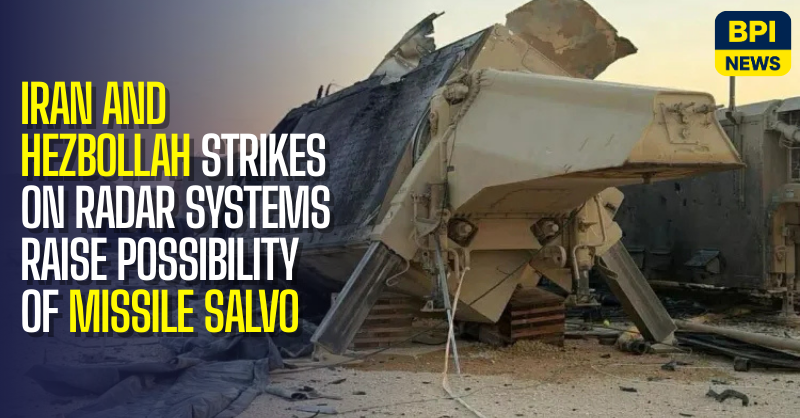
There are increasing signs that Iran and Hezbollah may be deliberately targeting the detection layer of Israel’s missile defence network, the radars, satellite links and communications infrastructure that make interception possible.
Several key systems have reportedly been struck.
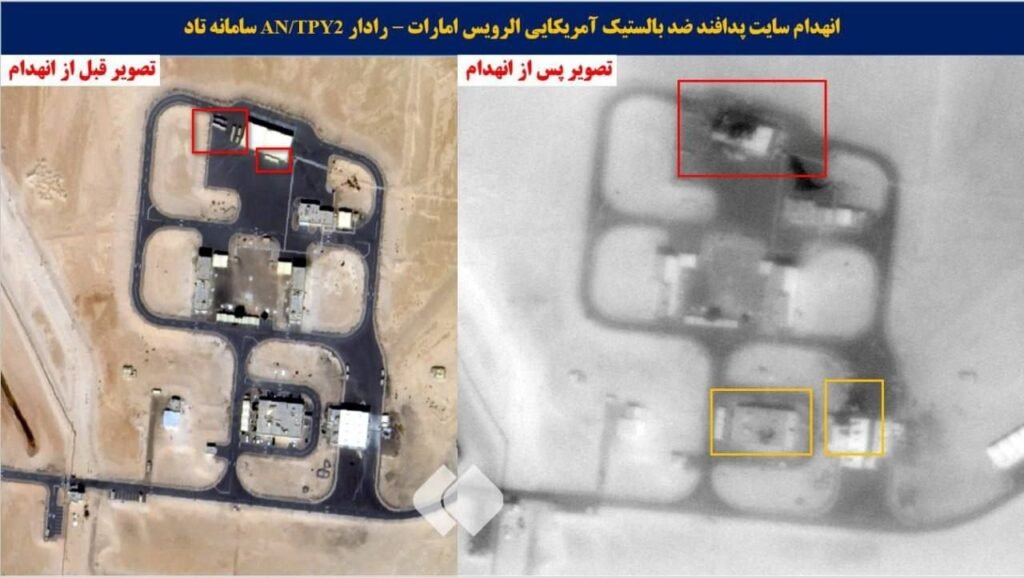
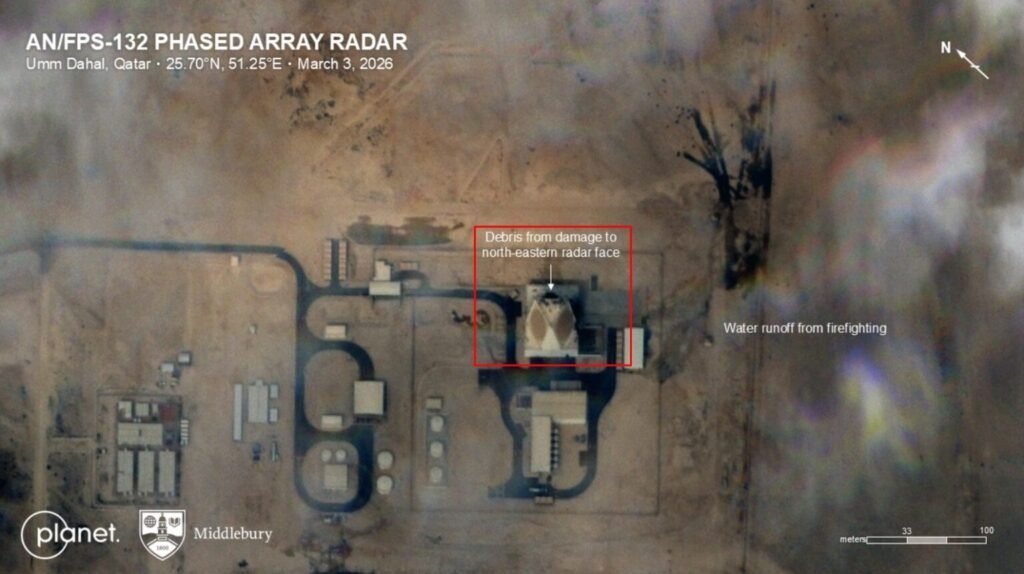
Iran targeted the AN/FPS-132 early-warning radar in Qatar and AN/TPY-2 X-band radars in Jordan, the UAE and Saudi Arabia, systems that previously provided long-range detection and up to 10 minutes of warning for incoming missile attacks.
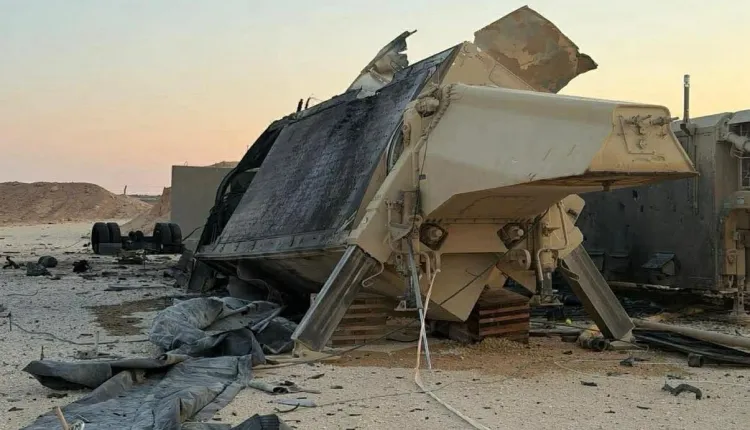
Hezbollah also struck the Ha’Ela Teleport near Beit Shemesh, a critical satellite communications station used for military data links.
In addition, Iranian strikes have targeted Sdot Micha Air Base, which hosts Israel’s Arrow anti-ballistic missile systems and Green Pine radars.
Taken together, this looks less like random targeting and more like a systematic attempt to degrade the radar network that underpins Israel’s missile defence system.
Missile defence works as a chain:
Detection → Tracking → Interception.
If you damage the detection layer, the entire system becomes slower and less effective.
Instead of a seamless radar network, you end up with a patchwork with gaps.
That means:
• shorter warning times
• degraded tracking
• interception batteries exposed to direct hits
There are already reports inside Israel of shorter or sometimes absent missile warnings in recent attacks.
This raises a bigger question, what comes next?
One possibility is preparation for a mass coordinated missile salvo.
In such a scenario:
• Iran launches ballistic missiles
• Hezbollah launches rockets and missiles from Lebanon
• potentially the Houthis launch long-range missiles from Yemen
All timed to arrive simultaneously.
The goal would not be a single strike but to overwhelm interception systems after degrading their sensors.
Another factor highlighted by these strikes is that parts of Israel’s defensive network rely on American systems outside Israel itself, including radars in Qatar and missile defence deployments in the Gulf.
That creates a dependency that is geographically distant and potentially vulnerable.
Missile defence systems are also specialised.
A Patriot battery can intercept certain drones and missiles.
A THAAD battery focuses on high-altitude ballistic threats.
The Arrow system targets long-range ballistic missiles.
No single system covers everything.
And when one air defence battery is used to protect another air defence battery, it is no longer protecting cities or civilian targets.
In a heavily defended environment like Israel, this creates difficult trade-offs.
For now, the strikes appear to be focused on infrastructure rather than maximum damage.
But if the pattern continues, it may indicate that Iran and its allies are shaping the battlefield for a much larger coordinated attack later.
And if that happens, the Houthis are another actor worth keeping an eye on.