

Iran’s recent striking US bases and forces based inside Gulf states looks designed to do more than punish American military infrastructure. By bringing retaliation onto the territory of governments that are trying to avoid full belligerency, Tehran appears to be setting a trap: either the Gulf stays publicly neutral and absorbs the pressure, or it responds in a way that Iran can frame as Arab states aligning with the US and Israel against Iran a framing that can be politically incendiary, especially in Ramadan.
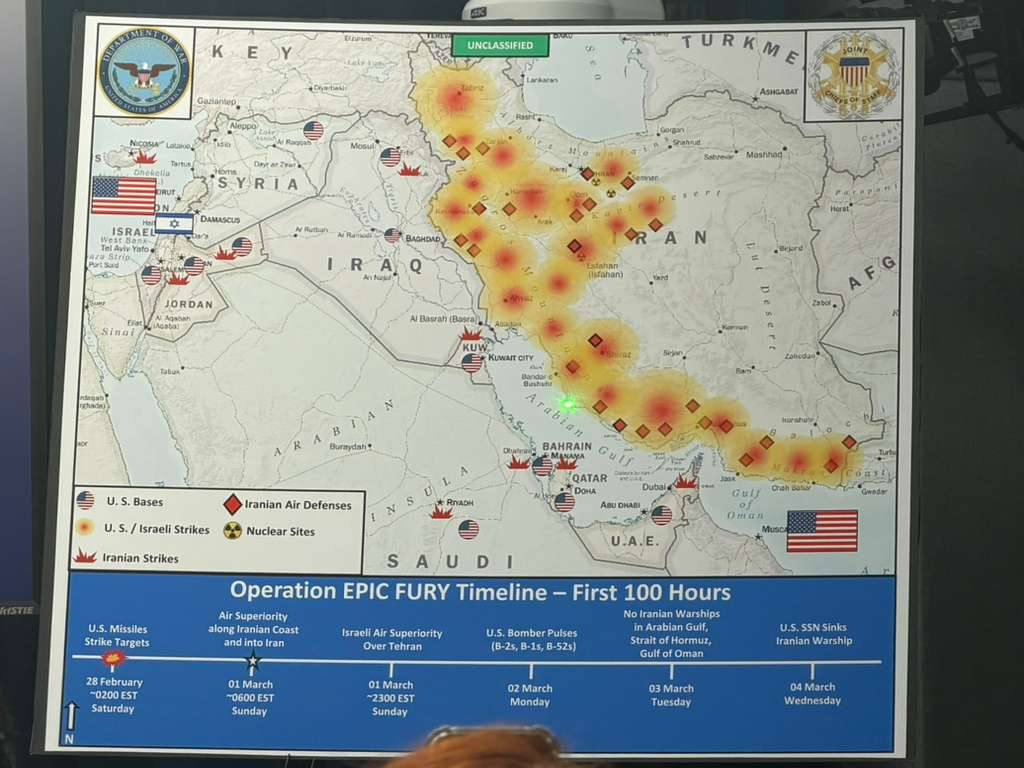
The military facts are already shaping the political terrain. Iran’s retaliatory strikes have been reported across multiple regional states hosting US forces, with interceptions and impacts recorded in Gulf airspace and beyond. The breadth of targets has been described as region-wide, including Gulf states such as Bahrain, Kuwait, Qatar and the UAE. Reuters has warned this pattern risks pushing Gulf capitals into a widening alignment with Washington precisely the outcome Iran can then use for narrative warfare.
A historical precedent: Saddam’s Scuds and the coalition-fracture attempt
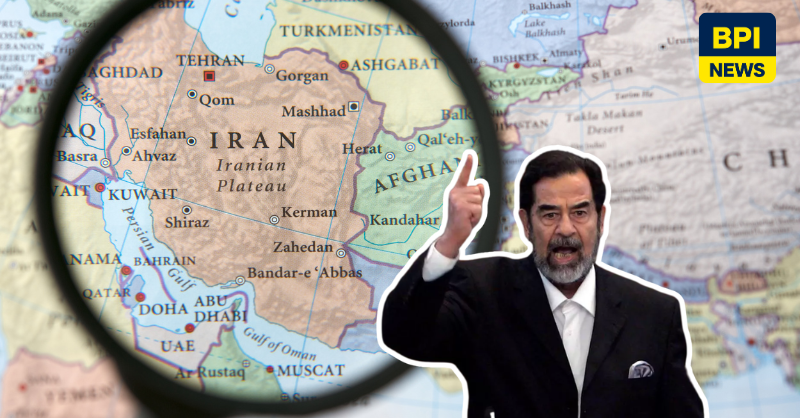
The logic carries a clear historical echo: Saddam Hussein’s decision to fire Scud missiles at Israel in 1991. Iraq launched roughly 42 missiles into Israel during the Gulf War, largely with conventional warheads. The strategic purpose was not for military effect but to provoke an Israeli retaliation that would make Arab governments in the US-led coalition look like they were fighting alongside Israel and potentially splinter the coalition. The United States applied heavy pressure on Israel to restrain itself, specifically to deny Saddam that narrative.
Iran’s present approach is a modern variant of the same coalition-fracture concept but there is a substantial difference. Instead of trying to lure Israel into widening the war, Tehran is trying to pull Gulf hosts into the line of fire and make them choose between strategic cooperation with Israel and domestic political stability.
How Tehran’s logic works in the Gulf
The Gulf states problem is structural. They host major US bases and depend on the American security umbrella, yet their domestic legitimacy rests on appearing to protect national sovereignty and avoid being seen as platforms for wars that provoke public anger. Striking US bases located in the Gulf puts that tension under maximum strain.
Even where Gulf governments have sought to limit their exposure for example, by signalling that their airspace or bases should not be used for attacks Iran’s retaliation collapses the distinction between “host” and “participant” in the public eye. The Guardian has noted Gulf officials have pointed to undertakings that the US would not use bases or airspace to attack Iran, yet Iran’s response still brought the war to their territory.
This is where the point becomes central: if Gulf states are seen to align militarily against Iran while also being perceived as enabling Israel, the domestic backlash could be severe. The underlying driver is not necessarily love for Iran it is public hostility to Israel and strong pro-Palestinian sentiment, which remains widespread across the Arab world and often cuts across sectarian lines. Recent regional polling has found majorities opposing normalisation with Israel and viewing Israel as a leading threat in the region.
Why Ramadan matters to Iran’s narrative warfare
Ramadan amplifies the symbolic stakes. The start of fasting differed by a day in some places due to moon-sighting, but for much of the Gulf Ramadan began around 18 February 2026. In this environment, even limited Gulf military participation can be framed by Tehran as collaboration in aggression during a sacred month language that can inflame opinion.
That does not mean Gulf societies will rally behind Iran. But it does mean that governments risk being politically squeezed from below if they appear to be facilitating Israeli war aims, especially while Gaza remains central to regional emotions. This is why the “revolt risk” is not a theory it is rooted in the persistent gap between state policy and public sentiment on Israel.
Why the Saddam analogy is not exact
There are limits to the comparison and Tehran knows it.
Saddam in 1991 was trying to mobilise an Arab solidarity narrative against Israel. Iran is a Persian, Shia-majority state, and sympathy across Sunni-majority Arab societies is often constrained by sectarian distrust and geopolitical rivalry. That reality reduces the ceiling of support Iran can expect compared with Iraq’s attempt to cloak itself in pan-Arab defiance.
But the comparison still holds in one crucial way, Iran does not need deep affection to weaponise anger at Israel. Anti-Israel and pro-Palestinian feeling can function as a bridge across sectarian divides, particularly when Gulf governments are already sensitive about perceptions of proximity to Israel (whether through formal normalisation, quiet cooperation, or shared strategic objectives).
Cautious reflection
The most dangerous feature of this strategy is that it turns Gulf governments into unwilling protagonists. Even if they try to stay out, they get hit; if they respond, they risk domestic backlash; if they visibly cooperate with Israel, they hand Iran its most potent narrative. Saddam tried to fracture a coalition by provoking Israel into action. Iran’s approach is subtler: it pressures Gulf capitals into choices that can fracture their legitimacy at home and it does so at a moment when public anger over Israel and Gaza is already primed.