

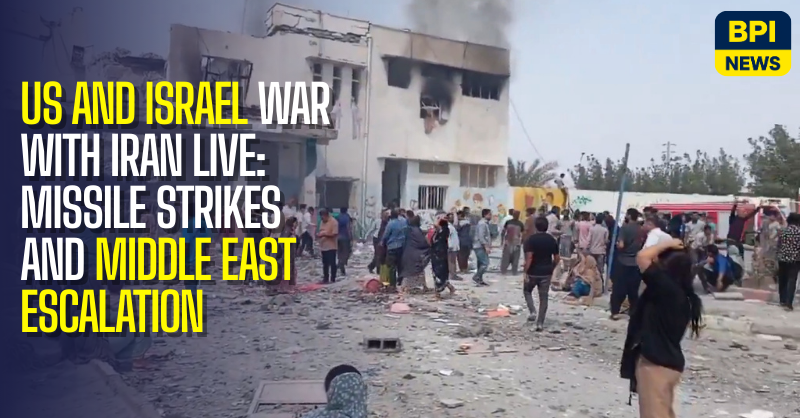
Follow live coverage of the war between the United States and Israel and Iran as missile strikes, drone attacks and regional military escalation unfold across the Middle East.
Live Updates
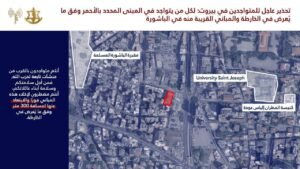
The Israeli military has issued an evacuation warning for a building in central Beirut, marking the first such warning for the area during the current phase of the war.
The warning included a map identifying a specific building and instructed residents in the surrounding area to leave immediately, indicating that an Israeli airstrike could be imminent. The targeted location lies a short drive from Lebanon’s parliament building in the capital.
The area identified in the warning is outside Beirut’s Dahyeh district, which is widely regarded as Hezbollah’s main stronghold in the city. Israeli evacuation notices in the past have primarily focused on Dahyeh or southern Lebanon, making a warning for central Beirut a notable escalation.
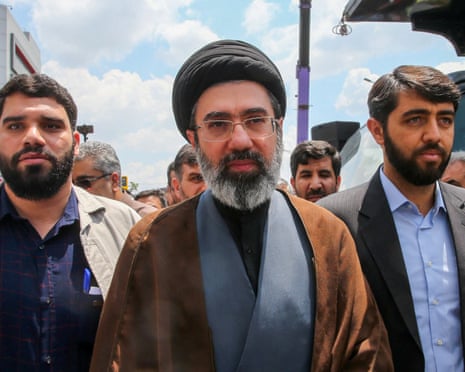
Uncertainty continues to surround the condition of Iran’s Supreme Leader Mojtaba Khamenei, who has not yet appeared publicly since being appointed to the position on 8 March.
Iranian state television has referred to Khamenei as a “veteran of the Ramadan war”, but has not provided any confirmation about whether he sustained injuries during the recent strikes. Reuters has reported that he was “lightly injured”, citing an unnamed Iranian official.
However, other reports circulating in regional and international media have claimed the new Supreme Leader suffered far more serious injuries. One report, citing a source in Tehran, alleged that Khamenei was being treated in intensive care at Sina University Hospital in Tehran and had fallen into a coma following the air strikes.
The same report claimed he may have lost one or more limbs and suffered internal injuries, including possible damage to his liver or stomach. According to that account, part of the hospital had been sealed off by security forces while senior Iranian officials monitored his condition.
Those claims have not been independently verified and have not been confirmed by Iranian authorities. The country is also currently experiencing an internet blackout, making it difficult to verify reports from inside Iran.
Khamenei has not been seen in public, nor has he appeared in photographs or video on Iranian state media, despite it now being several days since he was selected as Iran’s third Supreme Leader.
The leadership transition followed the death of his father, Ayatollah Ali Khamenei, who was killed during the early phase of the war. Iranian reports have also stated that Mojtaba Khamenei’s mother and wife were killed in the same US-Israeli strikes.
Iran’s Supreme Leader is chosen by the Assembly of Experts, an 88-member clerical body responsible for selecting and supervising the country’s highest authority.
In his first message since taking power, which was read aloud on state television rather than delivered in person, Mojtaba Khamenei said he learned about the Assembly of Experts’ decision to appoint him as Supreme Leader at the same time as the public through Iranian state television.
US President Donald Trump has said the United States stands to benefit from rising global oil prices as the war involving Iran continues to affect energy markets.
Writing on his Truth Social platform, Trump said the United States is the world’s largest oil producer and that higher prices increase revenues for the American energy sector.
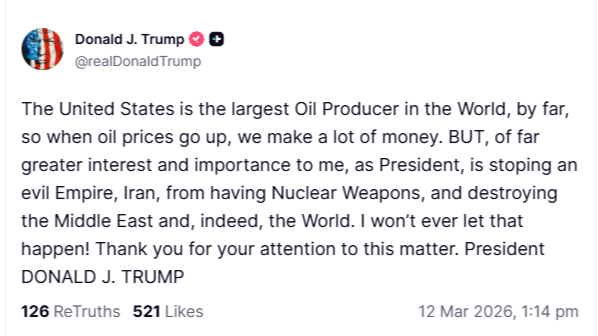
His comments came as oil markets reacted to attacks on commercial shipping in the Gulf and ongoing disruption around the Strait of Hormuz, one of the world’s most important oil transit routes.
Trump added that his primary focus remained preventing Iran from obtaining nuclear weapons. In the same message, he said he would not allow Iran to develop such weapons, warning that doing so could destabilise the Middle East and threaten wider global security.
Iran’s Supreme Leader Mojtaba Khamenei has used his first public statement to outline Tehran’s strategy in the ongoing war, warning that attacks on US forces and regional targets will continue.
In a written address read on Iranian state television, Khamenei said the Strait of Hormuz should remain closed as a means of pressuring the United States and Israel. The waterway is a critical global oil shipping route and its disruption has already contributed to rising energy prices.
Iran’s Supreme Leader Mojtaba Khamenei says the Strait of Hormuz will remain closed, US bases “must be closed” or face attack, and Iran will open new fronts.
— BPI News (@BPINewsOrg) March 12, 2026
He also vowed to avenge civilians killed in the Minab school strike and seek compensation from the US and Israel. pic.twitter.com/U23GIUKJtH
Khamenei also demanded that all US military bases in the region be shut down. He said Gulf Arab states should assist in closing those facilities, warning that American bases would otherwise face continued Iranian attacks.
The Iranian leader said Tehran would open additional fronts in the conflict, although he did not specify what form those operations might take or where they could occur.
Khamenei also vowed that Iran would avenge those he described as “martyrs” killed during the war. He specifically referred to the strike on a school in Minab which Iranian officials say killed at least 165 people, mostly children. A preliminary US inquiry reported this week said American forces were likely responsible for the strike, although Washington has not confirmed responsibility.
The new Supreme Leader said Iran would seek compensation from the United States and Israel for damage caused during the war. He warned that if compensation was not provided, Iran would target their assets.
Despite the threats, Khamenei said Iran was not seeking wider territorial control in the Middle East and maintained that Tehran wanted good relations with neighbouring countries.
He also called for unity among the Iranian population and acknowledged the pressure placed on the country during the conflict, urging citizens to remain resilient as the war continues.
Iran’s Supreme Leader Mojtaba Khamenei has said armed groups in Yemen and Iraq are prepared to support Iran as the regional war continues.
In remarks delivered during his first address since taking power, Khamenei said the “resistance in Yemen will also do the job”, signalling that Yemen-based forces could play a role in the broader confrontation with the United States and its allies.
He added that armed groups in Iraq also “want to help” the Islamic revolution, suggesting Tehran expects support from allied militias operating across the region.
Iran has long maintained ties with a network of allied movements and militias sometimes described as the “Axis of Resistance”, which includes groups in Lebanon, Iraq and Yemen that oppose US and Israeli influence in the Middle East.
Iran’s Supreme Leader Mojtaba Khamenei has called for national unity and continued public participation during the ongoing war, as part of his first address since taking power.
In remarks broadcast on Iranian state television, Khamenei said leading the country after Ayatollah Ruhollah Khomeini and Ayatollah Ali Khamenei was a difficult responsibility, adding that bridging the gap left by previous leaders would require both divine assistance and the support of the Iranian people.
The new leader praised what he described as the “insight and intelligence” of the Iranian population during the conflict, saying their steadfastness and presence during recent days of war had impressed allies and surprised Iran’s adversaries.
Khamenei said the strength of the Islamic Republic depended on the active participation of citizens, arguing that neither leadership nor state institutions could function effectively without public involvement.
He also called for unity across different segments of Iranian society, urging people to overlook political or social disagreements in order to maintain national cohesion during the war.
In the statement broadcast on Iranian state television, Mojtaba Khamenei opened by offering condolences to his father.
Khamenei said he learned of the decision by Iran’s Assembly of Experts to appoint him as Supreme Leader at the same time as the public through state media. The Assembly of Experts is the clerical body responsible for selecting the country’s supreme leader.
During the address, he said assuming a role previously held by Ayatollah Ruhollah Khomeini, the founder of the Islamic Republic, and Ayatollah Ali Khamenei was a difficult responsibility.
The new leader praised his predecessor’s decades of political and religious leadership, describing more than 60 years of struggle in service of the Islamic Republic.
Khamenei also said he had visited his father’s body after his death. He described seeing what he called a sign of determination, stating that one of the former leader’s hands remained clenched after the strike that killed him.
Iran’s Supreme Leader Mojtaba Khamenei has issued his first statement since being appointed to succeed his father, Ayatollah Ali Khamenei, with the address broadcast on Iranian state television.
In the statement, which is being read out on state TV, Khamenei warned that all United States military bases in the region should be closed immediately. He said that if they remain operational, they would be targeted by Iranian attacks.
Khamenei said Iran maintains that it seeks friendly relations with neighbouring countries but stressed that Iranian military operations will continue against US military facilities across the region.
During the address, the new Supreme Leader also stated that the Strait of Hormuz would remain closed. He said the move was intended to place pressure on Iran’s adversaries as the conflict across the Middle East continues.
Conflicting reports have emerged about the condition of Iran’s Supreme Leader Mojtaba Khamenei following recent air strikes in Tehran, with some sources claiming the 56-year-old leader is critically injured while others report far less serious wounds.
One report, citing a source in Tehran, claims Khamenei is in intensive care at Sina University Hospital in the Iranian capital. According to the source, a section of the hospital has been sealed off by security officials while the Supreme Leader receives treatment. The report alleges he is in a coma and has suffered severe injuries, including the loss of a leg and possible internal damage to his liver or stomach.
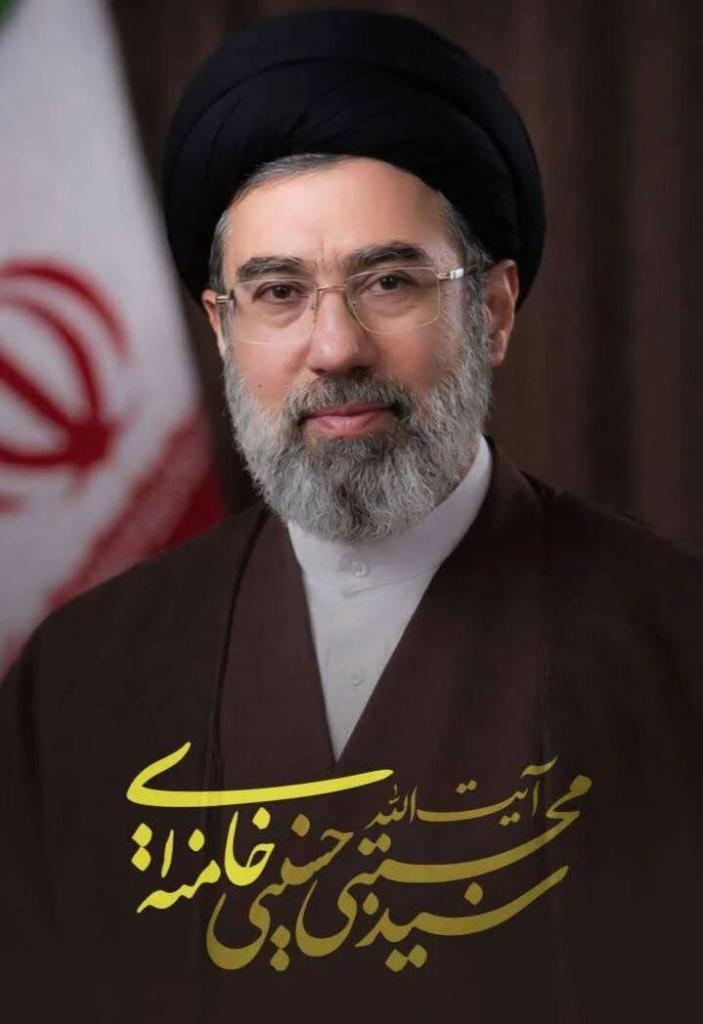
The source reportedly relayed the claims through messages to an exiled Iranian dissident in London, stating that “one or two of his legs have been cut off” following the air strikes. The same report says Khamenei is being treated by Mohammad Reza Zafargjani, Iran’s Minister of Health, Treatment and Medical Education, who is also described as one of the country’s leading trauma surgeons with experience from the Iran-Iraq war.
According to the same account, Zafargjani is believed to be assisted by senior surgeon Dr Mohammad Marashi, a relative by marriage of former Iranian President Akbar Hashemi Rafsanjani. The report also claims Iranian President Masoud Pezeshkian visited the hospital two days ago and is receiving regular briefings on the Supreme Leader’s condition.
However, other reports circulating in regional media have suggested Khamenei suffered far less serious injuries. Those accounts say the Supreme Leader sustained only minor wounds, including a fractured foot, and remains capable of performing his duties.
It is not clear whether Mojtaba Khamenei was injured in the same air strikes that killed his father, Ayatollah Ali Khamenei, on 28 February. Iran is currently under a widespread internet blackout, making independent verification of the claims difficult.
Iranian state media have not confirmed the reports about severe injuries but have referred to Khamenei as a “Jaanbaz of Ramadan”, a Persian phrase meaning a wounded war veteran.
Meanwhile, Iran’s official Telegram channel for the Supreme Leader announced that Mojtaba Khamenei’s first message since assuming leadership will be released shortly.