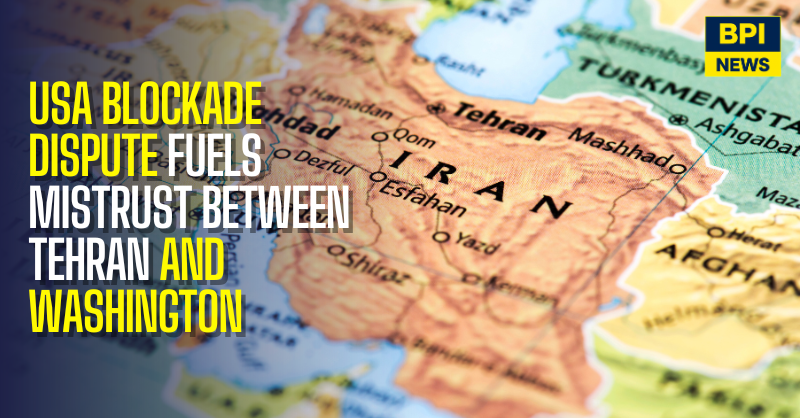
ISLAMABAD – Pakistani sources with knowledge of the negotiations and security arrangements in Islamabad told BPI News that Iran had been informed through mediation channels that the United States would both extend the ceasefire and lift the naval blockade before talks resumed.
In practice, only the ceasefire was extended, while the blockade on Iranian ports and shipping routes remained in place.
Officials familiar with the process said this has contributed to growing mistrust, complicating efforts to bring both sides back to the negotiating table.
The shifting positions have made it difficult for Tehran to establish a clear negotiating stance, with the lack of a stable reference point increasing hesitation within the Iranian leadership.
The situation has also placed Pakistan in a challenging position as mediator. Diplomatic sources indicated that rapidly changing signals from Washington risk undermining the mediating role of Islamabad, as messages conveyed to Tehran may no longer reflect the latest US position.
Within Iran, the inconsistency is being closely scrutinised. Elements of the Islamic Revolutionary Guard Corps (IRGC) view the shifting signals not simply as mixed messaging, but as a potential negotiating tactic aimed at creating ambiguity and internal pressure.
This has fed into a broader internal debate in Tehran over whether current US actions reflect policy uncertainty or a deliberate strategy designed to shape the conditions for future escalation.
The mistrust is further compounded by recent precedent. Iranian officials have repeatedly pointed to past incidents in which military actions took place during periods of diplomatic engagement, reinforcing scepticism about entering negotiations without firm guarantees.
Iranian officials have pointed in particular to recent conflicts, including the June 2025 “Twelve-Day War” and the current escalation, where strikes on Iranian sites took place while diplomatic engagement was ongoing or still being pursued. In Tehran, these episodes are seen as evidence that negotiations have not necessarily provided protection against military action, reinforcing concerns about entering talks without clear guarantees.
Taken together, these factors help explain Iran’s current hesitation, even as preparations for talks continue in Islamabad.