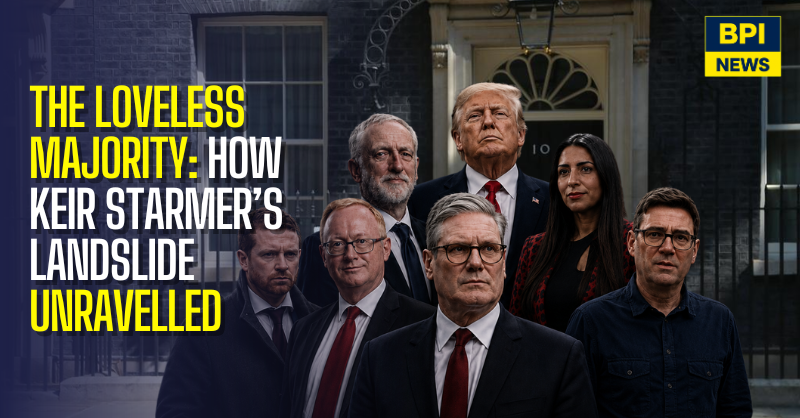
Sir Keir Starmer has resigned as prime minister and Labour leader less than two years after winning one of the largest parliamentary majorities in modern British history, bringing an abrupt end to a premiership that was always broader than it was deep.
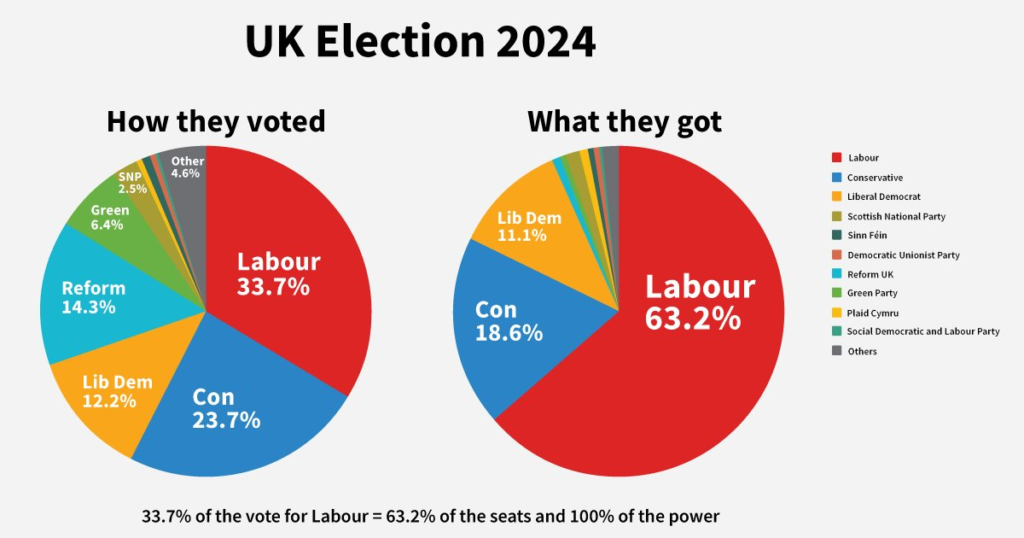
Starmer’s downfall exposes the weakness hidden inside his 2024 landslide. Labour won 411 seats and a majority of more than 170, but did so on just 33.7% of the vote the lowest vote share of any governing party in modern British electoral history. The Conservatives collapsed, Reform split the right, the Liberal Democrats surged in Conservative areas, and millions of voters used Labour as a vehicle to remove the Tories rather than as an expression of enthusiasm for Starmer himself.
That was the reality behind the so-called landslide. It was a huge majority, but not a loved one. Voters did not fall in love with Starmerism. They rejected everything else but Starmer puffed out his chest instead of looking out at reality.
Reuters described Starmer’s resignation as the end of an “unloved and directionless” premiership, with his government struggling to define itself after victory and losing authority as public and internal confidence collapsed.
A Landslide That Was Overhyped From The Beginning
Starmer and his allies treated the 2024 result as proof that their project had been vindicated: move Labour right, crush the left, reassure business, abandon radicalism and present managerial competence as ideology.
But the numbers told a different story.
Labour’s seat total was enormous because Britain’s first-past-the-post system amplified a fragmented vote. Just to put it into perspective, Labour’s Terry Jermy was elected in South West Norfolk with only 26.7% of the vote, while 73.3% of voters chose someone else.
Its national vote share barely resembled the mandate implied by the parliamentary arithmetic. The party took power with a majority that looked historic on paper but fragile in public sentiment.
That fragility became clear once Starmer entered government. A leader who had been sold as serious, disciplined and electable struggled to turn victory into affection, authority or a clear national mission.
What was meant to be a transformative government instead became associated with caution, indecision and an absence of clear direction, with Downing Street often looking paralysed by the very challenges it had promised to tackle.
The majority gave Starmer control of Parliament. It did not give him control of the country’s mood.
The Labour Together Project That Built Starmer
Starmer’s rise was not accidental. It was carefully engineered by the Labour right and by the network around Labour Together, the think tank and organising hub associated with Morgan McSweeney, who later became one of Starmer’s most powerful advisers.
Yet McSweeney’s own downfall came after he championed the appointment of Peter Mandelson, a political heavyweight whose long-standing association with Jeffrey Epstein reignited scrutiny and controversy. In the end, both men who believed they could shape British politics in their own image ended up resigning.
They can now sit on a beach and wonder what might have been, but their greatest mistake may have been believing they knew better than the public they sought to govern.
Labour Together had emerged during and after the Corbyn years as a vehicle for rebuilding the party around a different political project. Its strategy was to move Labour away from the left, rebuild the parliamentary party around candidates loyal to the leadership and ensure the Corbyn era could not return.
The Guardian reported in 2025 that Labour had clarified McSweeney’s salary during Starmer’s 2020 leadership campaign was paid by the campaign itself, not Labour Together, following Conservative allegations about undeclared support. The Electoral Commission had previously fined Labour Together over late donation declarations, although it later said there was no evidence requiring a new investigation beyond the earlier penalties.
That controversy mattered because it showed how central the Labour Together network had become to the Starmer operation. The project was not simply about electing a leader. It was about remaking Labour’s internal balance of power.
How Starmer Shut Corbyn Out
The clearest symbol of that internal project was Jeremy Corbyn.
Starmer had served in Corbyn’s shadow cabinet and campaigned for Labour under his leadership. But once he became leader, he moved decisively to separate Labour from the Corbyn era.
Corbyn was blocked from standing as a Labour candidate in Islington North and later fought the seat as an independent, winning against Labour’s official candidate. His victory ended Labour’s long hold on the constituency and came after his expulsion from the party.
Starmer’s supporters argued this was necessary to restore Labour’s credibility and distance the party from the controversies of the Corbyn years. His critics saw it as the defining betrayal: a leader elected on unity and continuity with parts of the left programme, who then used control of the party machine to remove the man whose movement had transformed Labour’s membership.
The point was not only Corbyn himself. It was the message sent to the left: the party had changed ownership.
What happened next offered another glimpse into the limits of Starmer’s much-vaunted mandate. Corbyn was cast out of the party he had led, yet the Labour vote share he secured in the 2017 general election was significantly higher than the share that delivered Starmer his landslide majority in 2024.
For all the glory that followed Labour’s return to power, it was a reminder that Starmer’s victory owed as much to the mechanics of first-past-the-post and a fragmented opposition as it did to any surge of public enthusiasm for his leadership but Starmer believed the hype.
Left-Wing Candidates Blocked And Allies Placed In Safe Seats
The 2024 candidate selection process reinforced that message.
Several left-wing or left-associated figures were blocked, suspended or pushed aside during the final stages before the general election. Lloyd Russell-Moyle was blocked from restanding in Brighton Kemptown. Faiza Shaheen was prevented from standing in Chingford and Woodford Green. Diane Abbott’s future was thrown into doubt during a highly public row, before she was eventually allowed to stand.
At the same time, Starmer allies and figures associated with the Labour right were selected for winnable or safe seats. LabourList reported that senior Starmer allies Josh Simons and Luke Akehurst were picked as candidates, while Westminster journalist Paul Waugh, Camden council leader Georgia Gould and a former Rachel Reeves adviser were also handed candidacies during the same period of selection turmoil.
Akehurst’s selection proved particularly controversial. A long-time organiser on Labour’s right and director of the pro-Israel group We Believe in Israel, he had spent years battling the Labour left and was one of the party’s most outspoken defenders of Israel during the Gaza war. He described Israel’s actions in Gaza as “proportionate”, a position that drew fierce criticism from many Labour members and pro-Palestinian campaigners.
To critics, the contrast was impossible to ignore. While left-wing and pro-Palestinian figures such as Faiza Shaheen, Lloyd Russell-Moyle and others found themselves blocked, suspended or pushed aside, candidates closely aligned with Starmer’s leadership and more supportive of Israel were being elevated into winnable seats.
Whether by design or coincidence, many on the left concluded that the message was unmistakable: dissent on Gaza could end a political career, while loyalty to the leadership’s position opened doors. The argument was no longer simply about party discipline. It was about who Labour was prepared to represent and whose voices it was willing to exclude.
The Guardian reported at the time that key allies of Starmer were expected to be lined up for safe seats after a series of last-minute retirements by sitting MPs.
To Starmer’s allies, this was discipline. To his critics, it was a purge.
Either way, the result was a parliamentary Labour Party far more loyal to the leadership than the membership mood that had existed under Corbyn. Starmer won power with a party shaped in his image and then discovered that loyalty built through control is not the same as affection built through belief.
Labour Taken To The Right
Starmer’s political offer was built on reassurance.
He softened or abandoned many of the promises that had helped him win the Labour leadership in 2020. He moved Labour away from nationalisation, away from left economic populism, away from open confrontation with wealth and corporate power, and towards a politics designed to comfort the establishment, business and voters exhausted by Conservative chaos.
The approach worked electorally in 2024 because the Conservatives had collapsed. But once in office, it left Labour with a problem: after years of saying what it was not, the government struggled to explain what it was.
For many on the left, Starmer’s premiership confirmed what they had long argued that Labour had not won because the country had embraced Starmerism, but because voters were desperate to end Conservative rule.
That distinction became fatal when the government failed to inspire.
Gaza Became A Moral And Political Breaking Point
Starmer’s position on Israel and Gaza alienated large parts of Labour’s traditional base, including Muslim voters, younger voters, left-wing members and human rights campaigners.
In October 2023, during an LBC interview, Starmer was asked whether cutting off power and water to Gaza was appropriate. He replied: “I think that Israel does have that right. It is an ongoing situation.” He added: “Obviously, everything should be done within international law.” Labour later tried to clarify his comments, but the damage had already been done.
The quote followed him.
For critics, it became the moment Starmer appeared to place political positioning and alliance management above basic humanitarian concern. For many British Muslims and pro-Palestinian voters, it was not a gaffe that could be managed. It was a defining statement.
Labour later suffered visible electoral damage in areas with large Muslim populations, while independent and pro-Gaza candidates demonstrated that Starmer’s majority had not erased deep anger inside communities Labour had once taken for granted.
The warning signs appeared quickly. Independent candidates campaigning heavily on Gaza made significant gains in local elections and parliamentary contests, often in areas where Labour had once considered its support secure.
In the 2024 general election, Jeremy Corbyn retained Islington North as an independent, while Shockat Adam unseated Labour’s Jonathan Ashworth in Leicester South. Adnan Hussain won Blackburn, Ayoub Khan captured Birmingham Perry Barr, and Iqbal Mohamed took Dewsbury and Batley, all running outside Labour while benefiting from anger over Gaza.
The trend continued beyond the general election. Local election results in parts of Birmingham, Leicester, Bradford, Oldham and other urban areas with substantial Muslim populations repeatedly showed Labour losing support to independents and smaller parties campaigning on Palestine. What had initially been dismissed by some in Westminster as a temporary backlash increasingly appeared to be a longer-term fracture in Labour’s relationship with parts of its traditional base.
The damage was not confined to heavily Muslim areas. Many younger voters, students and left-leaning professionals who had once formed part of Labour’s broader progressive coalition also became disillusioned. In cities and university towns that had historically provided fertile ground for Labour support, Gaza became a symbol of a wider complaint: that Starmer’s Labour was more concerned with reassuring establishment opinion than reflecting the values of many of its own supporters.
The Trump Factor And The Final Humiliation
Starmer also tried to manage the return of Donald Trump by adopting a posture of careful accommodation.
His government prioritised maintaining close relations with Washington, pursuing trade agreements, increasing defence spending and repeatedly emphasising the importance of the transatlantic alliance. Even when disagreements emerged, Downing Street generally sought to avoid public confrontation with the White House.
The strategy began to unravel during the Iran conflict. Starmer refused to allow British bases to be used in the initial US strikes against Iran, arguing that Britain should not become directly involved in the offensive operation. The decision infuriated Trump, who complained that the refusal had forced American aircraft to take longer routes and publicly questioned Britain’s commitment to the alliance.
Trump’s criticism soon became personal. Speaking after the dispute, he said he was “not happy” with Britain’s position and dismissed Starmer with a remark that cut particularly deeply in British politics: “Unfortunately this is not Winston Churchill that we’re dealing with.”
For a prime minister who had spent months trying to build a workable relationship with Washington, it was a public humiliation. The careful diplomacy, the avoidance of confrontation and the effort to remain in Trump’s good books had not secured influence or respect. When the first major test came, the relationship fractured anyway.
The calculation was understandable. Trump has long been known to respond favourably to leaders who flatter him, praise his achievements and make him feel respected on the world stage. Many politicians have concluded that maintaining his goodwill requires careful management of his ego as much as careful diplomacy.
But if that was Starmer’s strategy, it ultimately failed. Rather than strengthening his standing, the effort often left him looking weak without securing the loyalty he sought in return and one thing we know about Trump is that he does not respect the weak.
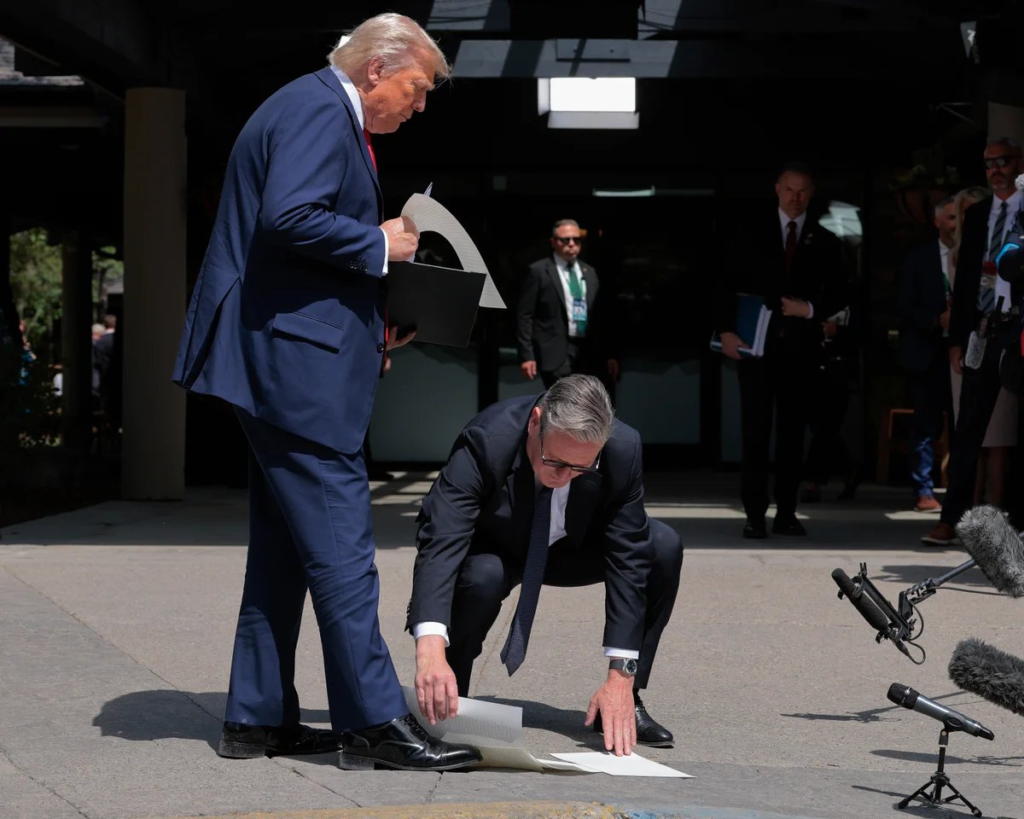
The final humiliation came when Trump effectively announced Starmer’s political end before Starmer himself had formally done so.
Writing on Truth Social, Trump said: “Keir Starmer will resign as Prime Minister of The United Kingdom. He failed badly on two very important subjects — IMMIGRATION AND ENERGY (OPEN NORTH SEA OIL!). I wish him well!”.
For a prime minister who had spent so much political capital cultivating relations with Washington, it was a brutal send-off. Starmer’s attempt to balance principle, diplomacy and alliance management ended with Trump first declaring that he was no Churchill and then effectively announcing his departure before he could do so himself.
The Toolmaker’s Son Became The Tool Of Others
Starmer often spoke about his father being a toolmaker, using the story as a way to ground his politics in working-class respectability, discipline and service.
But the tragedy of his leadership is that the toolmaker’s son became the tool of too many other projects.
He was used by the Labour right to end the Corbyn era. He was used by anti-Tory voters to remove the Conservatives. He was used by parts of the establishment to stabilise Britain after years of chaos. He was used by foreign leaders who wanted a predictable British prime minister. And once he stopped being useful, he was shown the door.
That is the sharper truth behind the resignation.
Starmer thought the majority meant he had power. In reality, it meant he had been hired for a job: remove the Tories, contain the left, reassure the system. Once he failed to turn that into a living political movement, the majority became hollow.
A Loveless Majority Was Never Enough
Starmer’s allies believed electability would be enough.
They believed that if Labour looked disciplined, patriotic, centrist and safe, voters would reward it with durable authority. They believed the left could be neutralised, the base managed, Muslim voters contained, unions kept close and the right held off through competence.
For one election, that calculation worked.
But it did not create loyalty. It did not create energy. It did not create a movement willing to defend Starmer when power became difficult.
By the end, the people who had once praised his ruthlessness began to see it as emptiness. The machine that had elevated him no longer could save him and was crumbling. The MPs who owed their seats to the Starmer era moved on. The voters who had lent him support withdrew it.
His majority was loveless because it was built on absence: no Tory competence, no Corbyn left, no radical promise, no deep emotional bond.
It was enough to win power. It was not enough to keep it.
The final irony arrived in the form of Andy Burnham. For months, Burnham’s supporters accused the Starmer leadership of trying to keep him away from Westminster. Burnham was blocked from contesting the Gorton and Denton by-election, a move that many in Labour saw as an attempt to prevent a potential rival from gaining a parliamentary platform.
Yet the man once viewed as a threat on the outside became the man waiting on the inside. After Burnham’s victory in Makerfield and growing unrest within Labour’s ranks, MPs who had spent years backing Starmer began rallying around the Greater Manchester mayor instead. Senior figures openly endorsed Burnham as Starmer’s successor and pressure on the Prime Minister became impossible to resist.
Politics can be brutally transactional. The tool that had served its purpose was replaced by another. The leader who had reshaped Labour in his own image found himself discarded by the same machine that once protected him.
The “King of the North”, as Burnham is often known, became the final verdict on the Starmer project. Once Burnham won Makerfield, the writing was on the wall. Labour’s attention shifted almost instantly from defending Starmer to discussing who would replace him.
The man who had spent years consolidating power, sidelining opponents and shaping the party in his own image discovered how quickly political loyalty evaporates. Before Burnham had even entered Westminster, he had already become the future, and Starmer had become the past.
He cast out Corbyn. He broke the left. He filled Parliament with loyalists. And when his moment came, none of it mattered. The coalition that used him as a tool discarded him, the movement he dismantled never mourned him, and the country never truly loved him. Starmer leaves alone, while the King of the North rides south towards Downing Street.