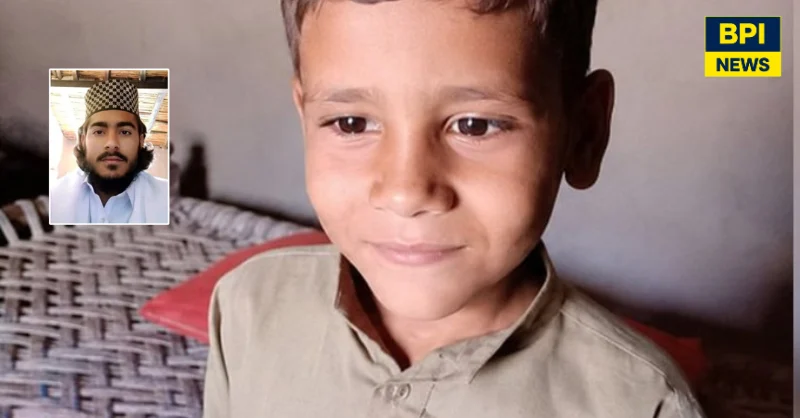
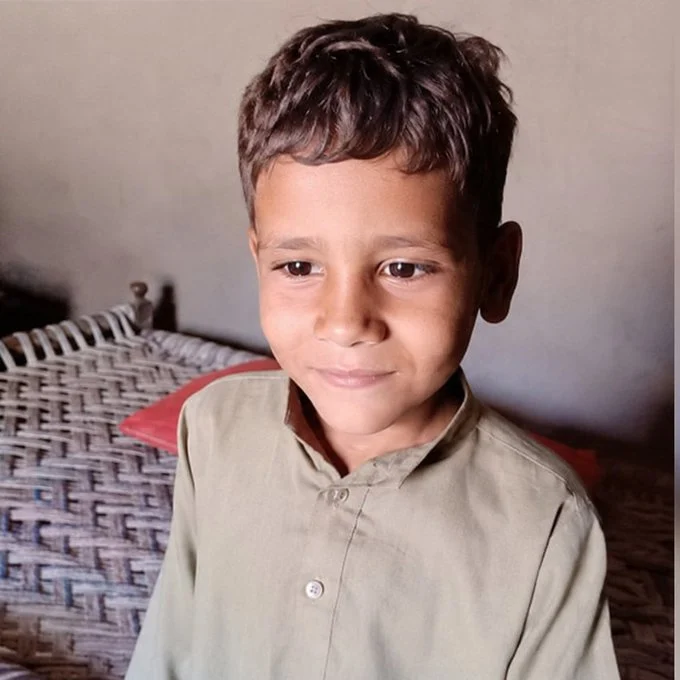
Muhammad Faizan’s father sent him to a madrassa believing he would be looked after. The teacher came from his village. Food and accommodation were promised. His son would study the Quran.
The allegations that followed Faizan’s death are now before the criminal justice system. But the questions raised by this case cannot all be answered by arresting a teacher.
Who was responsible for checking on the child? Who could contact his father? What happened when other adults learnt that he had been beaten? Who had the authority to take him to hospital, remove him from the teacher’s care or call the police?
These are questions every institution housing children should be able to answer before admitting its first pupil.
BPI News has seen the FIR in Faizan’s case and reviewed Haji Muhammad Sharif’s subsequent interview with journalist Abrar Qureshi. The father alleges a severe beating followed by concealment and delayed medical treatment. Sharif disputes deliberate wrongdoing by management but acknowledges failures in communication.
That is why BPI News is examining the wider system. Faizan’s case raises concerns about the care of children living away from home, the supervision of teachers, the responsibilities of seminary leaders and the value of registration when it is not accompanied by effective inspection.
Pakistan’s politicians have fought hard over which government office should register madrassas. The protection of the children inside them deserves at least as much political effort.
What Faizan’s Case Exposes
According to the FIR, Muhammad Sultan alleges that Qari Sanaullah beat his son for failing to memorise his lessons. He also alleges that people connected to different branches of the seminary network became involved afterwards and delayed appropriate treatment.
Those allegations remain to be proved. BPI News has not reviewed a signed post-mortem report establishing the final medical cause of death, and sexual abuse must not be presented as an established fact in this case.
But Sharif’s own account raises concerns independently of the contested allegations.
In the interview, he said he learnt of the beating after returning from Britain on 22 August, before Faizan’s reported death on 24 August. He maintained that he did not understand how badly the child was injured and had never seen him.
He acknowledged that management had not informed him while he was abroad. Asked whether anyone had been dismissed over that failure, he said no.
Sharif also said he asked for the father’s telephone number and was told the admission paperwork was at the Nalla Muslimana institution.
A child protection system cannot depend on the head of an organisation returning from abroad, receiving an accurate verbal account and locating a form before a parent can be contacted.
Nor should an injured child’s access to care depend on whether the teacher accused of hurting him agrees to hand him over.
Sharif says others offered to take Faizan for treatment, but Sanaullah insisted on taking responsibility himself. Investigators will need to establish what happened. For any institution reviewing its procedures, however, the lesson is already clear: an allegation against a teacher must trigger an independent response.
Other Cases Have Raised Similar Questions
Faizan’s death is not the first reported case to bring violence in a seminary into public view.
In Raiwind in June 2023, an eight-year-old residential pupil died after an alleged sexual assault and fall from a seminary rooftop. According to the FIR described in contemporaneous reporting, the teacher was accused of throwing the child from the roof to conceal the assault. Police reported arresting the suspect.
In Swat in July 2025, police investigated the death of a 13-year-old seminary pupil following an alleged beating by teachers. Reporting by Nukta, based on interviews with police and the family, said the boy had previously resisted returning and that his uncle sought assurances he would not be beaten.
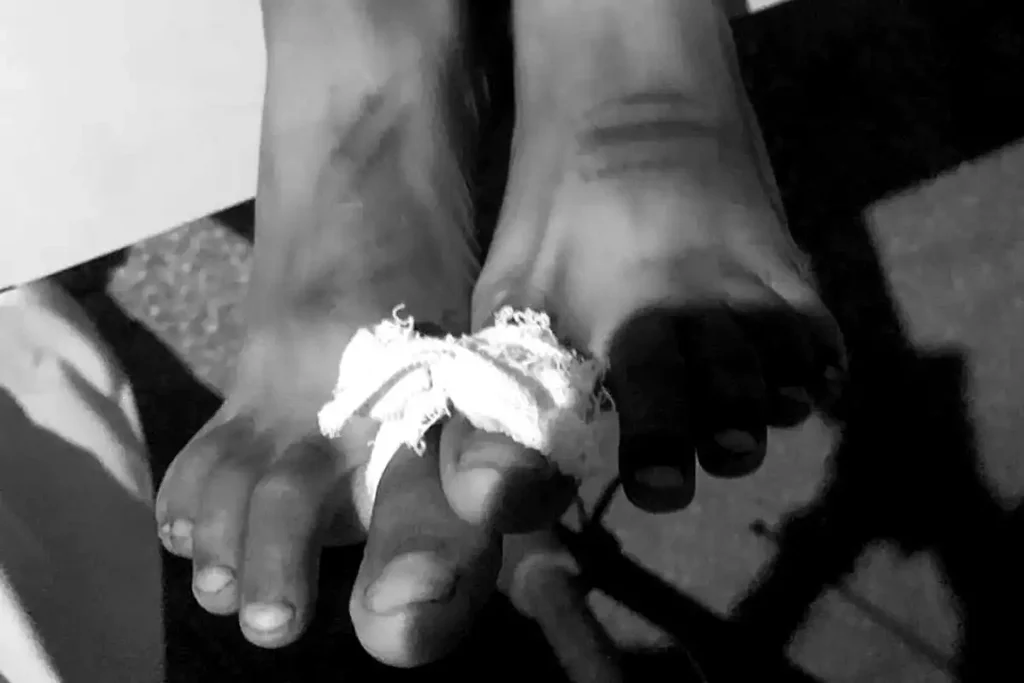
The station house officer told that outlet that investigators were also examining an allegation of attempted sexual abuse and possible retaliation after the child disclosed it. Authorities arranged for other pupils to be collected by their families.
These are accounts of allegations and investigations, not a substitute for court findings. They nevertheless show why safeguards must cover more than the act of violence itself.
A child may express fear before an incident. A relative may seek reassurance. Other adults may become aware of a complaint. The opportunity to protect the child can arise well before police are called.
The response to a disclosure must therefore be part of any serious investigation. Who listened? Who checked? Was the child returned to the person he feared? Were other pupils interviewed safely?
What the Numbers Can and Cannot Tell Us
Pakistan does not have a sufficiently reliable national measure of how many madrassa pupils experience physical or sexual abuse.
That gap should prevent exaggerated claims about the entire sector. It should also prevent assurances that the problem is insignificant.
Sahil’s Cruel Numbers monitoring recorded 3,364 reported child-abuse cases in 2024. Its 2025 findings, reported on publication, put the figure at 3,630 an increase of approximately eight per cent.
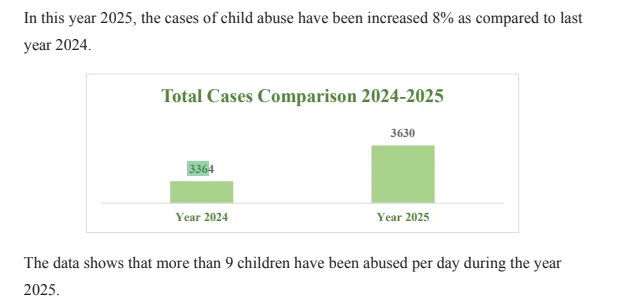
These totals cover several categories, including sexual abuse, abduction, missing children and child marriage. They are drawn from reported cases, principally newspaper monitoring. They are not a count of abuse in madrassas, and they are not a survey measuring the proportion of Pakistani children who have been abused.
An increase in reported cases can reflect changes in disclosure, media coverage and recording as well as changes in offending. Cases that never reach a newspaper remain outside the count.
Separate household evidence shows how widely violent discipline is accepted beyond religious institutions. The National Commission on the Rights of Child’s 2024 report reproduces provincial survey figures showing that roughly four in five children in Punjab, Sindh and Khyber Pakhtunkhwa experienced some form of violent discipline. The surveys were conducted in different years and concern household discipline, not madrassa abuse.
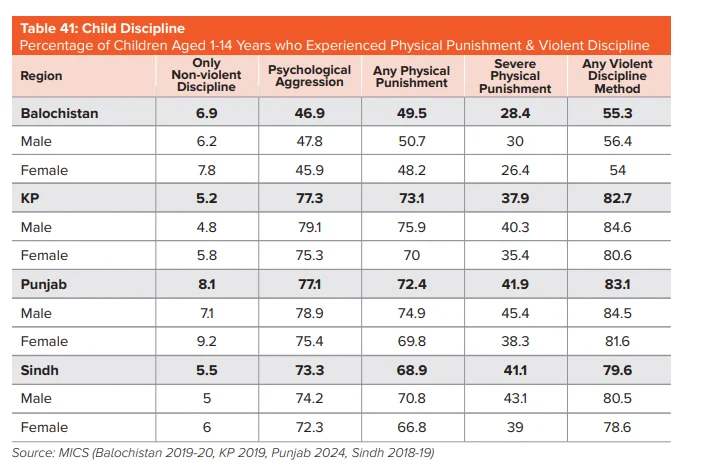
The relevance is cultural. A teacher using violence may be operating in a society where adults already regard hitting children as an ordinary way to secure obedience.
That does not excuse the teacher. It explains why prevention must reach parents, staff and governing bodies as well as police.
Why Families Send Children Away
It would be wrong to describe every madrassa family as poor or every admission as an act of desperation. Religious conviction, family tradition and the wish for a child to memorise the Quran are important reasons in their own right.
But food, accommodation and affordability also matter.
UNICEF estimates that 25.1 million Pakistani children aged five to 16 are out of school, approximately 35 per cent of that age group. That figure does not explain every family’s choice, but it shows the scale of the state’s failure to provide accessible education.
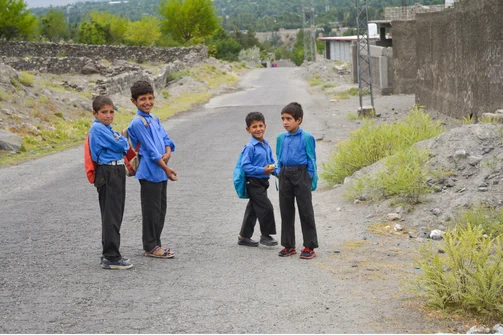
For a household struggling with transport costs, meals and school expenses, an institution offering education and accommodation can meet several needs at once.
This makes the relationship unequal. A parent challenging the institution may fear losing the child’s place or being unable to afford an alternative. Distance makes visiting difficult. If the teacher controls telephone contact, the family may hear about the child’s welfare only through that teacher.
The answer is not to blame parents for accepting help. It is to make accepting help safer.
Government support for nearby schools, meals, transport and family income would give parents greater choice. Religious education could continue without requiring every child to live away from home.
Where boarding is necessary or chosen, the standard of care should be higher because the institution has responsibility for the child throughout the day and night.
When Discipline Becomes Permission to Hurt
There is a difference between teaching a child and frightening one into compliance.
A child struggling to memorise a passage may need more time, a different teaching method or help with a learning difficulty. Physical punishment offers none of those things.
Yet where beating is treated as part of education, warning signs can be minimised. Bruises become evidence of strictness. Fear becomes disobedience. A child who refuses to return is described as difficult before anyone asks what happened.
Religious authority can make challenging an adult harder. A pupil may believe that questioning a teacher is disrespectful. A parent may hesitate to challenge someone regarded as a scholar or community benefactor.
These are risks associated with unchecked authority, not an indictment of religious teaching. They can arise in secular boarding schools, sports organisations and children’s homes too.
The protection is the same: nobody’s standing should place them beyond scrutiny.
Teachers also need training in non-violent classroom management, appropriate supervision and workable conditions. Low pay and inadequate preparation can undermine teaching, but neither provides an excuse for abuse.
Sexual Abuse Requires a Safe Way to Speak
Sexual abuse brings additional obstacles to disclosure.
A child may lack the words to describe it, fear punishment or believe the offender’s threats. Families may worry about stigma. Boys may find that adults wrongly treat sexual victimisation as a source of shame rather than a crime committed against them.
Institutions should teach children, in age-appropriate language, about bodily boundaries, unsafe behaviour and how to seek help. That teaching should make clear that a child is never responsible for an adult’s abuse.
Reporting cannot depend entirely on approaching the head teacher. The alleged offender may be the head teacher, a relative of the administrator or someone the management is reluctant to challenge.
Children need access to an adult outside that chain of authority. Inspectors should be able to speak to pupils privately. Parents should have regular contact that is not monitored by the teacher.
Complaints must be investigated fairly, with evidence preserved and the accused afforded due process. Protecting a child during that investigation does not require waiting for a criminal conviction.
What Madrassa Registration Actually Means
The legislation associated with Maulana Fazlur Rehman concerns religious seminaries, rather than a general “mosque charter”.
Several arrangements are often confused in this debate: legal registration, affiliation with a religious examination board, recognition of qualifications, management of property and supervision of children.
They are not interchangeable.
Registration under societies legislation records an organisation and its governing arrangements. Affiliation with a madrassa board may concern examinations and religious education. Neither, by itself, tells a parent whether a dormitory has been inspected or a teacher checked.
In 2019, the PTI government reached an agreement with seminary representatives to bring registration through the federal education ministry’s Directorate General of Religious Education, or DGRE.
The stated purpose included bringing madrassa pupils into the wider education system and supporting contemporary subjects. The DGRE established a network of regional offices.
By December 2024, figures presented to the Senate recorded 17,738 DGRE-registered seminaries with approximately 2.25 million students. Those were figures for that registration system at that time, not a complete current census of every religious teaching institution.
Registration is valuable. It gives authorities somewhere to begin. The problem comes when the existence of a record is mistaken for evidence of safe care.
What Fazlur Rehman Campaigned For
Fazlur Rehman and JUI-F pressed for a route under the Societies Registration Act, arguing for legal certainty and seminary autonomy and against departmental interference.
His position was not simply that madrassas should operate without registration. The dispute concerned the authority registering them and the conditions attached.
The issue became part of the bargaining surrounding the 26th Constitutional Amendment in October 2024. Contemporary reporting described the madrassa legislation as one of JUI-F’s conditions for supporting the constitutional package.
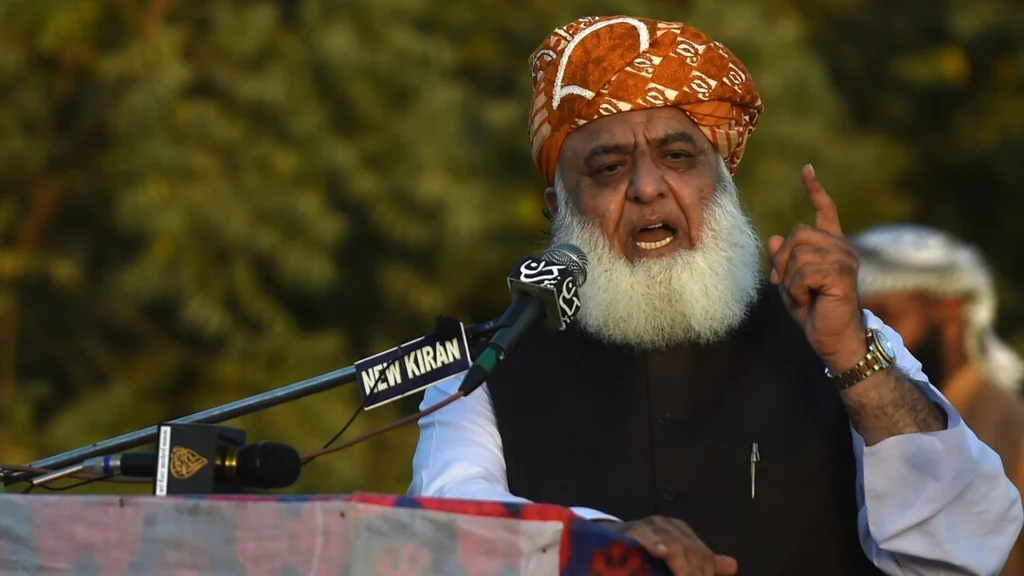
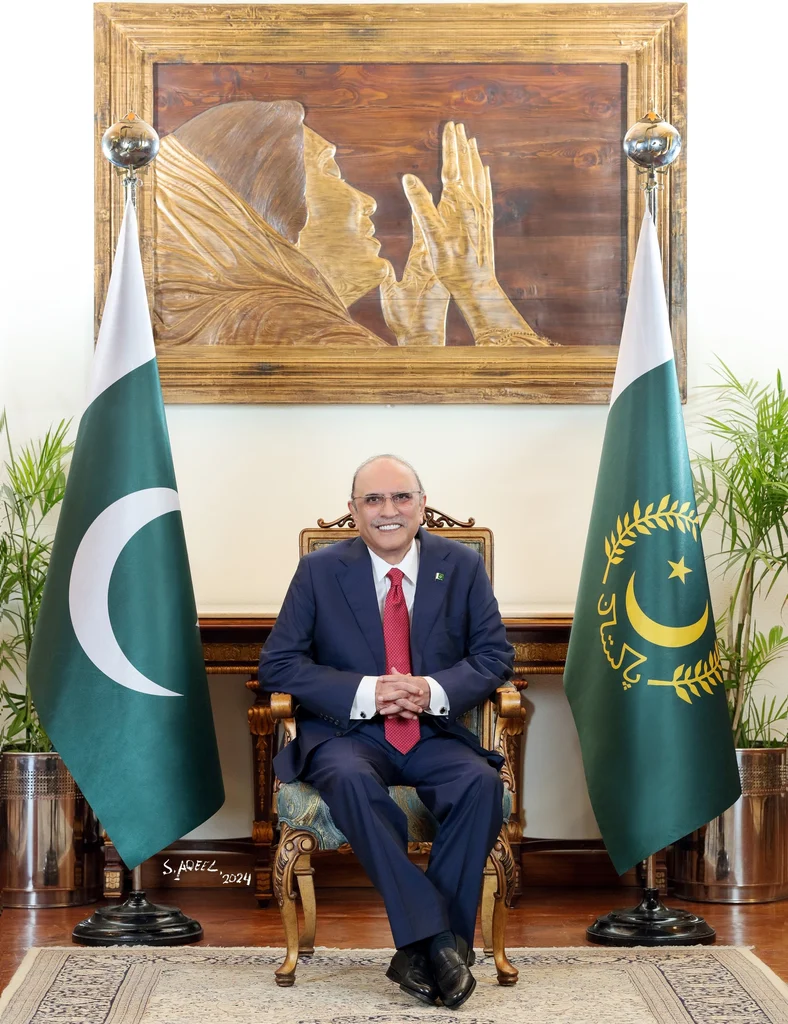
When President Asif Ali Zardari raised objections and the legislation stalled, Fazlur Rehman demanded its notification and threatened to take the dispute outside Parliament.
President Zardari ultimately assented in late December 2024. A companion measure preserved an education-ministry option, and a further Act in 2025 expressly recognised registration through the DGRE.
It is therefore inaccurate to say that the final settlement simply removed the education ministry from madrassa registration.
There is also no evidence presented here that Fazlur Rehman’s registration campaign caused Faizan’s death. The legitimate editorial question is whether the political effort devoted to institutional autonomy was matched by enforceable protection for pupils.
What the Law Contains
The amended federal framework includes educational reporting, audited accounts and restrictions on teaching or publishing material promoting militancy, sectarianism or religious hatred. It also provides for contemporary subjects through a phased approach linked to resources.
It allows a madrassa with multiple campuses to have one registration and protects against duplicate registration under other laws.
The original 2024 provisions set out a six-month period for existing unregistered institutions and one year for new ones. The 2025 amendment changed the wording to accommodate alternative registration and expressly recognised the DGRE route.
The text’s definition of a Deeni Madrasa includes religious institutions providing boarding and lodging. It should not be casually described as a comprehensive licensing system for every mosque-based lesson.
The 2025 federal amendment expressly extends to Islamabad Capital Territory. It cannot automatically be treated as the registration law governing every institution in Punjab, Sindh, Khyber Pakhtunkhwa and Balochistan.
That matters here: Kallar Syedan is in Punjab.
In June 2026, reporting described a Punjab bill proposing recognition of existing federal education-ministry registration without a fresh provincial application. Its final enactment has not been verified for this editorial.
As recently as May 2026, the federal government was still encouraging seminaries to register with DGRE to obtain educational and technical support. The education route plainly remains active.
One Registration Must Not Mean Uninspected Branches
The provision for one registration across multiple campuses is particularly relevant to the questions raised by Faizan’s case.
Sharif described a network of approximately 35 seminaries. A central registration may simplify administration for such an organisation. It does not establish what is happening at each address.
Every branch needs an identifiable manager, accurate pupil records, accessible parental contacts and a record of inspections. Each residential site needs its own assessment of staffing, sleeping arrangements, sanitation, emergency care and complaints.
A central office should not be able to collect donations in the network’s name while treating child welfare as solely a local matter.
Equally, the existence of a large network does not prove misconduct. The test is whether responsibility can be traced and enforced at both branch and leadership level.
The same distinction applies to the protection against duplicate registration. Avoiding repeated paperwork should never be interpreted as immunity from criminal investigation or child protection intervention.
Where the Political Parties Stand
The public record shows a more complicated picture than a division between religious parties opposing regulation and other parties supporting it.
JUI-F: Fazlur Rehman led the campaign for the societies route, defending institutional autonomy and pressing the government to honour its agreement. His party should now explain what binding inspection and reporting duties it would support alongside that autonomy.
PML-N: The PML-N-led government negotiated and implemented the legislative settlement. Its ministers have also continued to promote DGRE registration. It is responsible for explaining how the different arrangements deliver consistent protection rather than allowing institutions to fall between departments.
PPP: Bilawal Bhutto-Zardari publicly backed the madrassa legislation during the December 2024 dispute, while President Zardari initially raised objections before giving assent. That sequence should not be misrepresented as a settled PPP campaign against the bill.
PTI: The party’s clearest documented position is its record in government: the 2019 agreement and education-ministry registration system. That establishes what it implemented then, not necessarily its present position on every subsequent amendment.
Jamaat-e-Islami: In December 2024, Hafiz Naeem-ur-Rehman was reported as supporting continuation of the 2019 arrangement while allowing institutions wishing to register under the Societies Act to do so. Religious political opinion was therefore not uniform.
MQM-P: Following a December 2024 meeting, Khalid Maqbool Siddiqui publicly supported the merits of Fazlur Rehman’s arguments. Reporting also described negotiations involving MQM-P’s local-government demands. Support for the registration settlement extended beyond JUI-F.
A sufficiently clear position on these particular amendments has not been established here for every other party, including ANP, TLP and the smaller parliamentary groups. Their position should not be invented from their general political identity.
These are documented public positions and actions, not fresh interviews with BPI News. None amounts, by itself, to a comprehensive policy on abuse in residential religious education.
Registration Has Not Settled the Child Protection Question
The United Nations Committee on the Rights of the Child addressed this directly in its 2026 observations on Pakistan.
While noting the 2024 registration legislation, it called for stronger monitoring of both registered and unregistered private madrassas to prevent abuse and exploitation.
That is an important distinction. The committee did not treat registration as the end of the matter.
Pakistan also has laws addressing corporal punishment, although their geographical coverage and provisions differ. Islamabad’s 2021 law expressly covers religious educational institutions. Provincial protections must be examined under the relevant provincial legislation rather than assuming that the Islamabad law applies everywhere.
The practical test is whether a child can obtain protection before suffering serious injury. A prohibition that parents do not know about, staff ignore and officials rarely enforce offers little reassurance.
What Should Change After Faizan
The first requirement is a clear emergency procedure.
Where a child has a serious injury or alleges sexual assault, staff should obtain medical help immediately and refer the concern to the appropriate authorities. Management permission should not be a condition of emergency care.
The alleged offender should have no control over the child’s movements, access to treatment or contact with relatives. Records of the incident and the response should be preserved.
Parents should normally be informed promptly. Where informing a particular parent could endanger the child, child protection professionals should determine the safe course.
The second requirement is independent inspection of every residential branch.
Visits should include private conversations with pupils and checks of attendance, injuries, complaints and staff records. A tour conducted entirely in the company of the principal cannot establish whether children are frightened of the principal.
The third is safer recruitment.
Institutions should verify identity, obtain references directly and examine previous employment. Where lawful and available, criminal-record and safeguarding checks should be used. No single clearance certificate can replace ongoing supervision.
A teacher leaving after a serious substantiated complaint should not be able to move quietly to another branch. Information-sharing needs legal safeguards, but institutional silence should not be the default.
Make Complaining Possible for a Poor Family
Calling for parents to report abuse is inadequate if pursuing the complaint means unaffordable travel, lost wages and repeated court appearances.
Families need legal assistance, help with transport and access to confidential psychological support. Children need interviews conducted by trained personnel, without repeatedly being required to recount their experience to different officials.
Any support offered by an institution facing allegations must be unconditional. Assistance with funeral costs, treatment or legal expenses should never depend on withdrawing a complaint.
Other pupils must also be considered. Where an institution is closed, authorities need a plan for safe accommodation, family contact and continued education. Simply sending children away without assessing where they will go can create another risk.
Donors Must Ask About the Children, Too
BPI News’s review of Sharif’s interview also raised questions about UK-linked donations and how funds reached the institutions under his supervision.
Sharif said financial records were available for inspection. The interview did not establish financial misconduct.
But accountability to donors should include more than showing that money purchased food or paid for construction.
A donor supporting residential education should ask who checks on the children, how complaints are handled, what happens after an injury and whether every branch is inspected.
Funding agreements should require serious safeguarding concerns to be reported through appropriate channels, while protecting the identities of children. Independent welfare checks should be budgeted for alongside meals, salaries and buildings.
Where funding must be restricted because of a serious concern, arrangements should protect pupils’ immediate needs rather than abruptly removing their food or accommodation.
For the network involved in Faizan’s case, the next questions are specific: which branches have been inspected since his death, who conducted those inspections, whether pupils were spoken to privately, and what procedures have changed.
Those answers should be available to parents without another family first having to register an FIR.