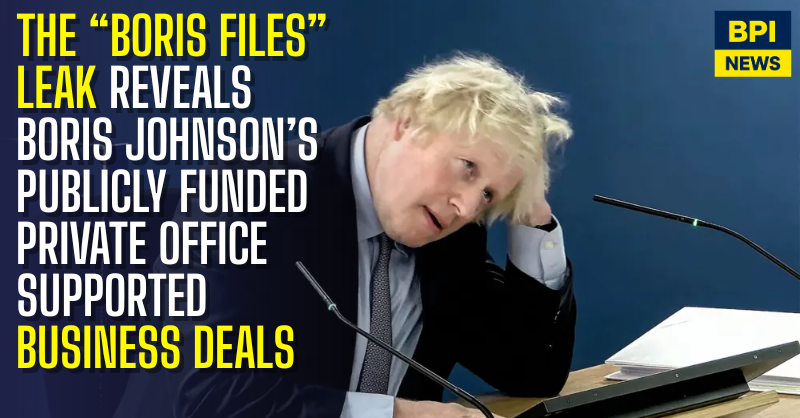
A major leak of documents from Boris Johnson’s private office has raised fresh questions about the former prime minister’s conduct both during his time in Downing Street and since leaving office.
The leak, known as the “Boris Files,” consists of about 2GB of data,1,820 files which include emails, invoices, contracts, letters, and spreadsheets. Obtained by transparency group Distributed Denial of Secrets (DDoS), the material sheds light on how Johnson has managed his affairs since stepping down in September 2022.
The files suggest Johnson has used his publicly subsidised private office to facilitate commercial ventures and personal enrichment, blurring the line between taxpayer-funded support and private business. His office, funded under the Public Duty Costs Allowance (PDCA) scheme that grants ex-prime ministers up to £115,000 a year, employs three full-time staff. Documents show all three have been involved in his business interests.
This raises questions about whether the £182,000 claimed in PDCA funds since his departure has been misused for private gain. Johnson did not respond to repeated requests for comment.
The leak also includes documents from Johnson’s time in office, pointing to potential breaches of the ministerial code, undisclosed meetings, and even questions over adherence to Covid lockdown rules. One highlighted case is a secret 2019 Downing Street meeting with Palantir co-founder Peter Thiel, not recorded in official disclosures.
DDoS, a US-based non-profit, has not disclosed how it obtained the files. Unlike WikiLeaks, it restricts access to sensitive data, sharing only with accredited journalists and researchers. The Guardian is currently the only UK outlet known to have reviewed the files.
The revelations have triggered debate over the adequacy of post-office rules and oversight. Johnson is accused of potentially breaching “revolving door” restrictions that limit post-ministerial employment, while questions also remain about his compliance with the ministerial code.