

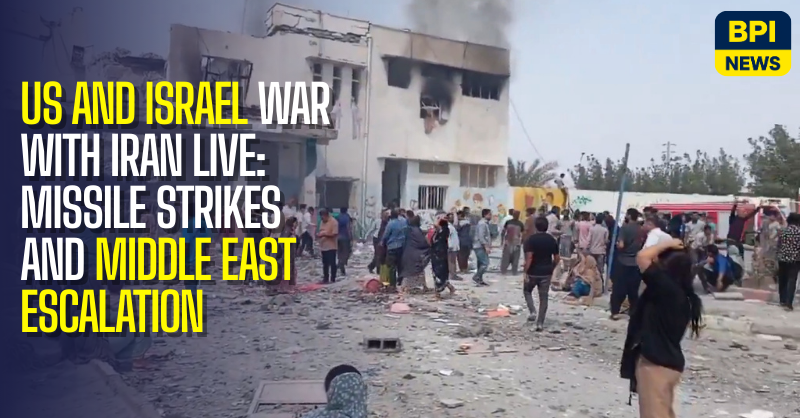
Follow live coverage of the war between the United States and Israel and Iran as missile strikes, drone attacks and regional military escalation unfold across the Middle East.
This page is now closed but join our new live blog by clicking here.
This event has ended.
Conflicting reports have emerged about the condition of Iran’s Supreme Leader Mojtaba Khamenei following recent air strikes in Tehran, with some sources claiming the 56-year-old leader is critically injured while others report far less serious wounds.
One report, citing a source in Tehran, claims Khamenei is in intensive care at Sina University Hospital in the Iranian capital. According to the source, a section of the hospital has been sealed off by security officials while the Supreme Leader receives treatment. The report alleges he is in a coma and has suffered severe injuries, including the loss of a leg and possible internal damage to his liver or stomach.
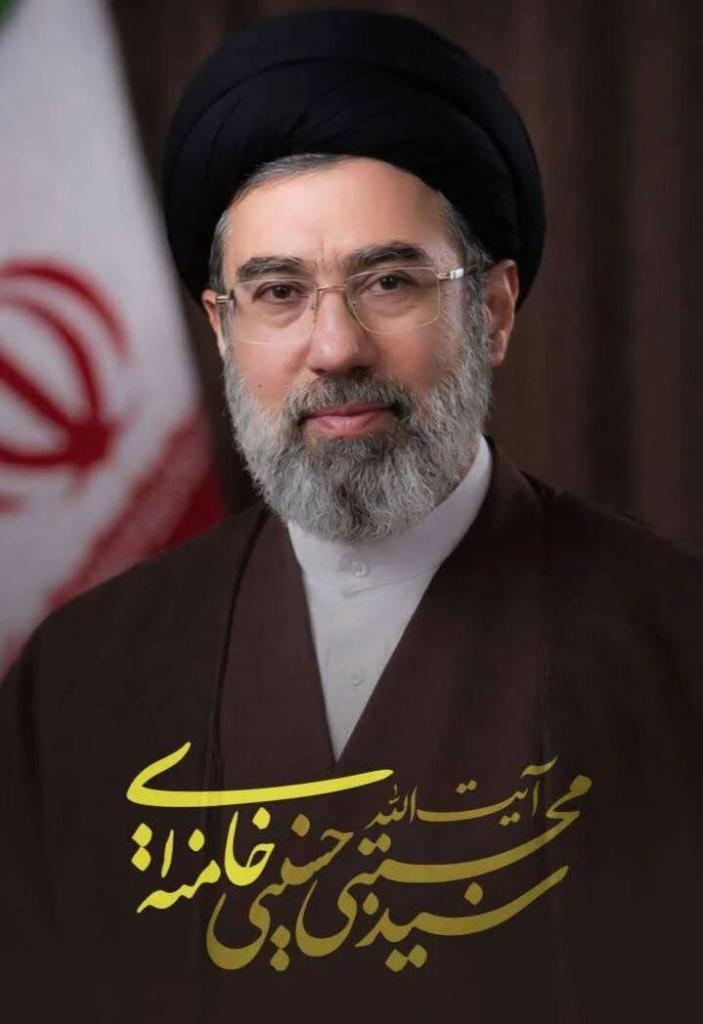
The source reportedly relayed the claims through messages to an exiled Iranian dissident in London, stating that “one or two of his legs have been cut off” following the air strikes. The same report says Khamenei is being treated by Mohammad Reza Zafargjani, Iran’s Minister of Health, Treatment and Medical Education, who is also described as one of the country’s leading trauma surgeons with experience from the Iran-Iraq war.
According to the same account, Zafargjani is believed to be assisted by senior surgeon Dr Mohammad Marashi, a relative by marriage of former Iranian President Akbar Hashemi Rafsanjani. The report also claims Iranian President Masoud Pezeshkian visited the hospital two days ago and is receiving regular briefings on the Supreme Leader’s condition.
However, other reports circulating in regional media have suggested Khamenei suffered far less serious injuries. Those accounts say the Supreme Leader sustained only minor wounds, including a fractured foot, and remains capable of performing his duties.
It is not clear whether Mojtaba Khamenei was injured in the same air strikes that killed his father, Ayatollah Ali Khamenei, on 28 February. Iran is currently under a widespread internet blackout, making independent verification of the claims difficult.
Iranian state media have not confirmed the reports about severe injuries but have referred to Khamenei as a “Jaanbaz of Ramadan”, a Persian phrase meaning a wounded war veteran.
Meanwhile, Iran’s official Telegram channel for the Supreme Leader announced that Mojtaba Khamenei’s first message since assuming leadership will be released shortly.
Iran’s Supreme Leader Mojtaba Khamenei has issued his first statement since being appointed to succeed his father, Ayatollah Ali Khamenei, with the address broadcast on Iranian state television.
In the statement, which is being read out on state TV, Khamenei warned that all United States military bases in the region should be closed immediately. He said that if they remain operational, they would be targeted by Iranian attacks.
Khamenei said Iran maintains that it seeks friendly relations with neighbouring countries but stressed that Iranian military operations will continue against US military facilities across the region.
During the address, the new Supreme Leader also stated that the Strait of Hormuz would remain closed. He said the move was intended to place pressure on Iran’s adversaries as the conflict across the Middle East continues.
In the statement broadcast on Iranian state television, Mojtaba Khamenei opened by offering condolences to his father.
Khamenei said he learned of the decision by Iran’s Assembly of Experts to appoint him as Supreme Leader at the same time as the public through state media. The Assembly of Experts is the clerical body responsible for selecting the country’s supreme leader.
During the address, he said assuming a role previously held by Ayatollah Ruhollah Khomeini, the founder of the Islamic Republic, and Ayatollah Ali Khamenei was a difficult responsibility.
The new leader praised his predecessor’s decades of political and religious leadership, describing more than 60 years of struggle in service of the Islamic Republic.
Khamenei also said he had visited his father’s body after his death. He described seeing what he called a sign of determination, stating that one of the former leader’s hands remained clenched after the strike that killed him.
Iran’s Supreme Leader Mojtaba Khamenei has called for national unity and continued public participation during the ongoing war, as part of his first address since taking power.
In remarks broadcast on Iranian state television, Khamenei said leading the country after Ayatollah Ruhollah Khomeini and Ayatollah Ali Khamenei was a difficult responsibility, adding that bridging the gap left by previous leaders would require both divine assistance and the support of the Iranian people.
The new leader praised what he described as the “insight and intelligence” of the Iranian population during the conflict, saying their steadfastness and presence during recent days of war had impressed allies and surprised Iran’s adversaries.
Khamenei said the strength of the Islamic Republic depended on the active participation of citizens, arguing that neither leadership nor state institutions could function effectively without public involvement.
He also called for unity across different segments of Iranian society, urging people to overlook political or social disagreements in order to maintain national cohesion during the war.
Iran’s Supreme Leader Mojtaba Khamenei has said armed groups in Yemen and Iraq are prepared to support Iran as the regional war continues.
In remarks delivered during his first address since taking power, Khamenei said the “resistance in Yemen will also do the job”, signalling that Yemen-based forces could play a role in the broader confrontation with the United States and its allies.
He added that armed groups in Iraq also “want to help” the Islamic revolution, suggesting Tehran expects support from allied militias operating across the region.
Iran has long maintained ties with a network of allied movements and militias sometimes described as the “Axis of Resistance”, which includes groups in Lebanon, Iraq and Yemen that oppose US and Israeli influence in the Middle East.
Iran’s Supreme Leader Mojtaba Khamenei has used his first public statement to outline Tehran’s strategy in the ongoing war, warning that attacks on US forces and regional targets will continue.
In a written address read on Iranian state television, Khamenei said the Strait of Hormuz should remain closed as a means of pressuring the United States and Israel. The waterway is a critical global oil shipping route and its disruption has already contributed to rising energy prices.
Iran’s Supreme Leader Mojtaba Khamenei says the Strait of Hormuz will remain closed, US bases “must be closed” or face attack, and Iran will open new fronts.
— BPI News (@BPINewsOrg) March 12, 2026
He also vowed to avenge civilians killed in the Minab school strike and seek compensation from the US and Israel. pic.twitter.com/U23GIUKJtH
Khamenei also demanded that all US military bases in the region be shut down. He said Gulf Arab states should assist in closing those facilities, warning that American bases would otherwise face continued Iranian attacks.
The Iranian leader said Tehran would open additional fronts in the conflict, although he did not specify what form those operations might take or where they could occur.
Khamenei also vowed that Iran would avenge those he described as “martyrs” killed during the war. He specifically referred to the strike on a school in Minab which Iranian officials say killed at least 165 people, mostly children. A preliminary US inquiry reported this week said American forces were likely responsible for the strike, although Washington has not confirmed responsibility.
The new Supreme Leader said Iran would seek compensation from the United States and Israel for damage caused during the war. He warned that if compensation was not provided, Iran would target their assets.
Despite the threats, Khamenei said Iran was not seeking wider territorial control in the Middle East and maintained that Tehran wanted good relations with neighbouring countries.
He also called for unity among the Iranian population and acknowledged the pressure placed on the country during the conflict, urging citizens to remain resilient as the war continues.
US President Donald Trump has said the United States stands to benefit from rising global oil prices as the war involving Iran continues to affect energy markets.
Writing on his Truth Social platform, Trump said the United States is the world’s largest oil producer and that higher prices increase revenues for the American energy sector.
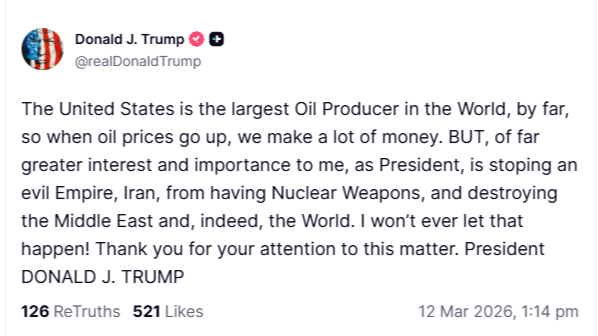
His comments came as oil markets reacted to attacks on commercial shipping in the Gulf and ongoing disruption around the Strait of Hormuz, one of the world’s most important oil transit routes.
Trump added that his primary focus remained preventing Iran from obtaining nuclear weapons. In the same message, he said he would not allow Iran to develop such weapons, warning that doing so could destabilise the Middle East and threaten wider global security.
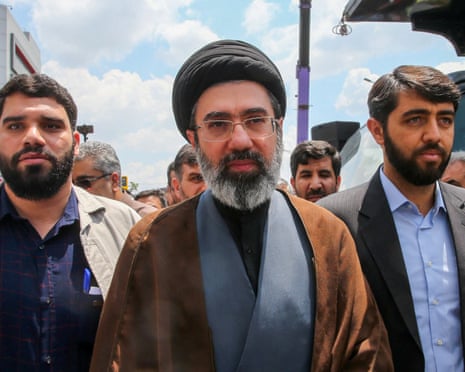
Uncertainty continues to surround the condition of Iran’s Supreme Leader Mojtaba Khamenei, who has not yet appeared publicly since being appointed to the position on 8 March.
Iranian state television has referred to Khamenei as a “veteran of the Ramadan war”, but has not provided any confirmation about whether he sustained injuries during the recent strikes. Reuters has reported that he was “lightly injured”, citing an unnamed Iranian official.
However, other reports circulating in regional and international media have claimed the new Supreme Leader suffered far more serious injuries. One report, citing a source in Tehran, alleged that Khamenei was being treated in intensive care at Sina University Hospital in Tehran and had fallen into a coma following the air strikes.
The same report claimed he may have lost one or more limbs and suffered internal injuries, including possible damage to his liver or stomach. According to that account, part of the hospital had been sealed off by security forces while senior Iranian officials monitored his condition.
Those claims have not been independently verified and have not been confirmed by Iranian authorities. The country is also currently experiencing an internet blackout, making it difficult to verify reports from inside Iran.
Khamenei has not been seen in public, nor has he appeared in photographs or video on Iranian state media, despite it now being several days since he was selected as Iran’s third Supreme Leader.
The leadership transition followed the death of his father, Ayatollah Ali Khamenei, who was killed during the early phase of the war. Iranian reports have also stated that Mojtaba Khamenei’s mother and wife were killed in the same US-Israeli strikes.
Iran’s Supreme Leader is chosen by the Assembly of Experts, an 88-member clerical body responsible for selecting and supervising the country’s highest authority.
In his first message since taking power, which was read aloud on state television rather than delivered in person, Mojtaba Khamenei said he learned about the Assembly of Experts’ decision to appoint him as Supreme Leader at the same time as the public through Iranian state television.
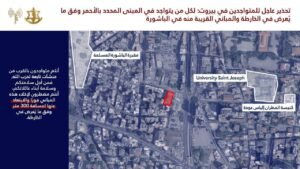
The Israeli military has issued an evacuation warning for a building in central Beirut, marking the first such warning for the area during the current phase of the war.
The warning included a map identifying a specific building and instructed residents in the surrounding area to leave immediately, indicating that an Israeli airstrike could be imminent. The targeted location lies a short drive from Lebanon’s parliament building in the capital.
The area identified in the warning is outside Beirut’s Dahyeh district, which is widely regarded as Hezbollah’s main stronghold in the city. Israeli evacuation notices in the past have primarily focused on Dahyeh or southern Lebanon, making a warning for central Beirut a notable escalation.
Banks and major consulting firms across the Gulf are suspending operations amid growing security concerns after Iran warned it could target financial institutions linked to the United States and Israel.
The warning followed reports that an Iranian financial institution, including facilities linked to Bank Sepah, was struck during US-Israeli attacks earlier in the war. Iranian military officials subsequently said economic and banking interests connected to the US and Israel in the region could become targets of retaliation.
Several international banks have since taken precautionary steps. HSBC has closed branches in Qatar, while Citibank and Standard Chartered evacuated offices and suspended some operations in the United Arab Emirates as staff shift to remote work.
Large professional services firms are also reducing their presence. PricewaterhouseCoopers said it was suspending operations across Saudi Arabia, Kuwait, Qatar and the UAE, while Deloitte has also paused some regional activity.

The Israeli military says it has dropped charges against five soldiers accused of sexually assaulting a Palestinian detainee at the Sde Teiman detention facility.
The incident took place on 5 July 2024 at the prison in southern Israel, which was established to hold Palestinians detained during Israel’s war with Hamas in Gaza.
According to the original indictment, soldiers took a detainee into an area shielded from view and assaulted him. A video aired by Israeli media appeared to show soldiers surrounding the detainee with shields. Prosecutors had alleged the detainee was sodomised with a knife, leaving him with multiple injuries.
A medical staff member familiar with the case said the detainee was transferred to a civilian hospital in life-threatening condition with blunt trauma to the chest and abdomen, fractured ribs and a perforated rectum that required surgery before he was returned to the detention facility.
The arrests of the soldiers previously triggered protests by ultranationalist activists who forced their way into the Sde Teiman base. Members of Israel’s far-right government criticised the investigation into the soldiers’ conduct.
[video width="272" height="192" mp4="https://bpinews.org/wp-content/uploads/2026/03/document_5879492602507565951.mp4"][/video]
Israeli airstrikes have hit a building in central Beirut after the Israeli military issued a warning that it would target what it described as a Hezbollah facility.
The strike occurred around one kilometre from reporters in the city centre. A warning strike was reported shortly before the main attack.
The main blast sent a plume of grey smoke rising above the surrounding residential district.
Further strikes followed the initial explosion, with additional blasts reported that shook nearby buildings.
The Israeli military has issued a warning for residents to evacuate a building in the Zkak al-Blat district of central Beirut.
A map published by the Israeli military marks a specific building and instructs anyone within a 300-metre radius to leave the area immediately ahead of a potential strike.
The building reportedly houses a branch of Al-Qard al-Hassan on the ground floor, a financial institution that operates legally in Lebanon.
The warning indicates the entire residential structure could be targeted despite the bank occupying only part of the ground floor of the building.
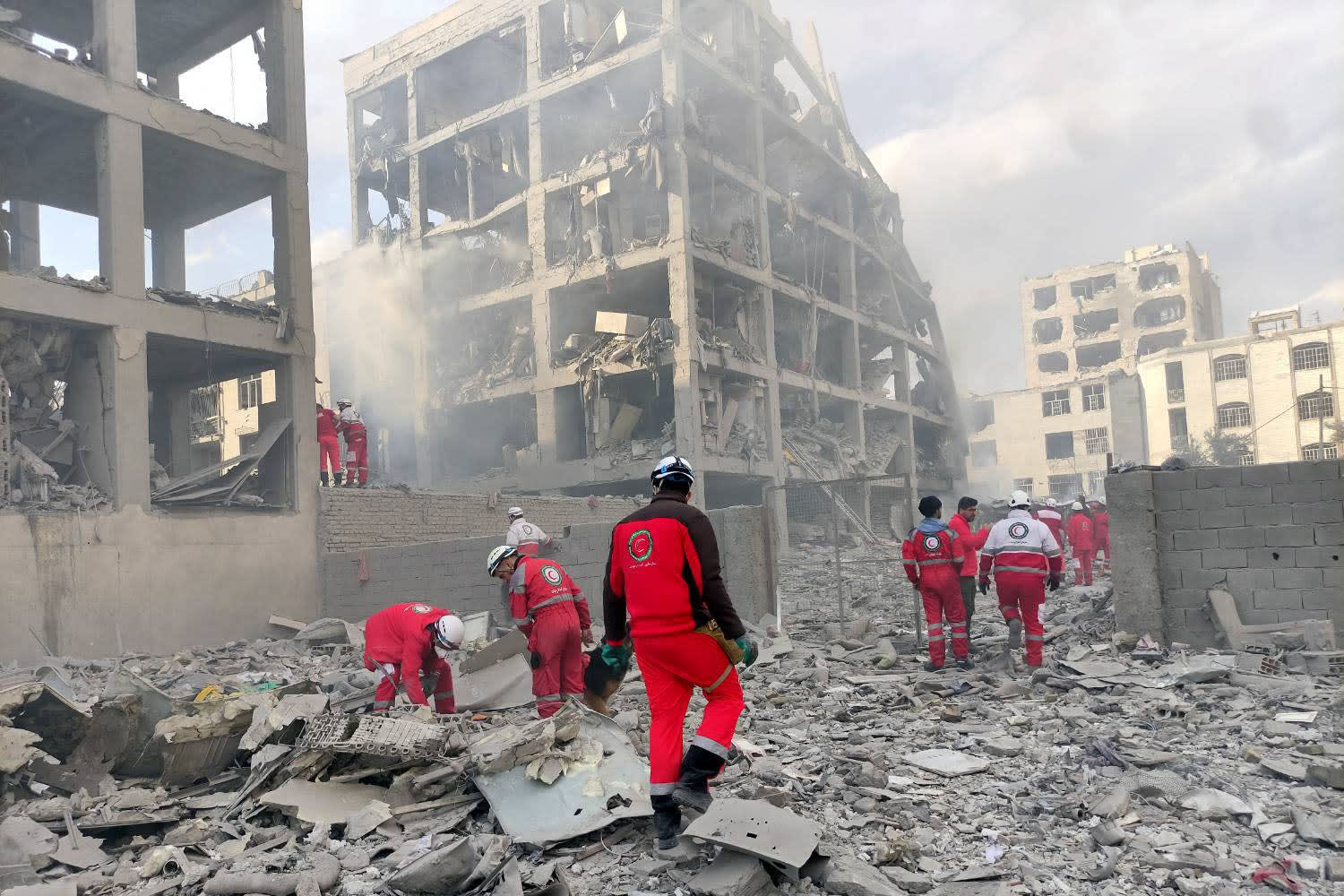
US Central Command says American forces have struck approximately 6,000 targets inside Iran since the war began on 28 February.
In a social media update, CENTCOM said the strikes form part of the ongoing campaign aimed at dismantling Iran’s military capabilities and the infrastructure used to produce weapons.
The command said the operation has also targeted Iran’s naval forces, with around 60 Iranian ships destroyed during the campaign.
CENTCOM added that roughly 30 Iranian minelayers have been destroyed as part of efforts to prevent Iranian forces from mining key shipping routes in the region.
Trump says he is looking for a speedy victory. While starting a war is easy, it cannot be won with a few tweets. We will not relent until making you sorry for this grave miscalculation. #TrumpMustPay
— Ali Larijani | علی لاریجانی (@alilarijani_ir) March 12, 2026
Senior Iranian security official Ali Larijani has responded to recent statements by US President Donald Trump, criticising the US leader’s remarks about the war.
Writing on social media, Larijani said the United States appeared to be seeking a rapid victory but warned that the conflict “cannot be won with a few tweets”.
The comment appeared to reference Trump’s frequent posts on his Truth Social platform since the war began.
Larijani said Iran would continue fighting and warned the United States it would regret what he described as a “grave miscalculation”.
Earlier in the conflict, Larijani also warned Trump to “be careful not to get eliminated” following threats made by the US president against Iranian leadership figures.
The Israeli military says it has begun a “broad wave of attacks” targeting Hezbollah infrastructure in southern Lebanon.
The Israel Defense Forces said the strikes are being carried out in parallel with attacks inside Beirut.
Israel says it has launched a “broad wave of attacks” on Hezbollah infrastructure in southern Lebanon while carrying out strikes in Beirut.
— BPI News (@BPINewsOrg) March 12, 2026
The IDF earlier warned residents in the Bachura area of the capital to evacuate before the latest strikes hit the city. pic.twitter.com/vZOM1LlyZn
The announcement came after the IDF issued an evacuation warning for residents in the Bachura neighbourhood of central Beirut, ordering people in the area to leave immediately.
Another airstrike has since hit central Beirut, only a few blocks from where strikes were reported roughly an hour earlier.
Video from the scene shows the sound of Israeli warplanes overhead followed by a plume of smoke rising from the area of the strike.

US Central Command says a KC-135 refuelling aircraft has been lost during operations linked to the war with Iran.
CENTCOM said the incident occurred in friendly airspace during Operation Epic Fury, the US military campaign that began on 28 February.
Two aircraft were involved in the incident. One aircraft went down in western Iraq while the second aircraft landed safely. Rescue efforts are ongoing.
CENTCOM said the loss was not caused by hostile fire or friendly fire.
However, a spokesperson for Iran’s Khatam al-Anbiya central command said the aircraft was struck by air defence systems in western Iraq and that all crew members were killed. US officials have not confirmed that claim.

At least 16 oil tankers, cargo vessels and other commercial ships have been attacked in the Persian Gulf since the US-Israeli war against Iran began nearly two weeks ago, according to an analysis by The New York Times.
Several of the incidents have targeted oil and energy infrastructure at sea.
Two Iraqi oil tankers that were set ablaze on Thursday were among the most recent attacks reported in the region.
Iran has claimed responsibility for several of the attacks on commercial shipping.
An Israeli attack in Arki, Lebanon killed nine people including five children, according to Lebanese officials. Authorities say more than 687 people have been killed in Israeli strikes across Lebanon since the start of the current escalation earlier this month.
Iran launched a wave of missiles and drones at Gulf states, including Bahrain, where fuel storage tanks were hit and a large fire broke out. Iranian strikes have targeted several countries in the region since the war began.
Iraq shut down port operations after an Indian crew member was killed in an attack on a US-owned oil tanker, part of a series of strikes on commercial shipping in the Persian Gulf.
The US military said a KC-135 refuelling aircraft crashed in western Iraq during operations connected to the war. US Central Command said the incident occurred in friendly airspace and was not caused by hostile or friendly fire.
In Tehran, thick smoke continued to rise over parts of the city following earlier US-Israeli strikes on oil facilities and other infrastructure.
Separately, the Netherlands and Iceland joined South Africa’s case at the International Court of Justice accusing Israel of genocide in Gaza.
Oil markets reacted sharply to the ongoing attacks on shipping and energy infrastructure, with Brent crude settling above $100 per barrel for the first time since August 2022.
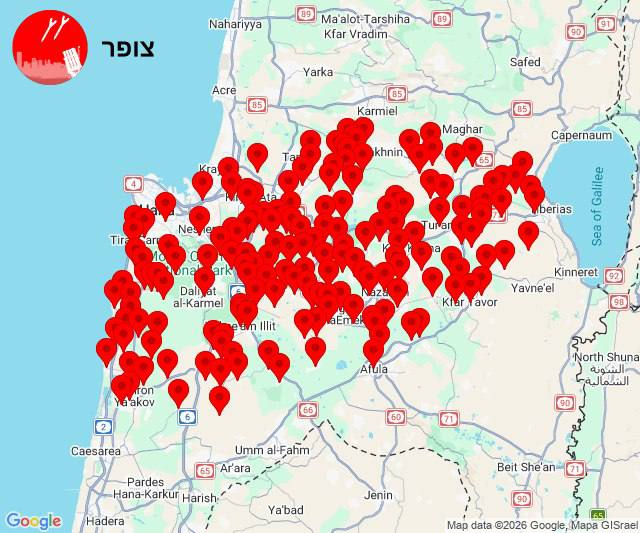
Air raid sirens have sounded again in Haifa and Karmiel in northern Israel.
Iranian armed forces have launched heavy missile strikes targeting oil refineries in Haifa.
The refinery complex in the port city is a major energy facility in northern Israel.
Officials say the attacks are ongoing and could continue for several hours.
Reports say air raid sirens sounded at Incirlik Air Base near Adana in southern Turkey.
Witness accounts indicate sirens were followed by possible explosions at or near the base.
Reports say air raid sirens sounded at Incirlik Air Base near Adana in southern Turkey, followed by possible explosions.
— BPI News (@BPINewsOrg) March 13, 2026
The base hosts Turkish and US military forces.
There has been no official confirmation of an attack. pic.twitter.com/Oix2aDfodP
Incirlik Air Base hosts Turkish and US military forces and is a key NATO facility in the region.
There has been no official confirmation of an attack from Turkish or US authorities.
Video circulating on social media appears to show a ballistic missile in the sky above Incirlik Air Base in southern Turkey.
The footage emerged after reports of air raid sirens and explosions heard earlier in several towns surrounding the base near Adana.
Video circulating online appears to show a ballistic missile over Incirlik Air Base near Adana, Turkey, following reports of air raid sirens and explosions in towns around the base.
— BPI News (@BPINewsOrg) March 13, 2026
There has been no official confirmation of a strike. https://t.co/O3AdPPqc6K pic.twitter.com/s1BzkyQmCP
Incirlik Air Base hosts Turkish and US military forces and is one of NATO’s key air facilities in the region.
Authorities in Turkey and the United States have not yet confirmed whether the base was targeted or if the missile impacted nearby.

Images circulating online appear to show a US Air Force KC-135 Stratotanker with visible tail damage parked at Ben Gurion International Airport in Israel.
The photos emerged after US Central Command reported that a KC-135 refuelling aircraft was lost during an incident involving two aircraft over western Iraq.
CENTCOM said one aircraft went down in western Iraq while the second aircraft landed safely.
The images appear to show damage to the tail section of a KC-135 that may be the aircraft that managed to land following the incident.

A building in Upper Galilee has been directly hit during the latest missile barrage, with reports of injured and trapped people inside.
A building in Upper Galilee has been hit during the latest Iranian missile barrage, with reports of injured and trapped people.
— BPI News (@BPINewsOrg) March 13, 2026
The number of injured has now risen to at least 19. pic.twitter.com/2uO3P0kvKL
Emergency services and rescue teams are heading to the scene as search and rescue operations begin.
Authorities say the total number of injured in the Galilee region has now risen to at least 19 following the missile strike.
Reports say massive explosions have been heard across Tehran and several cities in central Iran.
Witness accounts describe intense bombing in Tehran as well as in Karaj, Shahriar and Isfahan.
Video and local reports suggest strategic bomber activity over Iranian airspace during the strikes.
Reports indicate US strategic bombers are operating over Iran as a large aerial refuelling fleet is active across the region.
At least nine US Air Force tanker aircraft, including KC-135 Stratotankers and KC-46 Pegasus refuelling aircraft, are reported airborne above Jordan and Israel supporting long-range strike operations.
Reports say US strategic bombers are operating over Iran as at least nine US Air Force tanker aircraft – KC-135 and KC-46 are airborne over Jordan and Israel.
— BPI News (@BPINewsOrg) March 13, 2026
Explosions are being reported across Tehran while fires in the south of the city intensify after repeated strikes. pic.twitter.com/G0ytowqCS1
Witnesses in Iran report multiple explosions across Tehran as well as in Karaj, Shahriar and Isfahan.
The fire in southern Tehran is intensifying as additional US-Israeli airstrikes are reported to have struck the same location again.


Iranian attacks targeting the Prince Sultan US Air Base in Saudi Arabia are continuing, according to regional reports.
Saudi Arabia’s Ministry of Defence says its air defence systems intercepted nine Iranian drones in the last 40 minutes.
The interceptions were reported during an ongoing wave of attacks directed at the base.
Reports say a large wave of strikes has hit multiple cities in Iran including Tehran, Karaj, Shahriar and Isfahan.
Residents in Tehran described the explosions as among the most intense bombardments since the war began, with repeated blasts reported across the capital and surrounding areas.
The strike wave had reportedly been planned for the previous night but did not go ahead after reports that the strategic bombers involved had turned back.
Iran’s Islamic Revolutionary Guard Corps later said it had received advance notice of the planned operation.
US officials say at least four of the six crew members aboard a KC-135 refuelling aircraft that crashed in western Iraq have died.
Search efforts are continuing for the remaining two crew members.
US Central Command said the aircraft was involved in an incident with another aircraft in friendly airspace during Operation Epic Fury, the US campaign against Iran.
The second aircraft landed safely.
CENTCOM said the crash was not caused by hostile fire or friendly fire.
US officials said investigators believe a mid-air collision between two KC-135 aircraft may have led to the crash, though the investigation is ongoing.
The United States has temporarily eased sanctions on Russian oil already at sea in a move officials say is aimed at stabilising global energy markets as prices have risen sharply since the conflict began.
US President Donald Trump also issued a warning to Iran, telling Tehran to “watch what happens today” while repeating his claim that US operations in the conflict have been successful.
Four crew members have been confirmed dead after a US KC-135 refuelling aircraft crashed in western Iraq during Operation Epic Fury. An Iran-aligned militia group has claimed responsibility, although US officials say the crash was not caused by hostile fire.
Iran’s new Supreme Leader Mojtaba Khamenei said the Strait of Hormuz would remain closed and warned that US military bases in the region “must close” or attacks would continue. His first statement since taking office was read on state television, adding to speculation about his health after he has not appeared publicly.
Meanwhile, Israel expanded its campaign against Iran-backed Hezbollah, launching strikes in Beirut overnight as fighting continued across the region.
France confirmed that a French serviceman had been killed in northern Iraq, the first European soldier reported killed during the conflict. French President Emmanuel Macron described the attack as “unacceptable”.
Iran’s president Masoud Pezeshkian and foreign minister Abbas Araghchi were seen walking freely among crowds in Tehran during the annual Al Quds Day march.
Video published by Iranian state media showed the president moving through the streets among demonstrators taking part in the rally.
Iranian President Masoud Pezeshkian and Foreign Minister Abbas Araghchi were seen walking freely among crowds in Tehran during the annual Al Quds Day march.
— BPI News (@BPINewsOrg) March 13, 2026
Senior officials including Ali Larijani and judiciary chief Mohsen Ejei also appeared in public during the rally. pic.twitter.com/sjdHb3oLDA
Other senior officials were also present, including Ali Larijani, secretary of Iran’s Supreme National Security Council, and judiciary chief Mohsen Ejei, who were seen marching in broad daylight alongside protesters.
The demonstrations brought large crowds onto major streets in Tehran as part of the annual event organised by the Iranian government to express opposition to Israel.
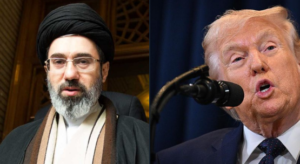
US President Donald Trump says he believes Iran’s new supreme leader Mojtaba Khamenei is alive but badly injured.
Speaking in a pre-recorded interview with Fox News to be aired on Friday, Trump said the Iranian leader was “probably alive in some form” but “damaged”.
Speculation about Khamenei’s condition has grown after reports that he may have been injured in the same US-Israeli airstrike that killed his father, former supreme leader Ayatollah Ali Khamenei.
The comments come after a statement attributed to Mojtaba Khamenei was read on Iranian state television, in which Iran said it would continue targeting ships in the Strait of Hormuz.
Turkey’s defence ministry says NATO air defences intercepted a missile fired from Iran after it entered Turkish airspace.
Officials said it was the third Iranian missile intercepted over Turkey in the past 10 days.
Residents near Incirlik Air Base in southern Turkey reported hearing air raid sirens followed by a loud explosion at around 03:30 local time that shook buildings.
Authorities did not confirm the exact location of the interception, and NATO has not yet commented on the incident.
Western officials previously said a missile intercepted over Turkey earlier in the conflict had been heading towards Incirlik Air Base, which hosts Turkish, US and other NATO forces.
Saudi Arabia’s defence ministry says it has intercepted 56 drones that entered the kingdom’s airspace since early Friday.
Officials said one of the drones attempted to approach the high-security diplomatic quarter in the capital, Riyadh.
The ministry did not identify who launched the drones.
On Thursday evening, Saudi authorities said their air defences had intercepted 53 drones and destroyed five ballistic missiles within a 24-hour period.

France has identified the first French soldier killed during the Iran war as Chief Warrant Officer Arnaud Frion.
Frion, 42, served with the 7th Battalion of the elite Chasseurs Alpins infantry unit. France’s chief of defence staff, General Fabien Mandon, shared an image of the soldier following confirmation of his death.
French officials said Frion was killed during an attack in the Erbil region of northern Iraq where French forces were involved in training Iraqi security forces.
Colonel François-Xavier de la Chesnay said the strike was carried out using an Iranian Shahed drone. Several other French soldiers were also wounded in the attack.
French President Emmanuel Macron described the strike as “unacceptable”.
A merchant vessel has reported a fire at an offshore oil rig northwest of Dubai’s Jebel Ali port, according to maritime security company Ambrey.
The cause of the fire is currently under investigation.
Ambrey said there have been no reports of damage to nearby ships or injuries to crews
Israel’s defence minister Israel Katz has warned that Israel will intensify its attacks on Lebanon after an Israeli strike hit the Zrariyeh bridge over the Litani River earlier today.
Speaking after the strike, Katz said: “This is just the beginning.”
Israel’s defence minister Israel Katz says attacks on Lebanon will intensify after an Israeli strike hit the Zrariyeh bridge over the Litani River.
— BPI News (@BPINewsOrg) March 13, 2026
He warned Lebanon’s government would face further strikes and possible territorial losses if Hezbollah is not disarmed. pic.twitter.com/BliHUcmUll
He said Lebanon’s government would face increasing strikes on national infrastructure and potential territorial losses if it failed to disarm Hezbollah.
Katz said the Lebanese government had “misled and failed to fulfil its commitment” to disarm the Iran-backed group, according to comments carried by Israeli media.

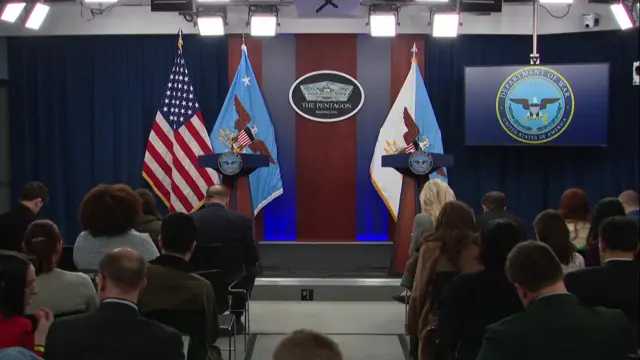
Reporters have gathered at the Pentagon for a news conference following confirmation that four US service members were killed in the crash of a KC-135 refuelling aircraft in Iraq.
US Central Command said four of the six crew members aboard the aircraft died in the incident, while search efforts for the remaining two crew members are continuing.
Defence Secretary Pete Hegseth and General Dan Caine, chairman of the Joint Chiefs of Staff, are scheduled to speak during the briefing.
We will bring you any major updates.
US Defence Secretary Pete Hegseth told reporters at the Pentagon that American forces are “decimating the radical Iranian regime’s military”.
He said Iran’s armed forces had been made “combat ineffective” following weeks of US-Israeli strikes targeting missile sites, naval assets and military infrastructure.
US Defence Secretary Pete Hegseth says Iran’s military has been made “combat ineffective” during US-Israeli strikes.
— BPI News (@BPINewsOrg) March 13, 2026
The claim comes as Iran’s closure of the Strait of Hormuz continues to disrupt shipping and push global oil prices above $100 a barrel. pic.twitter.com/fnN9ZOtLfg
Despite those claims, the Strait of Hormuz remains effectively closed after Iranian attacks on shipping and warnings to vessels not to enter the waterway.
The disruption has sharply reduced tanker traffic through the strait, which normally carries about 20% of the world’s oil supply, sending global energy prices sharply higher.
Oil prices have surged above $100 per barrel amid fears of prolonged supply disruptions as the conflict continues.

Concerns are reportedly being raised among some Iranian clerics about the physical condition of Iran’s new supreme leader Mojtaba Khamenei.
According to Iran International, Khamenei’s physical condition and difficulty maintaining regular communication with officials have prompted criticism and political manoeuvring among some members of the ruling establishment.
The report says Ali Asghar Hejazi, deputy chief of staff to the former supreme leader, and Alireza Arafi, a member of the Guardian Council and the Interim Leadership Council, are among clerics who have raised concerns about his health and managerial capacity.
The report comes amid continued speculation about Khamenei’s condition after his first statement as supreme leader was issued in written form and read on Iranian state television rather than delivered by him directly.
US Central Command says all six crew members aboard a KC-135 refuelling aircraft that crashed in western Iraq have now been confirmed dead.
The aircraft went down on 12 March while flying over friendly airspace during Operation Epic Fury, the US military campaign linked to the war with Iran.
Officials said the circumstances of the incident remain under investigation.
CENTCOM also stated that the loss of the aircraft was not due to hostile fire or friendly fire.
The identities of the six service members are being withheld until 24 hours after their next of kin have been notified.

Air raid sirens have sounded across the Tel Aviv district in central Israel after ballistic missile launches were detected from Iran.
Israeli authorities say the missiles are heading towards central parts of the country.
Air defence systems are responding to the incoming missiles.
Residents in the Tel Aviv area have been instructed to move to protected areas as the alerts continue.
Missile debris and suspected cluster munition fragments have impacted several areas in central Israel following the latest barrage of Iranian ballistic missiles.
Missile debris and suspected cluster munitions have impacted several areas in central Israel following the latest Iranian ballistic missile launches. https://t.co/ZiSVMO2hDC pic.twitter.com/9wo7VEx0td
— BPI News (@BPINewsOrg) March 13, 2026
Israeli officials are checking whether a strike in Tehran killed Amir Shari’at, believed to be the head of the Iranian army’s intelligence, along with his deputy and several other senior officers.
According to Kan News, Israeli authorities are examining intelligence to determine whether the strike eliminated a significant part of the army’s intelligence leadership.
Shari’at has been described as a low-profile or “shadow” figure whose identity had not previously been publicly known inside Iran.
Israeli officials are now assessing whether the attack may have neutralised a large portion of the Iranian army’s intelligence command structure.
Donald Trump says he believes Iran’s new supreme leader Mojtba Khamenei is alive but seriously injured.
Speaking in a radio interview, Trump said: “I think he’s damaged, but I think he’s probably alive in some form,” adding that Iran had been “doing a lot of talking” and would have to “put up” as the conflict continues.
Donald Trump says Iran’s new supreme leader Mojtaba Khamenei is “probably alive in some form” but “damaged”.
— BPI News (@BPINewsOrg) March 13, 2026
Trump said Iran has been “doing a lot of talking” and warned Tehran will need to “put up” as US strikes continue. pic.twitter.com/ZrSv2V5YGR
Khamenei has not appeared publicly since being appointed following the death of his father during the opening strikes of the war, fuelling speculation about his condition.
Reports about the Iranian leader’s health remain conflicting, with some officials suggesting he was only lightly injured while other reports claim he suffered more serious wounds during the attack that killed his father.
Iran’s Islamic Revolutionary Guard Corps says it has launched missile attacks on Israel jointly with Hezbollah.
According to the Iranian state-linked Tasnim news agency, the operation involved the IRGC navy and drone units alongside the Lebanese armed group.
Air raid alerts were triggered in Tel Aviv, central Israel and parts of the occupied West Bank following the reported launches.
There have been no immediate reports of casualties or damage from the latest wave of strikes.
Formula 1 races scheduled to take place in Bahrain and Saudi Arabia next month are not expected to go ahead, according to Sky Sports News.
The Bahrain Grand Prix was due to take place on 12 April, followed by the Saudi Arabian Grand Prix on 19 April.
The decision comes as the conflict in the Middle East continues with no signs of improvement in the security situation.
Official confirmation of the cancellation is expected within the next 48 hours.
Formula 1 and the FIA have declined to comment.
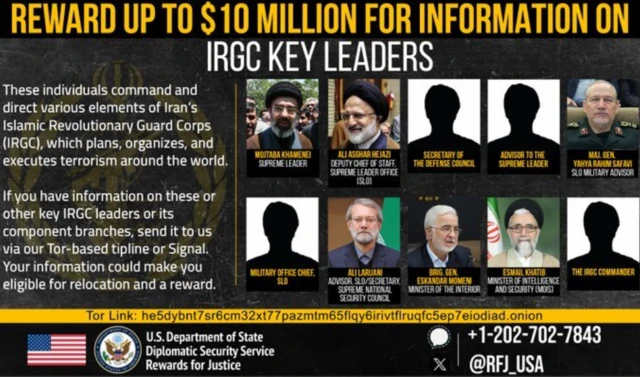
The United States is offering rewards of up to $10m (£7.6m) for information on key leaders of Iran’s Islamic Revolutionary Guard Corps (IRGC).
A notice issued by the US State Department’s Rewards for Justice programme lists 10 senior figures connected to Iran’s military and security structure, though only six of them are publicly named.
Among those identified are Iran’s new supreme leader Mojtaba Khamenei and Ali Larijani, secretary of Iran’s Supreme National Security Council.
Larijani was earlier seen marching in central Tehran during the Al-Quds Day demonstrations, alongside several other senior Iranian officials.
The US says the individuals listed “command and direct various elements” of the IRGC, which Washington accuses of planning and executing militant operations abroad.
The rewards programme says anyone with information about these figures or the IRGC’s activities could be eligible for payment and possible relocation assistance.
A total of 18 civilian vessels, most of them oil tankers and commercial cargo ships, have been hit in attacks linked to Iran since the war began.
The incidents have occurred across the Persian Gulf and the Strait of Hormuz, one of the world’s most critical maritime trade routes.
The list of affected vessels includes ships such as One Majesty, Mayuree Naree, Star Gwyneth, MSC Grace, Gold Oak, Libra Trader, and Hercules Star, among others.
At least 18 civilian ships, mostly oil tankers and cargo vessels have been struck in the Persian Gulf since the US-Israeli war on Iran began, according to analysis of maritime incidents. pic.twitter.com/0z98zFe5Rd
— BPI News (@BPINewsOrg) March 13, 2026
Several of the vessels struck were oil tankers or bulk carriers, highlighting the growing risk to global energy shipments and commercial shipping lanes.
The Strait of Hormuz normally carries around 20% of the world’s oil supply, and repeated attacks on vessels in the region have significantly reduced maritime traffic.

Very high levels of US and Israeli jet activity are being reported across Iraq and the Persian Gulf, with a large number of aircraft moving toward Iranian airspace.
Dozens of US Air Force aerial refuelling aircraft are currently operating across the region, with heavy tanker traffic visible along the Saudi-Iraqi border and over the Persian Gulf.
These aircraft, primarily KC-135 and KC-46 tankers are being used to refuel fighter jets and bombers involved in ongoing strike operations.
Air-tracking data shows multiple tanker aircraft flying circular holding patterns, a typical sign that they are refuelling combat aircraft preparing for or returning from strike missions.
Earlier at the Pentagon, US Defence Secretary Pete Hegseth said the day would see the most intense bombing campaign of the war so far, describing it as involving “the most fighters, the most bombers and the most strikes inside Iran.”

An Iranian ballistic missile has reportedly impacted the Negev region of southern Israel.
— BPI News (@BPINewsOrg) March 13, 2026
Some reports are claiming the strike hit Nevatim Air Base, one of Israel’s main air force facilities, though this has not yet been confirmed. pic.twitter.com/iB0GFtgXLW


Iran’s Islamic Revolutionary Guard Corps (IRGC) has issued an evacuation warning for residents in part of the Ramat Gan area near Tel Aviv.
A graphic published by Iranian channels shows a section of the city outlined in red, with a message instructing residents to leave the area immediately.
The warning states that evacuation should be carried out via Route 4, directing residents to move south away from the marked zone.
The message also claims that Israeli authorities are misleading the public about the situation, adding that “the war has not started yet”.
Ramat Gan lies directly adjacent to Tel Aviv and forms part of the densely populated metropolitan area surrounding Israel’s economic centre.

US President Donald Trump says American forces have carried out what he described as “one of the most powerful bombing raids in the history of the Middle East.”
In a post on Truth Social, Trump said US Central Command (CENTCOM) struck Iranian military targets on Kharg Island, a strategic island in the Persian Gulf that hosts major Iranian energy infrastructure.
Trump claimed the operation “totally obliterated every military target” on the island.
He added that the United States had deliberately not targeted the island’s oil infrastructure, saying the decision was made “for reasons of decency”.
However, the US president warned that decision could change if Iran interferes with shipping through the Strait of Hormuz, one of the world’s most critical energy shipping routes.
Trump said the United States would reconsider striking Iran’s oil infrastructure if Tehran or its allies threaten the “free and safe passage of ships” through the strait.
In the same statement, Trump said Iran has “no ability to defend anything that we want to attack” and repeated Washington’s position that Iran will not be allowed to develop a nuclear weapon.
Iranian channels are reporting “massive and intense strikes” on Kharg Island in southern Iran, allegedly carried out by US Air Force and US Navy aircraft.
Kharg Island sits in the Persian Gulf off Iran’s southern coast and is widely regarded as the most important hub in Iran’s energy network.
The island hosts Iran’s main oil export terminal and is responsible for around 90% of the country’s crude oil exports, making it one of the most strategically sensitive energy locations in the region.
In a statement posted on Truth Social, US President Donald Trump said US Central Command had carried out one of the most powerful bombing raids in the history of the Middle East, claiming American forces “totally obliterated every military target” on Kharg Island.
Trump added that US forces did not strike the island’s oil infrastructure, saying the decision was made “for reasons of decency”.
However, he warned that the United States could reconsider targeting the oil facilities if Iran interferes with shipping through the Strait of Hormuz, a vital route for global energy supplies.
At this stage, the full extent of damage on Kharg Island remains unclear, and there has been no independent confirmation from Iranian authorities regarding the reported strikes.
An Iranian missile strike in Saudi Arabia has damaged five US Air Force aerial refueling aircraft on the ground at Prince Sultan Air Base, according to US officials.
The aircraft believed to be KC-135 refueling tankers were struck during a missile attack targeting the base in recent days.
Officials said the planes were damaged but not completely destroyed and are currently undergoing repairs. No casualties were reported in the strike.
Prince Sultan Air Base, located southeast of Riyadh, hosts US and coalition forces and serves as a key hub for air operations and refueling missions across the Middle East.
The strike forms part of a broader pattern of Iranian retaliatory attacks targeting US-linked bases and infrastructure across the Gulf region since the war began.
Despite statements from the US president and the intensifying bombing campaign, Iran is unlikely to surrender or fully reopen the Strait of Hormuz without conditions.
For Tehran, the narrow waterway linking the Persian Gulf to the Indian Ocean is one of its most powerful strategic leverage points in a conflict. Roughly a fifth of the world’s oil normally moves through the strait.
Iranian leadership understands that disruption to this route places immediate pressure on global energy markets and therefore on the governments backing the military campaign against it.
If US strikes expand to include major economic targets such as oil facilities on Kharg Island or other export infrastructure, Iran would respond by escalating attacks across the Gulf.
That escalation could include targeting shipping, oil facilities and US-linked infrastructure in neighbouring states.
This reflects a long-standing dynamic in US-Iran tensions. Tehran views the conflict as a struggle for regime survival and, in that context, relies heavily on asymmetric tools rather than conventional military parity.
Those tools include missile attacks, proxy operations across the region and the ability to threaten maritime traffic in the Strait of Hormuz.
As long as the conflict continues to expand, the most immediate global effect is likely to be pressure on energy markets and rising oil prices rather than a rapid collapse of Iran’s leadership.
Strikes such as those reported against Kharg Island may damage infrastructure and military capabilities, but by themselves are unlikely to fundamentally change Tehran’s strategic calculus.
New figures show the growing toll on US forces two weeks after the start of the war against Iran.
According to US officials, the conflict has resulted in:
• 13 American servicemembers killed
• Around 200 wounded
• 10 listed as seriously injured
• Approximately 170 of the wounded have already returned to duty
Officials say many of the injuries are minor blast or shrapnel wounds, allowing a large number of personnel to return to operations relatively quickly.
The casualties include crew members killed when a US KC-135 refuelling aircraft crashed in western Iraq during operations, as well as personnel killed in earlier Iranian attacks on US-linked bases in the region.
Reports indicate Iran has moved around half of its processed uranium stockpile to a heavily fortified complex deep inside a granite mountain.
Facilities of this type are designed specifically to withstand sustained aerial bombardment, meaning conventional airstrikes are unlikely to destroy or secure the nuclear material stored inside.
If the uranium has been relocated into such a hardened underground structure, analysts say bombing alone may not be sufficient to neutralise the material.
At the same time, the United States is preparing to deploy around 5,000 additional personnel to the Middle East, according to US officials cited by NBC News.
The deployment includes:
• 2,500 US Marines
• 2,500 US Navy sailors
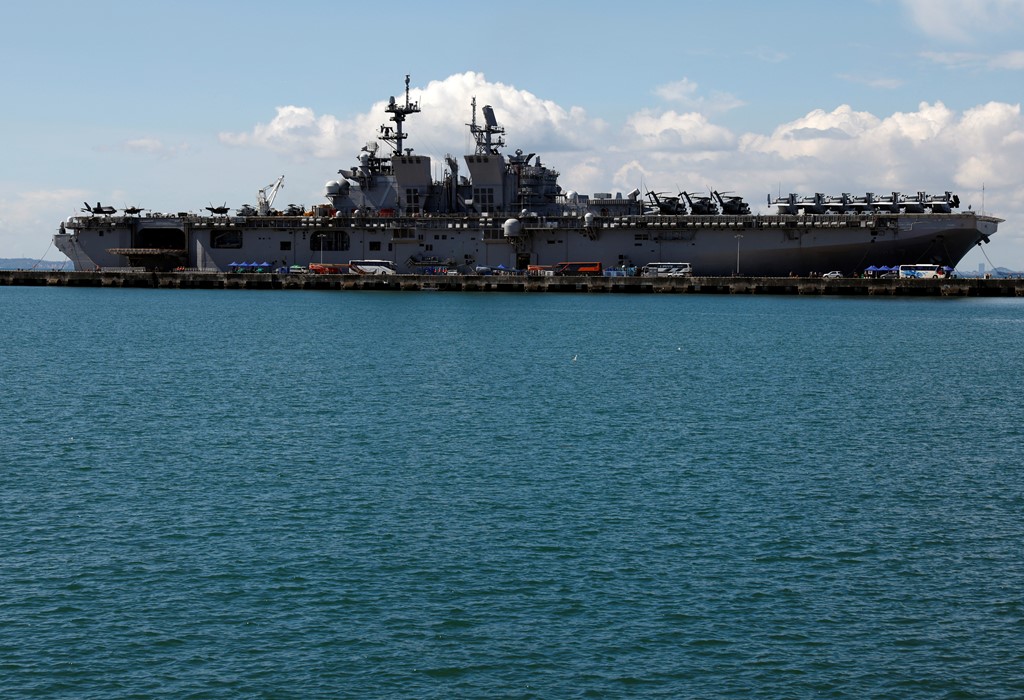
The sailors are part of the Tripoli Amphibious Ready Group, which includes the warships USS Tripoli, USS San Diego and USS New Orleans.
These amphibious Marine units are trained for rapid crisis response operations, including securing sensitive sites, evacuating personnel and establishing positions for follow-on forces.
The arrival of such forces is notable because if uranium has been placed inside a deeply buried complex, physically seizing the material or sealing the facility could require troops on the ground.
Military analysts say options in such a scenario could include:
• Securing the facility and removing nuclear material
• Destroying access points and permanently burying the site
• Conducting specialised operations to render the uranium unusable
If confirmed, the relocation of uranium to a hardened mountain complex would significantly complicate the campaign and could increase pressure for ground-based operations rather than airstrikes alone.

Israel is planning a major expansion of its ground operation in Lebanon, aiming to seize the entire area south of the Litani River and dismantle Hezbollah’s military infrastructure, according to Israeli and US officials cited by Axios.
If launched, the operation could become Israel’s largest ground invasion of Lebanon since the 2006 war, potentially placing southern Lebanon at the centre of the escalating regional conflict.
Israeli officials say the goal of the operation would be to take control of territory, push Hezbollah fighters north of the Litani River and destroy weapons depots and military positions in villages across the region.
A senior Israeli official said the operation would involve flattening buildings that Israel claims Hezbollah uses to store weapons or launch attacks, referencing tactics used during Israel’s campaign in Gaza.
Israeli forces have already deployed three armoured and infantry divisions along the Lebanese border since the start of the war with Iran, with some limited incursions taking place over the past two weeks.
On Friday the Israel Defense Forces (IDF) announced it was sending reinforcements to the border and mobilising additional reserve units ahead of a possible expanded operation.
The escalation follows a large coordinated attack earlier this week, when Hezbollah launched more than 200 rockets toward Israel while Iran fired dozens of ballistic missiles.
One Israeli official said that before the attack the government had been prepared to pursue a ceasefire in Lebanon, but that the latest barrage changed the situation.
“Before this attack we were ready for a ceasefire in Lebanon, but after it there is no way back from a massive operation,” the official said.
Israeli officials say the United States supports the goal of disarming Hezbollah, though Washington has reportedly urged Israel to limit damage to Lebanese state infrastructure.
According to US and Israeli officials, Washington asked Israel not to strike Beirut’s international airport, though Israel has not committed to protecting other state infrastructure during the operation.
The potential offensive has raised alarm in Lebanon’s government, which fears the war could lead to widespread destruction and prolonged Israeli occupation of southern Lebanon.
Hezbollah leader Naim Qassem warned that any ground invasion would become a direct battlefield confrontation, saying Israeli forces would face resistance fighters in close combat.
Meanwhile, the IDF has issued evacuation warnings across southern Lebanon, including for areas north of the Litani River and Hezbollah strongholds in Beirut’s southern suburbs.
The conflict has already displaced around 800,000 people in Lebanon, with at least 773 reported killed, many of them civilians.
Qatari authorities evacuated parts of central Doha shortly before missile interceptions were reported over the country, according to witnesses and official statements.
Witnesses said authorities cleared areas of Doha’s Msheireb district, a central government and business area that includes government offices and a Google office, early on Saturday.
Parts of Education City were also evacuated, witnesses said. The area hosts branch campuses of six United States universities, including major international academic institutions operating in Qatar.
Earlier, Qatar’s Interior Ministry announced that authorities were evacuating a “number of specified areas as a temporary precautionary measure.” The ministry did not initially disclose which locations were affected.
According to Reuters, the evacuations occurred roughly one hour before Qatari authorities reported intercepting missiles over the country.
The sequence of events has raised questions about whether officials may have had advance warning of a potential strike before the interceptions were announced.