
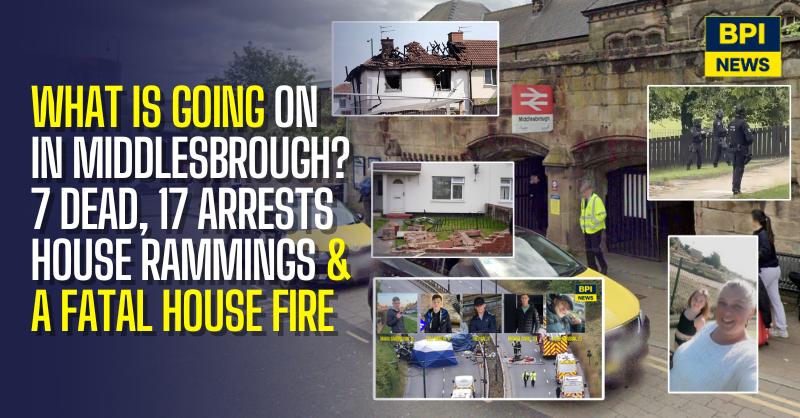
Seven people killed in a head-on collision. Seventeen arrests. Two vehicles allegedly using cloned number plates. Properties rammed with cars. Suspected firearms and drugs offences. A seven-year-old girl and her aunt killed in a suspected arson attack. Another house rammed. Armed police surrounding a property following a bladed-weapon assault.
In less than a week, a series of extraordinary events across Middlesbrough and surrounding Teesside communities has transformed what initially appeared to be a horrific wrong-way crash on the A66 into a sprawling investigation involving suspected serious and organised crime.
Some of those events are now known to be connected. Others may be connected. Some may ultimately prove to have nothing to do with each other.
That distinction is important.
Cleveland Police has itself described its investigation into the criminality preceding Saturday’s fatal crash as having “significant links to serious and organised criminal activity”.
However, investigators have not established publicly that every violent incident since the crash is part of a single gang feud or cycle of retaliation.
So what actually happened and why has Middlesbrough suddenly found itself at the centre of such an extraordinary police investigation?
It Begins Before The A66 Crash
The story does not begin when a Volkswagen Passat entered the A66 travelling in the wrong direction.
It begins earlier that night.
Cleveland Police says it received several reports of two vehicles being driven dangerously in the Middlesbrough area.
The first was believed to be a Volvo XC60.
Police say the Volvo was witnessed ramming properties around Middlesbrough.
The second vehicle was the Volkswagen Passat that would later be involved in the catastrophic A66 collision.
According to Cleveland Police, the Passat was believed to have been associated with the activities of the Volvo.
There was another significant detail.
Both vehicles were allegedly operating using cloned number plates in an apparent attempt to avoid detection.
Despite those plates, the vehicles were detected by Cleveland Police’s automatic number plate recognition technology.
The Volvo has since been traced and recovered in Middlesbrough as part of the criminal investigation.
Was A Gang Feud Already Underway?
This is where established police information and subsequent reporting need to be separated.
Reports have alleged that a property connected to the family of Cole Worthy, one of the five people later killed in the Passat, was among those rammed before the crash.
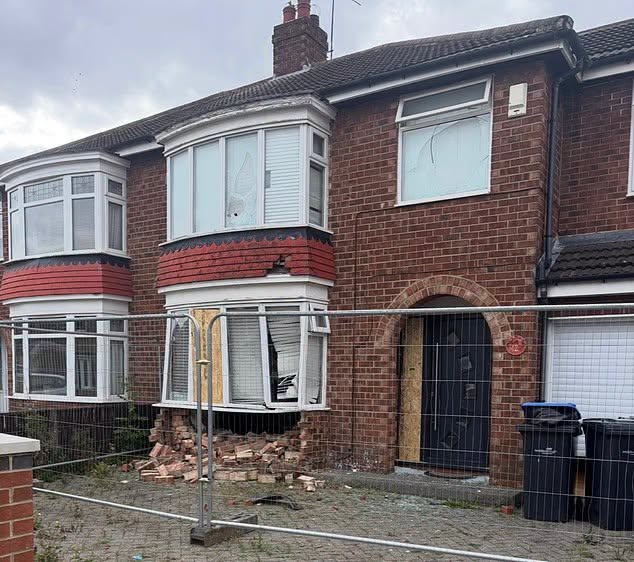
It has further been alleged that the Passat’s occupants then took to the streets looking for those responsible, potentially as part of a dispute involving rival criminal groups.
If correct, that would fundamentally change the understanding of why the Passat was being driven around Middlesbrough that night.
It would mean the events preceding the collision were potentially not simply joyriding or an attempt to provoke a police chase, but part of something much more serious.
However, Cleveland Police has not publicly confirmed the complete alleged revenge narrative, and it would therefore be premature to state as fact that the five men were pursuing a rival gang when police encountered them.
What police have confirmed is significant enough: the Passat was associated with the activity involving the Volvo, properties had been rammed, cloned plates were being used and the subsequent investigation has uncovered what the force describes as significant links to serious and organised criminal activity.
Police Begin Pursuing The Passat
Police subsequently located the Volkswagen Passat.
A pursuit began and continued for almost seven minutes.
Residents later described being woken by vehicles travelling at high speed through residential streets as police followed the car.
The pursuit ultimately reached the A66.
Then came the decision that would precede the disaster by seconds.
The Passat entered the dual carriageway travelling in the wrong direction.
Police abandoned the pursuit.
Approximately 10 seconds later, the Volkswagen collided head-on with a marked Cleveland Police armed response vehicle travelling correctly along the A66.
The two officers inside that vehicle had not been pursuing the Passat.
They had been in the area assisting with the search for it.
Seven People Die
There were no survivors.
PC Matthew Blades, 37, and PC Tom Clough, 38, were killed.
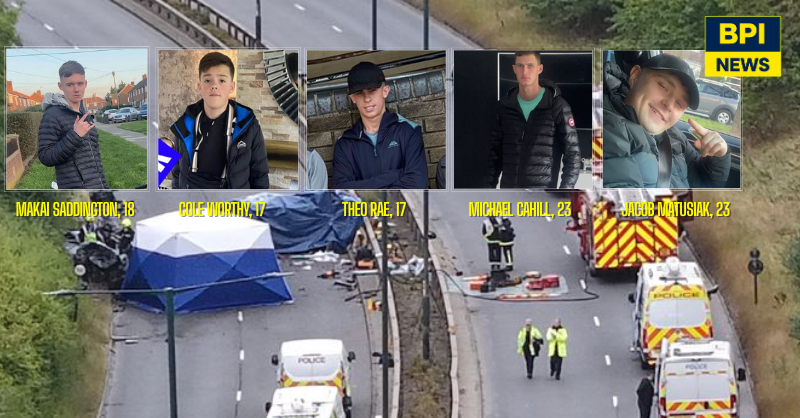
The five occupants of the Passat were also pronounced dead at the scene.
They were:
- Michael Robert Cahill, 23
- Jacob Matusiak, 23
- Makai Saddington, 18
- Theo Rae, 17
- Cole Robert Worthy, 17
The deaths of PC Blades and PC Clough sent shockwaves through Cleveland Police.
PC Clough had previously served with the Civil Nuclear Constabulary, joining in 2013 and working as an authorised firearms officer at Sellafield Operational Policing Unit until 2018.
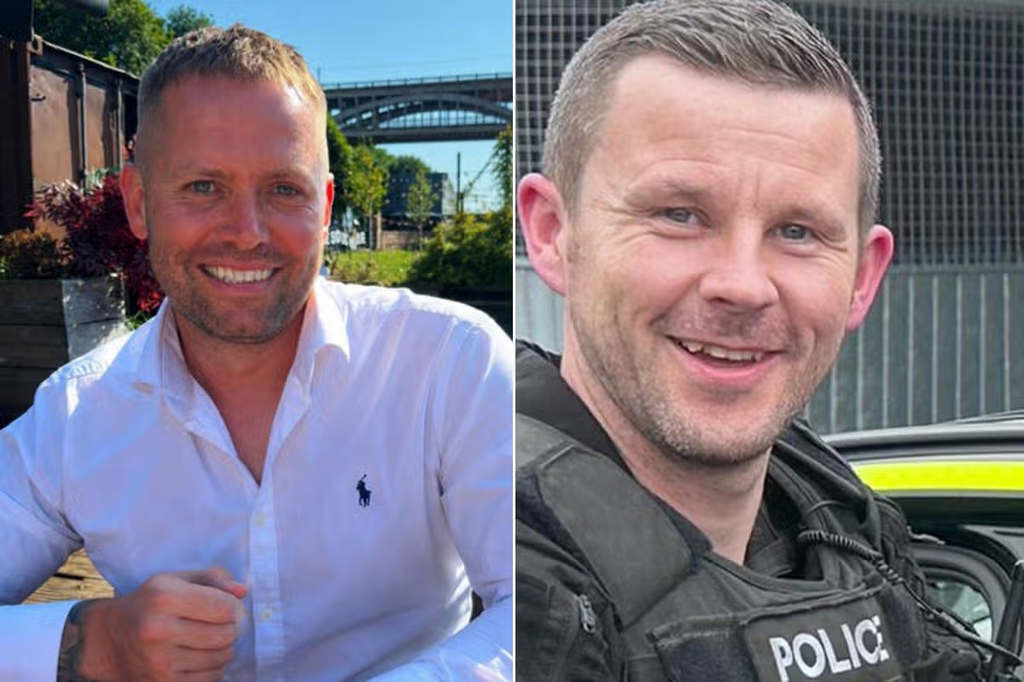
His former commanding officer described him as professional, dedicated and highly skilled, but also remembered his “fun-loving, cheeky nature” and ability to lift the spirits of those around him.
PC Blades had been an English teacher at Carmel College in Darlington before becoming a police officer.
The college remembered him as intelligent, kind and approachable and said he had given generously of himself to the young people he taught.
He leaves behind his wife and two sons.
The Investigation Suddenly Becomes Much Bigger
The scale of what police were investigating quickly became apparent.
Rather than focusing solely on how the Passat came to be travelling the wrong way along the A66, Cleveland Police launched a wider investigation into the alleged criminality preceding the collision.
Within days, 17 people had been arrested.
The first operation resulted in nine men and three women, aged between 19 and 61, being detained across Teesside.
Suspected offences included participation in the activities of an organised crime group, possession of firearms and possession of Class A and Class B drugs with intent to supply.
Five further arrests followed.
A 16-year-old boy, an 18-year-old man and a 21-year-old man were arrested on suspicion of participating in an organised crime group.
A 55-year-old man was arrested on suspicion of assisting an offender.
A 23-year-old man was arrested on suspicion of making threats to kill.
The National Crime Agency and North East Regional Organised Crime Unit have assisted Cleveland Police.
Two people from the earlier arrests have subsequently appeared in court on separate charges arising from the wider investigation.
The allegations against those arrested remain subject to the criminal justice process, and arrests do not establish guilt.
Four Of The Five Passat Occupants Had Previous Convictions
Police have also confirmed that four of the five people travelling in the Passat had previous convictions.
The offences across those individuals included vehicle crime, possession of a bladed article, assaulting police officers, drugs offences, shoplifting and driving offences.
Makai Saddington had previous convictions including possession of a knife in a public place, possession of a Class C drug, assaults on police officers and racially aggravated intentional harassment, alarm or distress.
Theo Rae had convictions including shoplifting, theft from motor vehicles, vehicle theft, aggravated vehicle taking, cannabis possession and assaulting a police officer.
Cole Worthy’s previous offences included common assault of a police officer and several motoring offences.
Jacob Matusiak had convictions for driving without a licence and using a vehicle without insurance.
Those records provide context to the police statement about criminality but do not, by themselves, establish what any individual was doing immediately before the A66 crash.
The TikTok Theory
Another theory emerged almost immediately after the collision.
Attention turned to social media and a trend involving young people filming themselves in vehicles during dangerous encounters with police.
BPI News has seen footage associated with Makai Saddington showing him driving at speed and footage involving cars and individuals wearing balaclavas.
That material contributed to questions about whether Saturday’s events had been staged or recorded for social media.
Cleveland Police has since specifically addressed that theory.
The force said there is currently no evidence that the activities on Friday night and Saturday morning were being filmed for TikTok.
That is significant because the emerging organised-crime investigation provides a potentially very different context for what happened before the Passat entered the A66.
Then Another Catastrophe
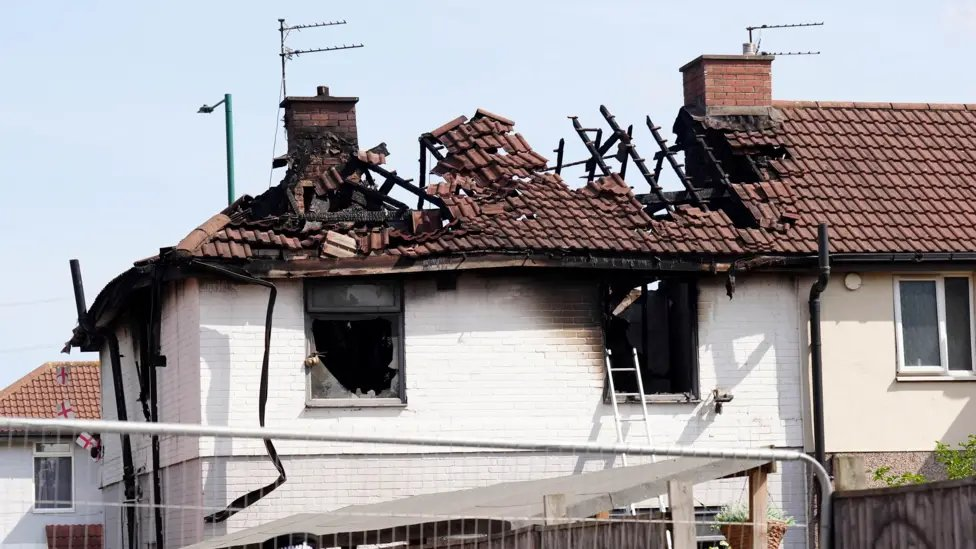
Four days after the A66 collision, emergency services were called to Birchington Avenue in Grangetown shortly after 5.20am.
A house was on fire.
By the time the scale of the tragedy became clear, two more people were dead.
They were 34-year-old Natalie McDonald and her seven-year-old niece, Valentina Foster.
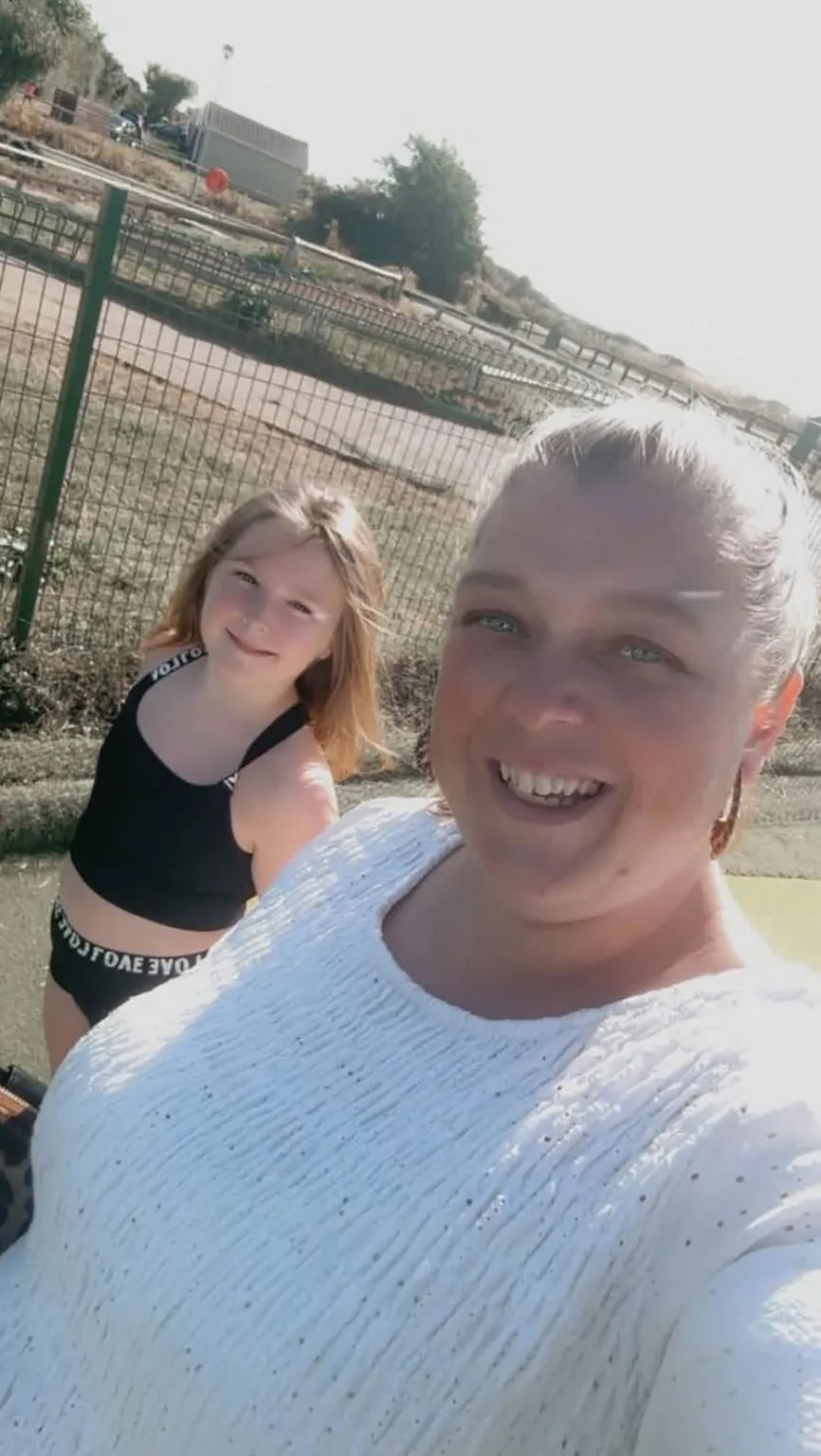
Another woman was left critically injured, while three other people suffered injuries that were not considered life-threatening.
Police launched a murder investigation.
Two men, aged 23 and 31, were arrested on suspicion of murder.
Is The Fire Connected To The A66?
That is now one of the biggest unanswered questions.
The geographical proximity and timing inevitably prompted speculation that the fire represented another episode in the violence surrounding the events preceding the A66 collision.
Police have not established that.
Cleveland Police has instead said it is keeping an open mind and cannot rule out links to wider organised crime.
That is materially different from saying such a link has been proven.
Investigators are examining what happened and whether the fire has any connection with the wider investigation.
Natalie McDonald’s Family: She Had Nothing To Do With Gangs
Amid speculation surrounding the fire, Natalie McDonald’s family has made one point particularly clear.
They say Natalie was not involved in gangs and had nothing to do with the A66 crash.
Her brother Josh Kirton described the deaths as senseless.
“My sister was not involved with anything to do with gangs, or the A66,” he said.
Natalie’s mother, Lisa Kirton, described her daughter as a beautiful and bubbly person with a “heart of gold”.
Valentina had been spending part of her summer holidays with her extended family.
Natalie’s 15-year-old daughter and another person reportedly escaped the burning property through an upstairs window.
Valentina’s father had died around two years earlier.
Natalie’s daughter said the only comfort the family could take was that Valentina would now be with her father.
Another Property Is Rammed
Before the community had even begun to process those deaths, another disturbing incident occurred.
At around 12.34am on Thursday, police received reports that a vehicle had crashed into a wall outside a property on Steele Crescent in South Bank.
Witnesses described hearing repeated bangs and alleged that the vehicle had gone backwards and forwards into the wall.
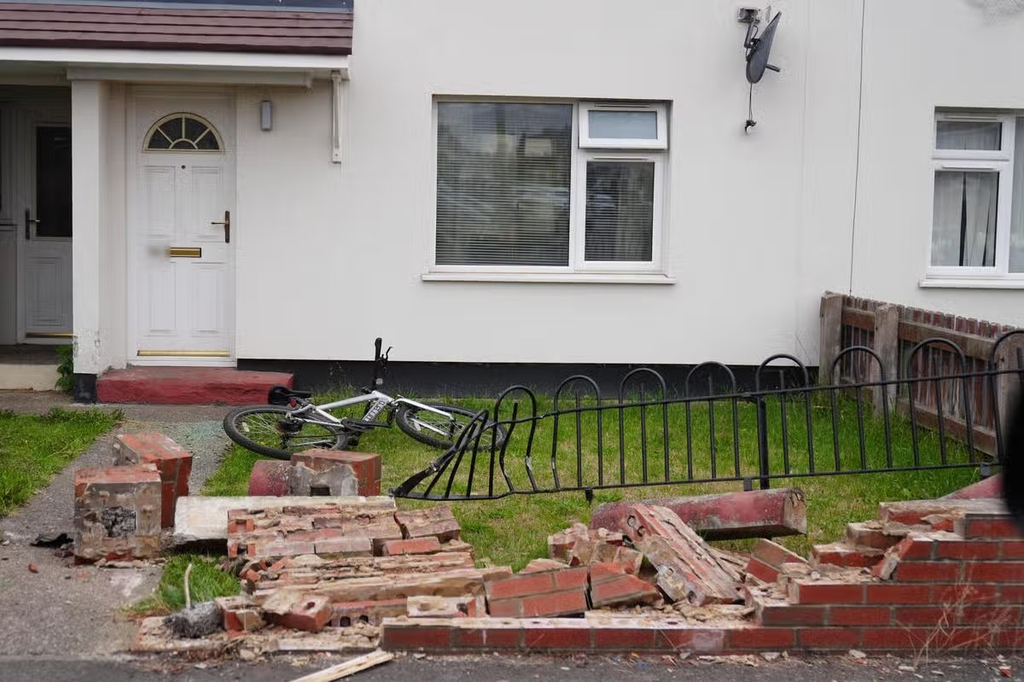
The property was empty.
No injuries were reported.
Once again, the immediate question was whether another deliberate property ramming had taken place as part of the wider violence.
Once again, police cautioned against assuming a connection.
Superintendent Emily Harrison said the investigation was at an early stage and that it had not been confirmed whether the incident was connected to wider organised crime.
Police increased their presence in the area while enquiries continued.
Armed Police Then Descend On Eston
Hours later came another serious incident.
A 39-year-old man was attacked with a bladed weapon at an address on Sedgemoor Road in Eston at around midday on Thursday.
Armed police were deployed to the area and footage circulated showing officers around a property.
An air ambulance also attended the area before the injured man was taken for treatment.
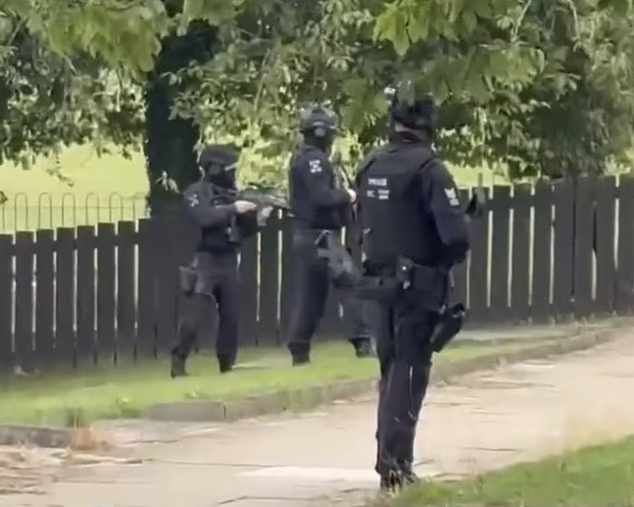
Police said no arrests had initially been made and enquiries were continuing.
Again, there is an important caveat.
There is currently no established evidence that the Eston attack was connected to the A66 investigation, the Grangetown fire or the property rammings.
Its occurrence amid an already extraordinary week of violence has inevitably heightened fears locally, but proximity and timing alone do not prove a connection.
So What Do We Actually Know?
Strip away the rumours circulating online and several important facts have now been established.
The events preceding the A66 crash involved more than the Passat alone.
Police were investigating two vehicles.
One, a Volvo XC60, was allegedly being used to ram properties.
The Volkswagen Passat was believed to have been associated with those activities.
Both were allegedly using cloned number plates.
Police pursued the Passat.
The pursuit ended when it entered the A66 travelling the wrong way.
Ten seconds later, it collided with an armed response vehicle, killing all seven people in the two vehicles.
The officers killed were not part of the pursuit.
The subsequent investigation has resulted in 17 arrests and has identified what Cleveland Police describes as significant links to serious and organised criminal activity.
Police have recovered the Volvo.
The National Crime Agency and a regional organised crime unit have become involved.
And investigators are looking beyond the collision itself to establish the criminal activity that preceded it.
What Has Not Been Established?
There is also a considerable amount that remains unknown.
Police have not publicly confirmed that the Passat’s five occupants were carrying out a revenge mission when they were pursued.
They have not established publicly that every house ramming was committed by opposing organised crime groups.
They have not established that the fatal Grangetown fire was retaliation for anything connected with the A66.
They have not established that Thursday’s Steele Crescent ramming was connected.
And there is currently no established connection between the bladed-weapon attack in Eston and the wider investigation.
Those gaps matter because the phrase “gang war” is increasingly being used to describe what is happening across the area.
There is evidence of serious organised criminality.
There are allegations of a feud.
There have been multiple acts of extreme violence.
But investigators are still working out precisely how those pieces fit together.
A Community Caught In The Middle
Whatever investigators ultimately establish about the connections between these incidents, their consequences are already being felt far beyond those suspected of criminal activity.
Two police officers went to work and never returned home.
A seven-year-old child is dead.
Her aunt is dead.
Families have been devastated.
Residents have woken to houses being rammed, emergency vehicles filling residential streets and armed officers deployed within their communities.
Natalie’s family says she had no involvement whatsoever with gangs.
That distinction underlines perhaps the most alarming aspect of what police are now confronting: when organised criminal disputes spill into residential streets, the consequences do not necessarily remain confined to those participating in them.
Cleveland Police says its response will continue in the weeks and months ahead as officers attempt to identify those responsible for the criminality preceding the A66 collision and dismantle the serious and organised crime networks believed to be operating in the area.
The investigation into Natalie McDonald and Valentina Foster’s deaths is continuing separately, with detectives still working to establish whether the fatal fire has any connection to that wider criminal activity.
Meanwhile, police are investigating the latest South Bank property ramming and the bladed-weapon assault in Eston, with no link between those incidents and the wider organised-crime investigation established at this stage.
1 comment