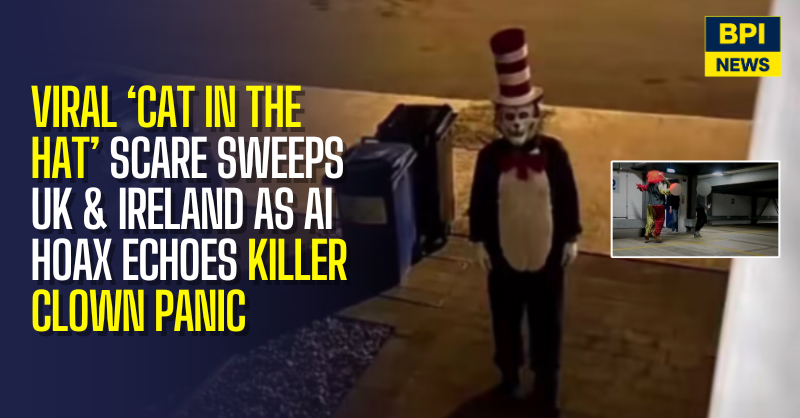
A bizarre viral phenomenon involving the Cat in the Hat is spreading across Britain and Ireland, with AI-generated “sightings”, people dressing as the Dr Seuss character and fabricated claims of attacks becoming so widespread that police have intervened to reassure the public.
The trend has particularly taken hold among teenagers on TikTok, where accounts have published supposed sightings of a life-sized Cat in the Hat wandering through streets and residential areas after dark.
Some are obvious jokes. Others are considerably more convincing, with artificial intelligence allowing users to produce images and videos that appear, at first glance, to document genuine sightings.
Millions of people have now encountered the phenomenon.
One TikTok post featuring the original costume from the 2003 film and asking “Help, what do I do?” accumulated more than 14 million views in three weeks.
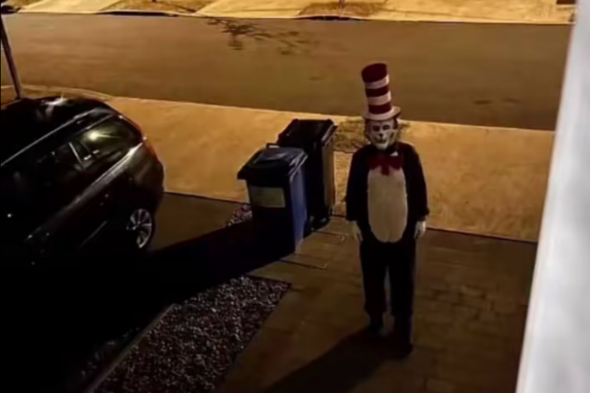
Other accounts have gone further.
One recently created account has posted footage of a real person wearing a Cat in the Hat costume while announcing locations they supposedly intend to visit. One video carried the message: “Kent I’m coming. lock your doors.”
Other users have subsequently reposted the footage while attaching the names of different towns and cities, allowing what began as a single piece of content to mutate into apparently local warnings across the country.
Police Forced To Debunk ‘Sightings’
The phenomenon has already become sufficiently widespread to prompt intervention from police.
AI-generated images have circulated particularly heavily around Limerick and Wexford in Ireland, with purported footage claiming to show the character wandering through local streets.
Gardaí in Wexford dismissed the sightings and confirmed images being circulated were AI-generated.
Similar rumours reached Yorkshire, where claims circulated that a “killer Cat in the Hat” had been spotted.
A fabricated Facebook post even purported to come from “Yorkshire Police” — despite no police force of that name existing.
South Yorkshire Police subsequently addressed the rumours and urged social-media users to check whether purported policing information actually originated from verified official accounts.
“The cat is not out of the hat on this one,” the force said, adding: “Please don’t believe everything you read on social media.”
There is currently no evidence supporting viral claims that a Cat in the Hat figure has been responsible for violent attacks.
How Did The Cat In The Hat Trend Start?
One of the catalysts appears to have been something considerably less sinister: a film memorabilia auction.
On August 8, pop-culture account DiscussingFilm posted images of the original Cat in the Hat costume used in the 2003 film starring Mike Myers after it was listed for auction.
The costume, separated from the lighting, movement and visual effects of the finished film, has an unusual appearance which prompted users to describe it as frightening.
The post received around 10 million views, with commenters describing the costume as “nightmare fuel” and comparing it to something recovered from a cursed attic.
The original costume is being offered as part of a Propstore auction featuring around 1,400 pieces of film and television memorabilia and is expected to fetch as much as $24,000 (£17,500).
From there, the image appears to have become raw material for an internet horror story.
TikTok accounts began placing the character into purported real-world situations. AI-generated photographs and videos followed, as did location-specific sightings, jokes, conspiracy theories and fabricated warnings.
The result is effectively a collaboratively written urban legend unfolding in real time.
Teenagers Are Becoming Genuinely Frightened
While much of the phenomenon is deliberately comedic, some younger social-media users have taken the supposed sightings seriously.
One 16-year-old described becoming frightened during a sleepover after spending hours watching Cat in the Hat videos.
After deciding to leave at around 3am, she became sufficiently worried about encountering the character that she called her mother to collect her.
Another teenager said she had heard about a purported “meet and greet” in woods near Galashiels in the Scottish Borders and was interested in attending.
Her mother immediately rejected the idea of her daughter meeting an unknown person in woodland at night.
That illustrates one of the more serious risks surrounding an otherwise absurd internet phenomenon.
There may be no murderous fictional cat roaming Britain, but a real person can put on a costume, create an account and use an established viral trend to attract attention or encourage people to meet them.
Echoes Of The Great Killer Clown Panic Of 2016
The phenomenon bears striking similarities to the “killer clown” craze which swept across several countries a decade ago.
The Great Killer Clown Panic of 2016 began with reports in the United States of mysterious people dressed as frightening clowns appearing near roads, woods and residential areas.
Reports rapidly multiplied.
Social media provided the perfect environment for the story. A photograph or unverified encounter in one town was immediately visible to millions of people elsewhere, encouraging both fear and imitation.
Soon, the distinction between urban legend and genuine incidents became increasingly difficult to untangle.
People really did begin dressing as clowns.
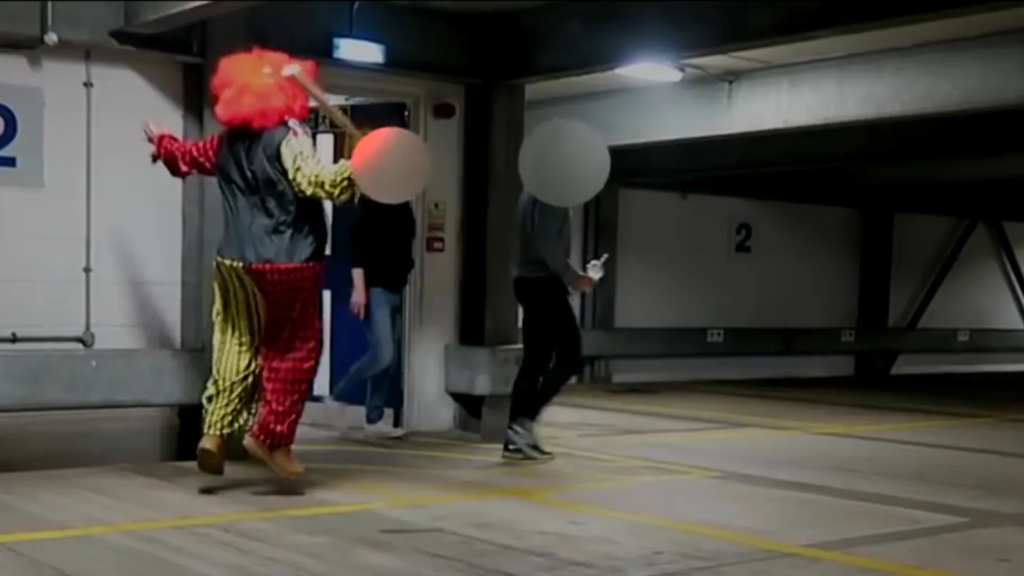
Some simply wanted to frighten friends or create viral videos. Others appeared in public places, chased people or behaved threateningly, prompting police responses and arrests.
The craze crossed the Atlantic and reached Britain, where police forces dealt with numerous reports involving people dressed as clowns.
This produced a self-reinforcing cycle: reports generated publicity, publicity encouraged copycats, copycats produced genuine incidents, and genuine incidents made subsequent rumours appear more believable.
The Cat In The Hat Scare Has One Major Difference
The technology available in 2026 makes the current phenomenon potentially much faster and harder to verify than its 2016 predecessor.
Ten years ago, creating convincing footage of a fictional character wandering through a real town generally required somebody actually wearing a costume or possessing relatively sophisticated editing skills.
Generative AI has dramatically lowered that barrier.
Someone can now produce apparently photographic evidence of a Cat in the Hat standing on a familiar street without anybody ever having been there.
That image can then be reposted without its original context, attached to the name of another town and presented as a new sighting.
A second user can create video.
A third can fabricate a police warning.
Someone else can actually buy a costume and recreate the supposedly fictional sighting.
At that point, an entirely fabricated story has generated a genuine physical event.
From Hoax To Copycat
That transition is also what made the 2016 clown phenomenon unusual.
The question eventually stopped being simply whether the original stories were true. Once thousands of people knew about the idea, some began deliberately making it true.
The Cat in the Hat phenomenon may be displaying the early stages of the same process.
There are already genuine videos of people wearing costumes alongside entirely synthetic images. Comedy clips show supposed police pursuits involving human-sized cats, while other creators have filmed themselves dancing in costume.
Scottish drag performer Ellie Diamond even joined the joke by announcing that she was not the “Cat in the Hat killer”, while Irish TikTok personality Garron Noone has mocked the supposed sightings.
This mixture of genuine costumes, parody, AI material and people sincerely believing the claims makes the trend increasingly difficult to categorise.
The Momo Challenge Offers Another Comparison
There are also parallels with the so-called Momo Challenge, an earlier internet panic centred on a disturbing image of a sculpture with bulging eyes and an exaggerated smile.
Warnings spread claiming children were being contacted or encouraged to perform dangerous acts.
Despite enormous publicity, fact-checkers and authorities found no evidence supporting many of the most alarming claims attributed to the supposed challenge.
The panic nevertheless became real in another sense: parents and children became frightened by something they had been repeatedly warned about.
The Cat in the Hat phenomenon similarly demonstrates how an unverified story does not necessarily need to be true to produce real-world consequences.
Why These Trends Spread
Several ingredients make scares of this kind particularly suited to social media.
They involve an instantly recognisable character, a frightening visual, an unresolved mystery and something that can easily be localised.
“Cat in the Hat spotted in Britain” is distant.
“Cat in the Hat spotted on your street” is personal.
Algorithms then reward material that keeps people watching, commenting and sharing. Fear, humour and curiosity can all produce those reactions.
Every person attempting to debunk, parody or investigate the phenomenon can inadvertently expose it to another audience.
The story also becomes participatory. Users are not simply watching an urban legend develop; they can add another sighting, photograph, costume, theory or joke themselves.
When An Internet Joke Becomes A Real Safety Issue
There remains no evidence that the fictional character itself represents any threat, and police have explicitly debunked purported sightings.
The more credible concern is what real people may do with the phenomenon.
Someone wearing a costume can deliberately frighten members of the public. Fake police statements can cause unnecessary alarm. AI-generated footage can falsely implicate locations or individuals.
Invitations encouraging teenagers to meet supposed characters in woods, parks or isolated locations present a different and potentially genuine safeguarding issue regardless of whether the person issuing the invitation intended it as a joke.
The experience of the killer clown craze demonstrates another possibility: enough attention can encourage increasingly extreme attempts to outperform previous viral videos.
For now, the “Cat in the Hat” roaming Britain and Ireland is an internet creation assembled from an old movie costume, AI-generated imagery, genuine costumed performers, jokes and unsubstantiated claims.
Police advice remains to verify purported warnings against official sources before sharing them and to treat invitations from unknown people to meet at night or in isolated locations seriously.