
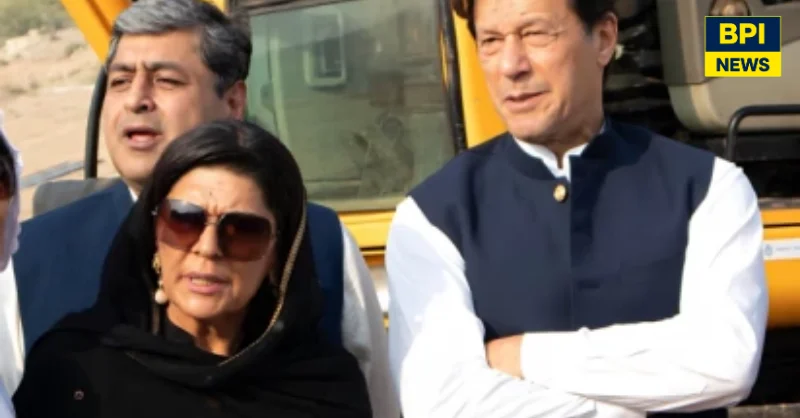
Feroz Khan – Islamabad Imran Khan’s sister Aleema Khan has been detained in Lahore after the city’s deputy commissioner ordered that she be held for 30 days under Pakistan’s controversial Maintenance of Public Order law.
An order dated September 20 from Lahore Deputy Commissioner Muhammad Ali Ijaz directed the detention of Aleema and Muhammad Ameer under the Punjab Maintenance of Public Order Ordinance, 1960.
Their custody was ordered to be placed under the superintendent of Kot Lakhpat Central Jail.
The order says both detainees can make a representation to the provincial government challenging their detention.
BPI News Speaks To Police Officer
BPI News has spoken to a Pakistani police officer with knowledge of Aleema Khan’s detention.
The officer said she was arrested outside her home in Lahore.
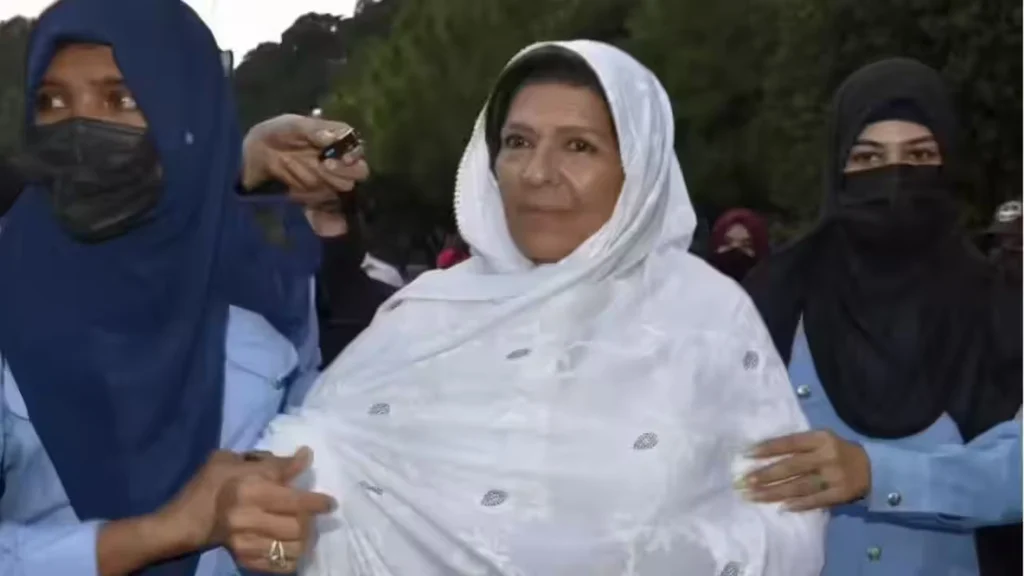
Asked for any further information about the circumstances of the arrest, he said he had nothing else to say about the matter.
His account is consistent with PTI’s claim that Aleema was taken from outside her residence.
Authorities Say Aleema Poses Public Order Risk
The deputy commissioner’s order refers to a report from Lahore’s capital city police officer and other police intelligence assessments.
According to the order, authorities allege that Aleema and Ameer are “prejudicial to the public safety and maintenance of public order”.
The document refers to the May 9, 2023 protests which followed Imran Khan’s arrest and alleges that they were involved in roadblocks and demonstrations.
Authorities further allege that they motivated workers to damage public and government property.
The latest order claims the pair are again mobilising supporters through social media and public meetings in a way officials believe could create a law-and-order situation.
Those are allegations contained in an administrative detention order rather than findings of guilt by a criminal court.
PTI Says Aleema Was ‘Abducted’
PTI initially described Aleema as having been “abducted” by authorities from outside her home.
PTI Chairman Barrister Gohar Ali Khan said he had been informed of the detention by Aleema’s sister, Noreen Niazi.
Gohar said the party had already made clear that its September 27 protest would be peaceful.
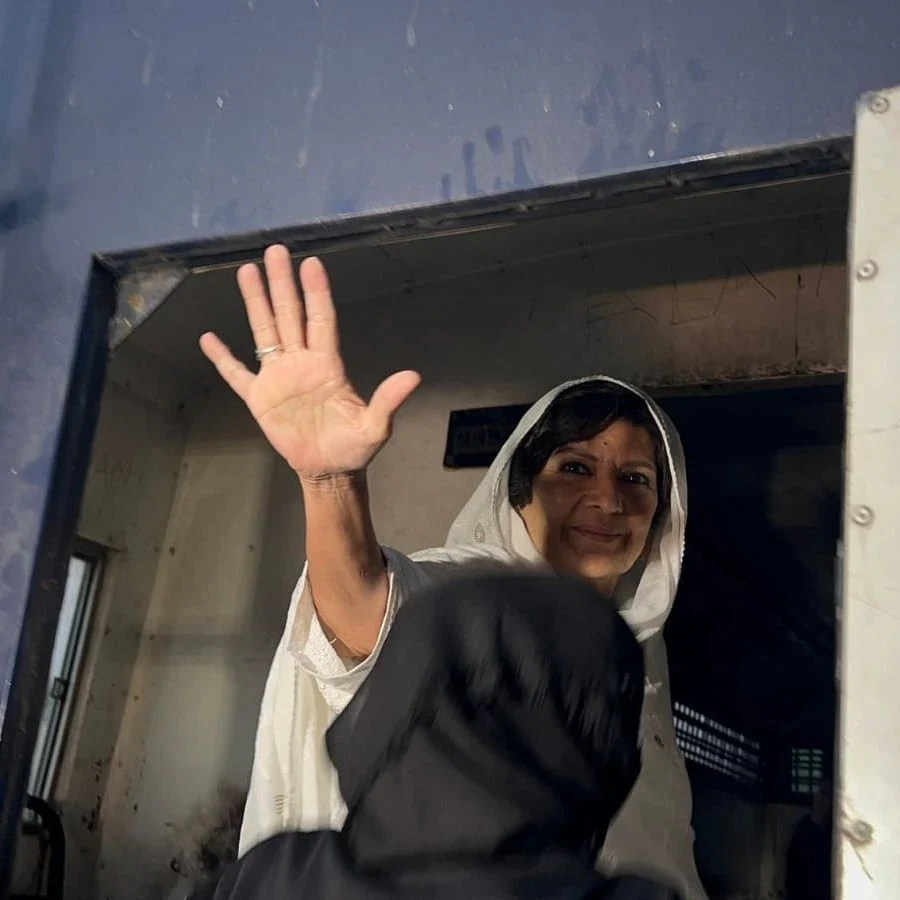
He argued that detaining Aleema under the MPO risked increasing tensions and demanded her immediate release.
PTI Central Information Secretary Sheikh Waqas Akram also called for Aleema to be produced before a court.
The opposition alliance Tehreek-i-Tahaffuz Ayeen-i-Pakistan has also condemned the detention and called for her release.
Detention Comes Ahead Of September 27 Protest
Aleema’s detention comes one week before PTI’s planned march towards Islamabad.
The party says it intends to demonstrate for the release of Imran Khan and what it describes as the supremacy of the Constitution.
Authorities have been making extensive security preparations ahead of the protest.
Preventive detention orders have already been issued against PTI workers in several parts of Punjab, while Islamabad police have also detained activists and workers.
Containers and barriers have been positioned around entry points to the federal capital as authorities prepare for potential large-scale demonstrations.
What Is The MPO?
The Maintenance of Public Order Ordinance dates back to 1960 and gives authorities powers of preventive detention.
Unlike an ordinary criminal prosecution, preventive detention is intended to stop someone from carrying out conduct authorities believe could threaten public safety or public order before that conduct occurs.
Section 3 allows the government, where it says such action is necessary to prevent conduct prejudicial to public safety or public order, to order a person’s arrest and detention.
The power has repeatedly been used against political activists and other individuals during periods of unrest.
Why The Law Is So Controversial
The MPO has become one of Pakistan’s most disputed public-order laws because a person can be detained through an administrative order without first being convicted of a criminal offence.
Critics argue that the breadth of the power makes it vulnerable to political misuse.
They also question whether detention orders are always based on sufficiently individualised evidence rather than generalised assessments of political activity.
Government authorities have defended preventive detention as necessary in circumstances where they believe there is a credible risk of violence, disruption or threats to public safety.
The dispute therefore centres on how far the state should be able to restrict a person’s liberty before any new criminal conduct has actually taken place.
Sections 3 And 16 Challenged In Lahore High Court
The controversy is currently before the Lahore High Court.
Two opposition members of the Punjab Assembly have challenged sections 3 and 16 of the MPO.
Their lawyers argue that the provisions conflict with constitutional rights including liberty, due process, freedom of movement, freedom of assembly and equality before the law.
The challenge also raises concerns about restrictions on judicial review of detention orders.
The Lahore High Court reserved its decision on September 19 on whether the latest petition challenging the provisions is maintainable.
Thousands Previously Detained
The scale at which the MPO has previously been used has intensified criticism of the law.
Punjab government figures submitted during earlier court proceedings showed that thousands of people were detained under MPO orders following the May 9 unrest.
More than 4,700 people were detained in Punjab, with thousands later released after their detention orders were withdrawn.
Those figures have been cited by critics as evidence of what they describe as overly broad use of preventive detention.
Authorities have maintained that such measures were necessary to control serious public disorder.
Courts Have Previously Overturned MPO Orders
Pakistani courts have repeatedly scrutinised individual detention orders.
On September 19, the Lahore High Court set aside an MPO detention order against PTI leader Usman Farooq after government lawyers were unable to satisfy the court about the grounds for keeping him detained.
In earlier cases, courts have also overturned detention orders where judges found insufficient evidence or inconsistencies in the reasons given.
The Islamabad High Court has previously stressed that preventive detention powers must be exercised on the basis of sufficient material and within constitutional protections surrounding liberty.
PTI Says Crackdown Is Political
PTI says the growing number of detentions ahead of September 27 amounts to a political crackdown designed to prevent mobilisation.
The Punjab and federal authorities reject that characterisation and say measures are being taken to protect public order and prevent roads, public buildings and key infrastructure from being disrupted.
The Islamabad High Court has separately ruled that political parties do not have an unrestricted right to occupy roads, highways, interchanges, toll plazas and public buildings during protests.
Aleema Khan’s detention is now likely to become another major test of how far the MPO can be used against opposition figures ahead of a planned political demonstration.