Saudi Arabia and Yemen’s Houthis continue to exchange strikes as fighting spreads across Yemen and threatens regional security.
Missile and drone attacks have targeted Saudi airports and energy infrastructure, while Saudi-backed forces battle Houthi fighters across several fronts.
Follow BPI News for live updates on military operations, casualties, regional developments and diplomatic efforts.
BPI NEWS LIVE
Live coverage
Follow the latest verified developments as they happen, reported by the BPI News team.
Houthis Claim Four Military Operations As Saudi Arabia Confirms Damage To Aramco Tower In Riyadh
Houthi military spokesman Brigadier General Yahya Saree says Yemen's Ansarallah movement has conducted four military operations using ballistic missiles, cruise missiles and drones against Saudi targets and Saudi-backed forces in Yemen. In a statement issued on Sunday, 8 November, Saree claimed the first operation targeted King Khalid International Airport, Aramco oil storage tanks and Riyadh's financial district, causing significant damage.
BPI News was first to confirm damage to Aramco Tower in Riyadh's King Abdullah Financial District through Pakistani workers in the Saudi capital who spoke directly to the newsroom. Three witnesses separately told AFP that the skyscraper had sustained damage. Saudi Arabia's Energy Ministry subsequently acknowledged limited damage to an Aramco administrative building, attributing it to falling interception debris and reporting no injuries or fatalities.
Saree claimed the second operation struck Aramco facilities in Abqaiq, causing fires. He said the third targeted Saudi-backed forces commanded by Fares Al-Shammari east of Al-Jawf and in Madghal district of Marib, while the fourth struck forces commanded by Badr Al-Harbi in Al-Mudaraba, Lahij governorate. The Houthis claimed numerous casualties in both ground-target operations, but the figures have not been independently verified.
The Saudi-led coalition separately reported intercepting two ballistic missiles launched by the Houthis towards Riyadh and two cruise missiles over Riyadh and southern Saudi Arabia. The coalition's interception announcements differ from Saree's claims of direct hits on several targets.
Saree said the operations were launched in retaliation for Saudi strikes on a market in Al-Wazi'iyah and residential buildings in Bani Hushaysh, which he claimed caused more than 120 deaths and injuries combined. He warned that attacks against Saudi Arabia would continue until the military offensive and blockade of Yemen ended.
BPI News Sources Confirm Damage To Aramco Tower In Riyadh's King Abdullah Financial District
Pakistani workers in Riyadh have confirmed to BPI News that Aramco Tower in the King Abdullah Financial District (KAFD) sustained damage following missile attacks on the Saudi capital on Sunday, 8 November.
The accounts corroborate reports from three witnesses cited by AFP. One witness claimed the tower had been targeted, while two others confirmed seeing damage to the building.

The Saudi-led coalition said its air defence systems intercepted and destroyed two ballistic missiles launched by Yemen's Houthi movement towards Riyadh. It subsequently announced the interception of two cruise missiles in the Riyadh and southern regions, without identifying their origin.
Loud explosions were reported across Riyadh during the attacks. Although the Pakistani workers contacted by BPI News and witnesses cited by AFP reported damage to Aramco Tower, it remains unclear whether the building sustained a direct missile impact or damage from falling interception debris.
Petition Calling For Inquiry Into UK's Role In Gaza War Nears 100,000 Signatures
A parliamentary petition calling for an independent public inquiry into Britain's involvement in Israeli military operations in Gaza has surpassed 91,000 signatures, bringing it closer to the 100,000 threshold for consideration for a debate in Parliament.
The petition, launched on 23 October by Your Party chair Jennifer Forbes, seeks scrutiny of UK arms supplies, surveillance aircraft, the use of Royal Air Force bases and intelligence-gathering activities connected to Gaza since October 2023. Campaigners want an inquiry empowered to question ministers and government officials about their decisions and legal advice concerning allegations of genocide.
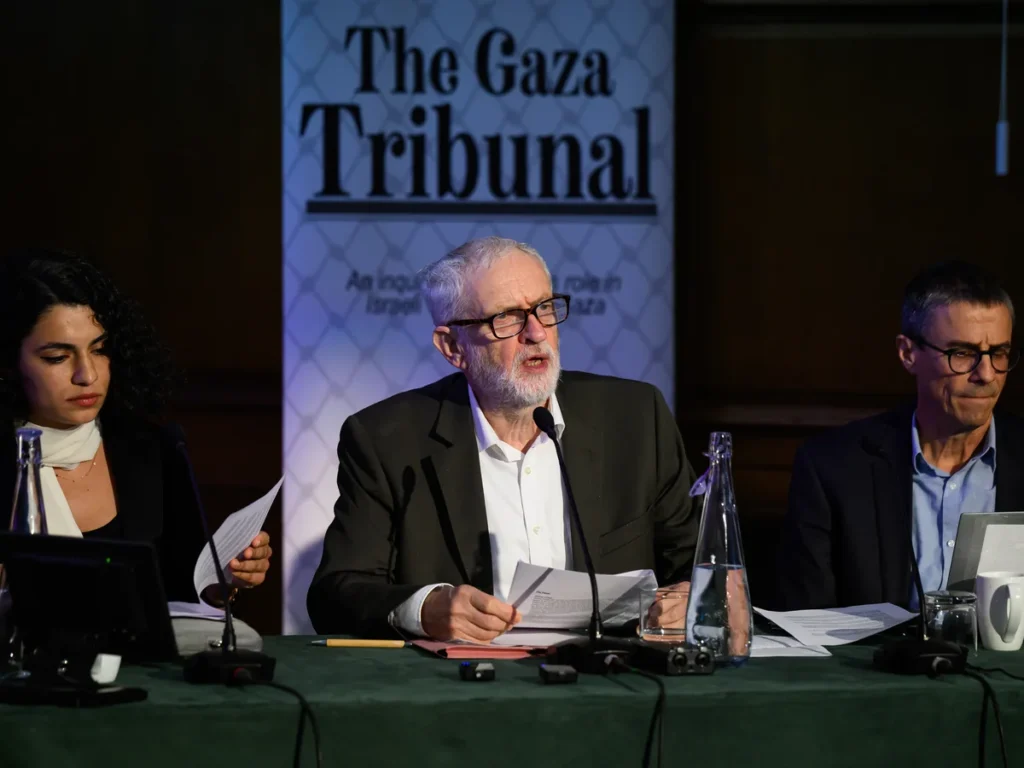
The campaign follows the government's rejection of former Labour leader Jeremy Corbyn's call for an inquiry. Foreign Office minister Stephen Doughty said in an October response that existing parliamentary scrutiny made a separate investigation unnecessary.
Corbyn has criticised the government's position, arguing that the public deserves answers about Britain's involvement in Israeli military operations, including arms exports, RAF facilities and surveillance flights.
The official parliamentary petitions website confirms that the campaign has exceeded 91,000 signatures. Reaching 100,000 would make it eligible for consideration for a parliamentary debate, but would not automatically establish a public inquiry.
Death Toll Rises To 22 In Reported Saudi Airstrikes On Yemen's Sana'a Governorate
The death toll from reported Saudi airstrikes on the Al-Shariya area of Yemen's Sana'a governorate has risen to 22, with another 30 people wounded, according to media outlets affiliated with the Houthi movement.
The Houthis' Saba news agency and Al-Masirah TV reported the updated figures, saying women and children accounted for most of those killed.
“The number of victims of the Saudi enemy warplane massacre in the Al-Shariya area… has risen to 22 citizens, most of them children and women, while the number of wounded has risen to 30,” Saba reported, according to AFP.
The reported attack comes amid continued Saudi-led military operations in Yemen and Houthi missile and drone attacks against Saudi Arabia.
Saudi authorities have not been quoted responding to the latest allegations, and the casualty figures and responsibility for the strikes remain independently unverified.
Qatar Reports Progress In Iran–US Talks As Saudi Arabia Intercepts Houthi Missile And Deadly Strikes Hit Yemen
Qatar says significant progress has been made in negotiations between Iran and the United States, with Prime Minister Sheikh Mohammed bin Abdulrahman Al Thani expressing confidence that an agreement remains possible. He said Washington was still willing to pursue a diplomatic settlement following the American midterm elections, urging both sides not to delay negotiations while seeking a perfect agreement.
The latest diplomatic proposals reportedly include lifting the US naval blockade on Iranian ports, releasing some frozen Iranian assets and allowing international inspections of Iranian nuclear facilities, followed by reopening the Strait of Hormuz. US Vice President JD Vance has reportedly maintained frequent contact with Pakistani and Qatari mediators, including Field Marshal Asim Munir. No agreement has been finalised.
Meanwhile, Saudi-led coalition forces say they intercepted and destroyed a Houthi cruise missile heading towards Riyadh on Saturday, following the interception of a drone on Friday. The coalition also reported destroying two ballistic missiles targeting Najran and another drone over Makkah Province. The reported interceptions have not been independently verified.
In Yemen, Houthi-run health authorities say airstrikes on the village of Al-Shariya, near Sana'a, killed 22 people and wounded 30 others, mostly women and children. The Houthis blamed Saudi Arabia, which has not immediately commented. The strikes follow a separate attack on a market in southern Yemen that reportedly killed 30 people, with the opposing sides disputing responsibility.
Iran's Revolutionary Guard has separately warned that it could change its nuclear doctrine if ordered by the country's leadership, while Iranian media reported an oil tanker catching fire after allegedly striking a mine in the eastern Strait of Hormuz. The maritime incident remains unverified, and negotiations to restore unrestricted shipping through the waterway continue
Exclusive: JD Vance Maintains Direct Contact With Pakistani And Qatari Mediators As US-Iran Negotiations Advance
US Vice President JD Vance has remained in constant contact with Pakistani and Qatari mediators as Washington explores a new ceasefire with Iran and the possibility of restarting nuclear negotiations, two Pakistani security sources familiar with the discussions have told BPI News.
The sources said current efforts are focused on arranging a working-level technical meeting between American and Iranian officials, although no venue or date has been agreed. Vance has been communicating almost daily with Pakistan's Field Marshal Asim Munir, Qatar's Prime Minister Sheikh Mohammed bin Abdulrahman Al Thani and other intermediaries.
One senior Pakistani security source said Islamabad, despite being Pakistan's preferred venue, was increasingly unlikely to host the next meeting. “Pakistan would obviously prefer Islamabad, but at the moment it looks unlikely,” the source said.
The source cited concerns over the economic disruption caused by extensive security arrangements, road closures and restrictions on movement during high-level international negotiations, particularly as Pakistani households and businesses continue facing financial pressures.
BPI News understands that Pakistan remains closely involved in the diplomatic process regardless of where negotiations eventually take place. White House envoy Steve Witkoff and Jared Kushner are also participating in discussions, while Washington continues to seek verifiable restrictions on Iran's nuclear programme.
The diplomatic efforts continue amid military tensions following an American strike against an Iranian anti-aircraft missile launcher on Qeshm Island. No new ceasefire agreement has been announced, and the proposed technical meeting has yet to be scheduled.
Trump Threatens Renewed Iran Strikes As Syria Aids Saudi Arabia And Maritime Attacks Continue
US President Donald Trump has warned that Washington could resume major military strikes against Iran, saying a decision would be announced soon. His comments come as Qatar continues mediation efforts, with Trump speaking to Emir Sheikh Tamim bin Hamad Al Thani about reducing tensions and pursuing a diplomatic settlement.
Iran has submitted a new nuclear proposal to the United States through Qatari intermediaries, according to a senior Iranian official cited by Reuters. However, Tehran maintains that Washington must first satisfy its seven conditions before negotiations resume or the Strait of Hormuz reopens. Qatar's prime minister has urged both sides to accept a workable agreement rather than seek a perfect settlement.
Meanwhile, Syria has sent military advisers and training personnel to Saudi Arabia, according to Syrian military sources and a senior US official. The personnel are reportedly assisting Saudi and Yemeni forces following a defence cooperation agreement signed during Syrian President Ahmed al-Sharaa's visit to Riyadh. Türkiye has also ratified its collective defence agreement with Pakistan and Saudi Arabia, clearing the way for further military cooperation.
Saudi-led coalition forces have reported intercepting two Houthi ballistic missiles targeting Najran, while a separate drone was intercepted over Makkah Province. In the Gulf, one seafarer was killed following a suspected missile attack on the tanker Velos Sapphire. Iran's Revolutionary Guard separately claimed two additional tankers struck mines in the Strait of Hormuz, although those incidents remain independently unverified.
The developments follow Thursday's meeting between Russian President Vladimir Putin and Iranian security chief Mohsen Rezaei in Moscow. Rezaei delivered a message from Supreme Leader Mojtaba Khamenei and said discussions covered regional security and energy cooperation. No agreement to end the US-Iran conflict or reopen the Strait of Hormuz has been announced.
Iran's Security Chief Delivers Supreme Leader's Message To Putin During Kremlin Talks
Russian President Vladimir Putin has met Iran's Supreme National Security Council Secretary Mohsen Rezaei at the Kremlin in Moscow, where the Iranian official delivered a message from Supreme Leader Mojtaba Khamenei, according to Iranian state media.
The meeting on Thursday, 5 November, was confirmed by Kremlin spokesman Dmitry Peskov. Iran's state broadcaster IRIB reported that Rezaei personally delivered the message, although its contents have not been disclosed.
Russian foreign policy adviser Yuri Ushakov and military intelligence chief Igor Kostyukov attended the talks, alongside Iran's Deputy Supreme National Security Council Secretary Ali Bagheri Kani and Ambassador to Russia Kazem Jalali.
The visit follows a telephone conversation between Putin and Rezaei on Monday, during which the two officials discussed developments in West Asia and reaffirmed the importance of strategic cooperation between Moscow and Tehran.
The meeting comes as diplomatic efforts continue to resolve the US-Iran conflict and reopen the Strait of Hormuz. Neither Russia nor Iran has disclosed the meeting's agenda or announced any agreement resulting from the discussions.
Saudi Arabia Issues New Security Alerts As Tanker Attacked Near Qatar And Syria Signs Defence Agreement
Saudi Arabia has issued new security alerts in Yanbu, its major Red Sea oil export hub, and Sharurah, near the Yemeni border, as the Saudi-led coalition reports intercepting a ballistic missile launched by Yemen's Ansarallah movement towards Madinah. The Houthis have not claimed Thursday's reported attack but said on Wednesday that they targeted Riyadh's international airport, a claim Saudi authorities have not confirmed.
Meanwhile, a commercial tanker was struck by two unidentified projectiles approximately 50 nautical miles north of Madinat ash Shamal, Qatar, at 23:20 GMT on Wednesday. The United Kingdom Maritime Trade Operations agency reported the incident, saying the crew's condition and the extent of damage remained unclear. Responsibility for the attack has not been established.
Separately, Saudi Arabia and Syria have signed a defence agreement during President Ahmed al-Sharaa's visit to Riyadh for talks with Crown Prince Mohammed bin Salman. Details of the agreement have not been disclosed. Egypt has already authorised military assistance to Saudi Arabia, while Türkiye is moving towards ratifying its collective defence agreement with Saudi Arabia and Pakistan.
In Yemen, fighting continues between Houthi forces and troops aligned with the internationally recognised government, particularly around Taiz and Lahij. Both sides have reported gains and losses during the past month, with no indication that hostilities are easing.
Diplomatic efforts involving Qatar also continue as Washington and Tehran review proposals aimed at ending the wider conflict. Iran maintains that reopening the Strait of Hormuz must be linked to measures addressing the American naval blockade and sanctions, while disagreements over its nuclear programme remain unresolved.
US Strikes Iran's Qeshm Island As Houthis Claim New Saudi Attacks And Qatar Intensifies Mediation
American forces have carried out military strikes on Iran's Qeshm Island near the Strait of Hormuz, with US officials describing the operation as a limited defensive response to Iranian missile activity threatening American aircraft. Iranian media reported explosions on the island and near Bandar Lengeh, while the Revolutionary Guard claimed to have shot down an American MQ-9 drone and two other US unmanned aircraft. The Iranian claims remain unverified.
Meanwhile, Qatar says Washington and Tehran are examining proposals to resume negotiations following more than three hours of discussions between Qatari mediators and Iranian officials in Tehran on Monday. An official familiar with the talks said responses were expected within 36 hours, although a senior Iranian official told Reuters the two countries remained far from an agreement. President Donald Trump has separately said a diplomatic settlement remains possible.
In Yemen, Houthi military spokesman Brigadier General Yahya Saree announced a drone attack against Abha International Airport and a ballistic missile strike against Khamis Mushait Air Base in southwestern Saudi Arabia. Saree claimed both operations hit their targets and that flights at Abha were disrupted. The announcement follows earlier Houthi claims of attacks against Dammam airport and military facilities in Jizan. Saudi authorities have not confirmed the claimed impacts.
Iranian Foreign Minister Abbas Araghchi has also confirmed that discussions with Saudi Arabia are continuing over regional security arrangements following last week's meeting in Tehran involving Iran, Pakistan, Saudi Arabia and Türkiye. Tehran's military leadership has separately demanded an end to regional hostilities, the lifting of sanctions, the release of frozen assets and recognition of Iran's claimed sovereignty over the Strait of Hormuz as part of a wider security framework.
The diplomatic developments come as Tehran maintains that the Strait of Hormuz will not reopen until its conditions are met, while Washington continues to demand progress on Iran's nuclear programme. No agreement to end the conflict or restore unrestricted commercial shipping through the waterway has been announced.
Iran Says Field Marshal Asim Munir Raised Concerns Over Israeli Threat And Alleged Anti-Pakistan Cooperation
Pakistan's Chief of Defence Forces, Field Marshal Asim Munir, warned of the perceived threat posed by Israel to Pakistan and raised concerns about alleged cooperation between Hindu and Jewish groups directed against Muslims and Pakistan during recent talks in Tehran, according to Iran's Supreme National Security Council Secretary Mohsen Rezaei.
Speaking to Iranian media about the quadrilateral security meeting held on 26 October, Rezaei said Munir had discussed Israel's potential future actions towards Pakistan and what he described as developing links between Hindu and Jewish groups that could threaten the country.
Rezaei said the concerns expressed by Munir and other visiting officials reflected intelligence and assessments about Israel's possible future conduct towards their respective countries.
The Iranian security chief also revealed that Saudi Defence Minister Prince Khalid bin Salman had warned that Israel could target Türkiye after Iran before turning towards Saudi Arabia. Turkish intelligence chief Ibrahim Kalin reportedly expressed similarly strong concerns.
Rezaei said he was surprised by the strength of the officials' positions against Israel, remarking that they appeared “more Hezbollah-like than many of our own friends”.
The comments offer further details about the Tehran meeting involving Iran, Pakistan, Saudi Arabia and Türkiye, although the Pakistani military has not publicly confirmed Rezaei's account of Munir's remarks.
Iran Announces Two-Day Plan To Reopen Strait Of Hormuz As Qatar-Led Negotiations Continue
Iran says it has reached a revised two-day framework with Qatari mediators for reopening the Strait of Hormuz, with Foreign Minister Abbas Araghchi confirming that navigation could resume within 48 hours if the United States implements Tehran's conditions.
Speaking to Al Jazeera, Araghchi said Qatar had proposed shortening Iran's original seven-day timetable, with both sides eventually agreeing on a framework requiring Washington to take specified measures on the first day before the strait reopens on the second. The United States has not publicly accepted those terms.
Araghchi also described recent correspondence from US Vice President JD Vance as a positive step towards maintaining negotiations. President Donald Trump has separately said talks with Iran are “going fine”, while indicating that Washington is not rushing towards an agreement.
Two Pakistani security sources familiar with the negotiations have previously told BPI News they remain cautiously optimistic about diplomatic progress and confirmed that Field Marshal Asim Munir has been relaying messages between the parties. Pakistan's military spokesman has separately expressed similar optimism following Munir's diplomatic visits to Tehran.
Meanwhile, Saudi-led coalition forces say they intercepted a drone over the Riyadh region, with falling debris causing no reported injuries. Iran's Supreme Leader Mojtaba Khamenei has also warned of immediate retaliation against renewed US or Israeli attacks, while shipping security incidents in the Strait of Hormuz have continued amid the American naval blockade.
Iran Reports Change In Washington's Tone As Pakistani Sources Confirm Asim Munir's Role In Diplomatic Communications
Iran's Supreme National Security Council Secretary Mohsen Rezaei says Washington's tone has “completely changed” in a letter from US Vice President JD Vance, while Pakistani security sources have told BPI News that Field Marshal Asim Munir has been relaying messages between parties involved in negotiations.
Rezaei confirmed that he had read the letter but had not yet responded, describing the change in American rhetoric as a positive development and claiming it demonstrated Iran's strengthened position. He declined to disclose the correspondence's contents, saying US officials had not publicly discussed them.
Two Pakistani security sources with knowledge of the negotiations have told BPI News that Field Marshal Asim Munir has been passing messages between the parties as diplomatic efforts continue. Both sources have expressed cautious optimism about the prospects for progress.
Munir has made two visits to Tehran in recent weeks, including participation in high-level discussions involving officials from Iran, Saudi Arabia and Türkiye, as regional governments seek to reduce tensions and facilitate negotiations between Washington and Tehran.
US Secretary of State Marco Rubio has separately confirmed that President Donald Trump has not decided whether to resume military operations against Iran and that Washington remains open to diplomacy. However, disagreements over Iran's nuclear programme, the American blockade and the reopening of the Strait of Hormuz remain unresolved.
Rubio Says Trump Has Not Decided On Renewed Iran Strikes As Washington Remains Open To Diplomacy
US Secretary of State Marco Rubio says President Donald Trump has not made a decision on renewing large-scale military operations against Iran, confirming that Washington remains open to a diplomatic settlement aimed at ending the conflict.
Rubio said he was unaware of any established timetable for the Qatar-led negotiations between the United States and Iran, leaving uncertainty over how long diplomatic efforts could continue before Washington considers further action.
His comments follow reports that Iran's Supreme Leader Mojtaba Khamenei ordered the country's armed forces to update their list of potential military targets and prepare to respond to any renewed American or Israeli attack “without geographical limitations”.
Trump earlier acknowledged that diplomatic contacts were continuing, telling reporters: “There are talks,” and adding: “We have time.”
The statements come amid renewed mediation efforts involving Qatar and Pakistan. Two Pakistani security sources with knowledge of the ongoing negotiations have told BPI News they are cautiously optimistic about the prospects for diplomatic progress, although disagreements over Iran's nuclear programme, the US blockade and the reopening of the Strait of Hormuz remain unresolved.
Pakistani Security Sources Express Cautious Optimism As Iran–US Mediation Continues Amid Military Tensions
Two Pakistani security sources with knowledge of ongoing negotiations have told BPI News they are cautiously optimistic about the prospects for diplomatic progress between Iran and the United States, as Iranian negotiators continue discussions with Qatari mediators in Doha.
The assessments come following lengthy talks in Tehran on Friday and recent diplomatic visits by Pakistan's Field Marshal Asim Munir. Pakistan's military spokesman, Lieutenant General Ahmed Sharif Chaudhry, has separately described Islamabad as “cautiously optimistic” about mediation efforts.
Iranian Foreign Minister Abbas Araghchi said Tehran was reviewing a communication from US Vice President JD Vance but maintained that Iran's proposal remained the basis for reopening the Strait of Hormuz. Washington continues to demand negotiations over Iran's nuclear programme, while Tehran is seeking the removal of the American naval blockade and restrictions on its oil exports.
Meanwhile, Iran has warned of immediate retaliation against renewed US or Israeli military action, while Saudi-led coalition forces have reported further interceptions of Houthi missiles and drones. The Houthis have disputed some of the Saudi claims.
Iran's Revolutionary Guard has also claimed that four oil tankers caught fire after encountering mines in the Strait of Hormuz. The incidents remain independently unverified, and no agreement to reopen the waterway or end the conflict has been announced.
Qatar Resumes Iran–US Mediation As Tanker Attacked In Strait Of Hormuz And Saudi Arabia Reports New Interceptions
Qatari mediators have reportedly returned to Tehran for renewed negotiations between Iran and the United States, as President Donald Trump says he expects the conflict to end soon, despite continued disagreements over Iran's nuclear programme and the US blockade of Iranian ports.
Speaking to American radio station KCMO, Trump said the conflict was approaching a conclusion but insisted Washington required guarantees that Iran would not acquire nuclear weapons. Tehran continues to demand the removal of sanctions on its oil exports and an end to the American naval blockade.
Meanwhile, the Panama-flagged oil tanker Louise 1 was reportedly attacked with limpet mines approximately 25 nautical miles northeast of Khasab, Oman, causing an engine-room fire. Maritime authorities said the crew was safe and the vessel had resumed its voyage. Iran separately claimed three tankers had caught fire in the Strait of Hormuz, although the incidents have not been independently linked.
In Saudi Arabia, coalition forces reported intercepting a drone over Makkah Province and a cruise missile targeting western parts of the kingdom. However, Houthi military spokesman Brigadier General Yahya Saree denied that Ansarallah had launched any attacks towards Saudi territory on Friday.
The developments follow high-level talks in Tehran involving Iran, Pakistan, Saudi Arabia and Türkiye, with regional governments continuing diplomatic efforts to reduce tensions. No agreement to end the conflict or reopen the Strait of Hormuz has been announced.
Iran Hosts High-Level Talks With Pakistan, Saudi Arabia And Türkiye Following Unusual Saudi Aircraft Movements
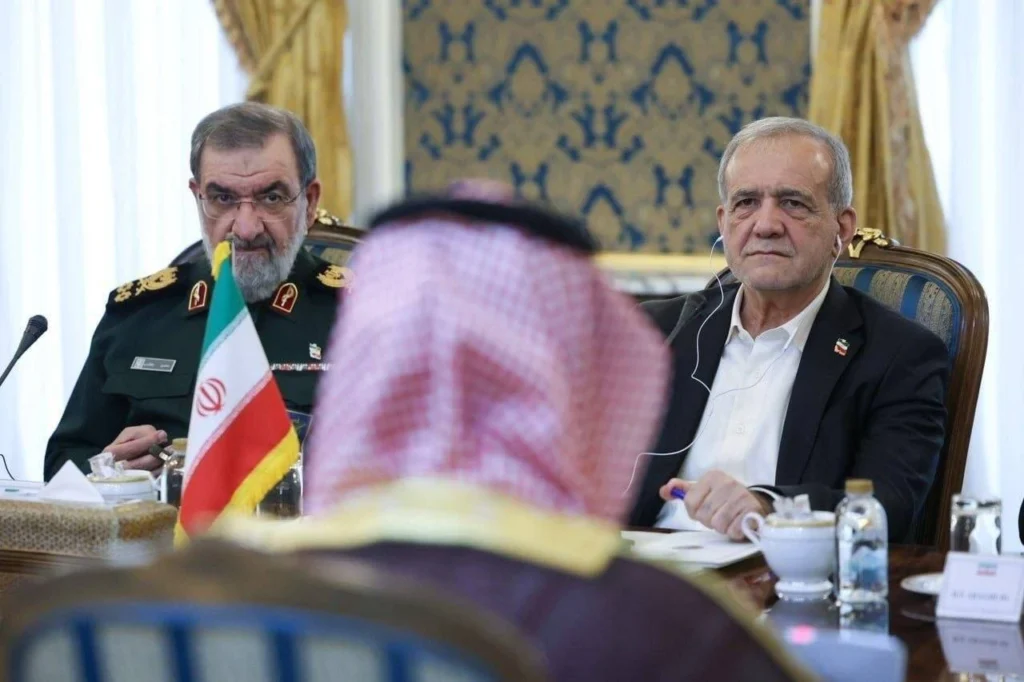
Senior officials from Pakistan, Saudi Arabia and Türkiye have convened in Tehran for high-level negotiations with Iranian leaders aimed at reducing regional tensions and addressing the consequences of the ongoing conflict involving Iran, the United States and Israel.
Iranian state broadcaster IRIB released footage on Monday, 26 October, showing Pakistan's Field Marshal Asim Munir, Saudi Defence Minister Prince Khalid bin Salman and Turkish intelligence chief Ibrahim Kalin attending the quadrilateral meeting.
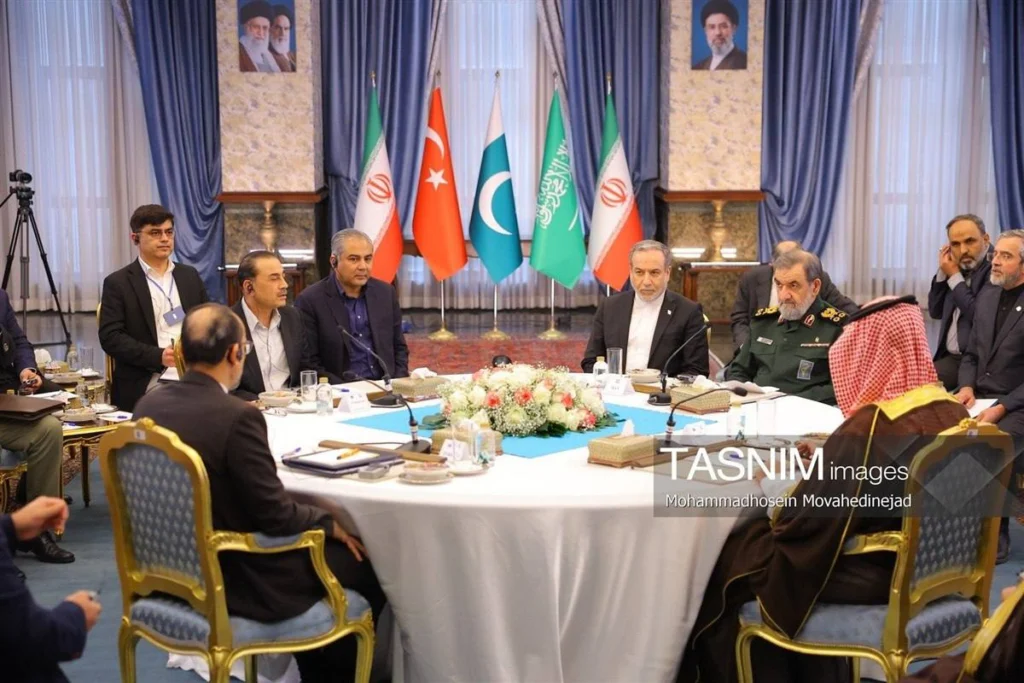
The footage also showed Pakistan's Interior Minister Mohsin Naqvi alongside Iranian President Masoud Pezeshkian, Foreign Minister Abbas Araghchi and Supreme National Security Council Secretary Mohsen Rezaei.
Iranian authorities said discussions would cover regional security and stability, the US-Israeli military campaign against Iran, developments in Palestine and Lebanon, and the wider consequences of the conflict for neighbouring countries.
Saudi Military And Government-Linked Aircraft Tracked Towards Iran Before Talks
The meeting follows unusual aircraft movements reported by open-source intelligence observers on Sunday, 25 October, involving Saudi military and government-linked aircraft flying towards Iran.
OSINT observer MenchOsint identified a Royal Saudi Air Force Lockheed C-130H Hercules transport aircraft, registration 1625 and callsign RSF1036, entering Iranian airspace.
Flight-tracking screenshots showed the aircraft operating over the Persian Gulf before being reported inside Iranian airspace. Its precise destination and mission were not established.
A second aircraft, a Saudi government-linked Airbus A320-214 operating under callsign HZA3 and registration HZ-A3, was separately tracked departing Riyadh and flying towards Tehran.
MenchOsint highlighted both flights before the official announcement of Monday's diplomatic meeting.
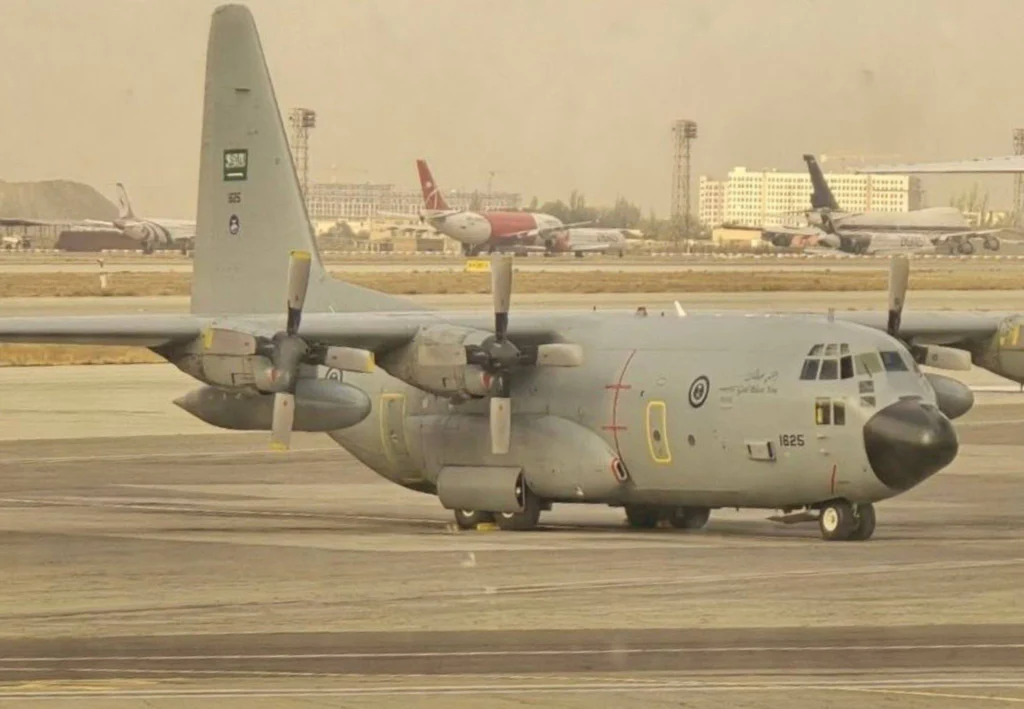
Although the movements preceded the arrival of senior Saudi officials in Tehran, there has been no official confirmation establishing whether either aircraft transported delegation members, security personnel or equipment associated with the negotiations.
Pakistan, Saudi Arabia And Türkiye Seek Regional De-Escalation
Saudi Deputy Minister for Public Diplomacy Rayed Krimly confirmed that the delegations were visiting Iran as part of continued efforts by the Makkah Joint Defence Alliance to reduce tensions and encourage diplomatic engagement.
Krimly said the initiative supported mediation efforts being undertaken by Pakistan and Qatar to resolve the wider regional crisis.
The meeting represents the first high-level joint engagement between Iran and all three members of the alliance since Saudi Arabia became more directly involved in the regional conflict.
The Makkah Joint Defence Agreement, signed in August, establishes a collective defence framework under which an armed attack against one member is considered an attack against all three.
Iran Calls For Regional Security Framework
Iran's Deputy Secretary of the Supreme National Security Council, Ali Bagheri Kani, said the gathering could contribute towards establishing a lasting regional security framework built around cooperation between Middle Eastern countries.
Iranian Foreign Ministry spokesman Esmaeil Baqaei said the meeting would examine the most pressing security threats facing the region, particularly the consequences of US and Israeli military operations against Iran.
Baqaei said the proposal for the meeting had emerged during Field Marshal Asim Munir's visit to Tehran the previous week and was subsequently received favourably by Iranian authorities.
He stressed that sustainable regional security required cooperation and trust between neighbouring countries rather than reliance on external powers.
Talks Take Place Amid Stalled US-Iran Negotiations And Houthi Attacks
The diplomatic initiative comes as negotiations between Tehran and Washington remain stalled over reopening the Strait of Hormuz, lifting the US blockade on Iranian ports and addressing disagreements concerning Iran's nuclear programme.
Meanwhile, Saudi Arabia continues facing missile and drone attacks attributed to Yemen's Ansarallah movement, while Saudi-led coalition forces have conducted airstrikes against Houthi positions across Yemen.
The discussions in Tehran also follow heightened warnings from Washington and Tehran concerning the possibility of renewed military operations.
Saudi Arabia Reports Houthi Missile Debris In Makkah Region As Ansarallah Reiterates Position On Islamic Holy Sites
Saudi Arabia's Civil Defence has announced that debris from two intercepted Houthi ballistic missiles fell across several locations in Makkah Province, including the holy city of Makkah, following air defence operations on Saturday.
Authorities identified four locations affected by falling fragments: Wadi Al-Maghmas in Makkah, Al-Nuzha neighbourhood in Jeddah, Wadi Jalil in Taif and Mastoura in Rabigh.
Saudi Civil Defence described the missiles as having been launched towards the Makkah and Madinah regions, while coalition spokesman Turki Al-Maliki separately announced the interception of two ballistic missiles targeting Taif and Yanbu.
The announcements followed security alerts in Makkah, Jeddah, Taif and Yanbu, which were subsequently lifted.
Houthis Have Repeatedly Denied Targeting Makkah And Madinah
Yemen's Ansarallah movement has previously rejected Saudi accusations that its forces targeted Makkah, insisting that the Islamic holy sites are excluded from its military operations.
Following a similar incident in September, Houthi military spokesman Brigadier General Yahya Saree stated:
“There is no threat whatsoever from Yemen to the holy sites. Our operations target their oil facilities and military bases, and are far removed from the holy places.”
Saree accused Saudi authorities of spreading false claims regarding alleged attacks on Makkah.
The Houthis have also issued warnings to international airlines operating in Saudi airspace while explicitly exempting the airspace over Makkah and Madinah from those threats.
On 21 October, Saree again denied launching drones towards Madinah following Saudi allegations of attempted attacks near the holy city.
Houthis Claim Attacks Against Saudi Oil Infrastructure
Earlier on Saturday, Ansarallah announced military operations targeting Saudi energy infrastructure, including the Petro Rabigh refinery, Saudi Aramco facilities in Yanbu and the kingdom's East-West Pipeline.
Houthi forces also claimed operations against King Khalid International Airport in Riyadh and other aviation facilities.
The reported falling of missile debris in the Rabigh area coincides geographically with one of the facilities named in the Houthi announcement.
However, neither the available interception reports nor the location of the falling debris independently establishes whether the intercepted missiles were aimed at Petro Rabigh, the holy cities or other installations.
The Saudi-led coalition's claims regarding the missiles' intended destinations and the Houthis' stated targeting intentions remain separate accounts that have not been independently reconciled.
Houthis Renew Warning To International Airlines As Riyadh Airport Declared A Military Target
Yemen's Ansarallah movement has renewed its warning to international, regional and domestic airlines against operating flights through King Khalid International Airport in Riyadh, declaring the facility a military target and warning that further attacks will continue.
Houthi military spokesman Brigadier General Yahya Saree issued the statement on Telegram, addressing airlines, aviation employees and passengers, and warning that the airport was unsafe for travel.
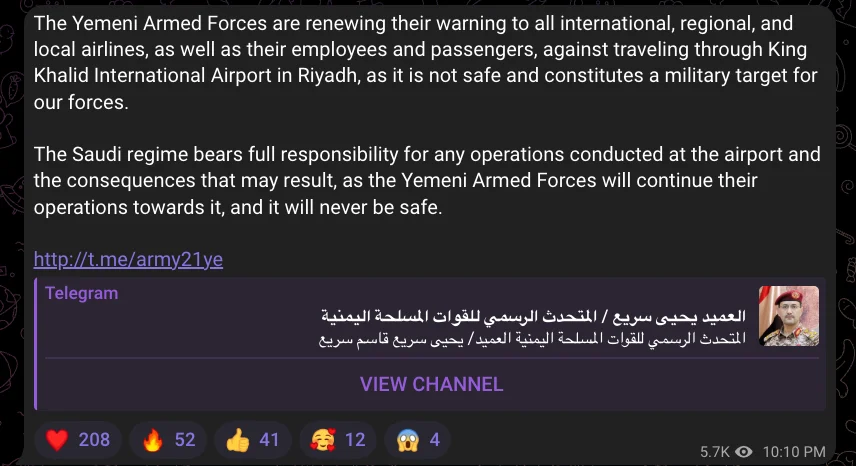
“The Yemeni Armed Forces are renewing their warning to all international, regional, and local airlines, as well as their employees and passengers, against travelling through King Khalid International Airport in Riyadh, as it is not safe and constitutes a military target for our forces,” Saree said.
He added that Saudi authorities would bear responsibility for the consequences of any further military operations against the airport, declaring that Ansarallah forces would continue targeting the facility.
The warning follows Saree's announcement earlier on Saturday that Houthi forces had conducted seven military operations against Saudi Arabia over the preceding 24 hours, claiming strikes against King Khalid International Airport, Petro Rabigh, Saudi Aramco facilities in Yanbu, the East-West Pipeline and other aviation and military installations.
King Khalid International Airport was previously struck on 10 October in an attack that killed civilians and injured hundreds of people. The Houthis have continued to identify the airport as a military target despite its use by civilian passengers.
The latest warning does not establish that a new attack has taken place or confirm the airport's current operational status.
Houthis Claim Ballistic Missile Strikes On Naval Base And Al-Nasr Camp In Yemen's Aden
Yemen's Ansarallah movement says its forces have launched ballistic missile strikes against Al-Nasr Camp and a naval military base in the southern port city of Aden, targeting positions held by Saudi-backed forces.
Yemen's Ministry of Information separately reported that Houthi ballistic missiles had targeted the city, while journalists on the ground reported hearing four explosions near Aden International Airport.
The Houthis claimed the strikes targeted concentrations of troops at Al-Nasr Camp, also known as Victory Camp, and a naval military installation used by forces aligned with Yemen's internationally recognised government.
According to Ansarallah, Saudi military officers led by Colonel Bader Salah Al-Harbi were overseeing the mobilisation, training and equipping of troops at the targeted facilities in preparation for operations against Houthi positions.
The reported attack follows several missile strikes against military and government facilities in Aden in recent days, including previous Houthi claims of attacks against Saudi-led coalition positions near the city's international airport.
The number of missiles launched, the extent of damage and any casualties remain unknown. Although explosions have been reported, there has been no independent confirmation that the two military installations were successfully struck.
Saudi Arabia Reports Fresh Houthi Missile Attacks As Trump Considers Next Steps In Iran War
Saudi Arabia Reports Fresh Houthi Missile Attacks As Trump Considers Next Steps In Iran War
Saudi-led coalition forces say they have intercepted two Houthi ballistic missiles targeting Riyadh and Khamis Mushait, alongside two drones launched towards southern Saudi Arabia, as regional powers intensify diplomatic efforts to prevent further escalation in the conflict involving Iran.
Saudi Arabia Reports Further Interceptions
Coalition spokesman Major General Turki Al-Maliki said Saudi air defences destroyed a ballistic missile heading towards Riyadh shortly after 4am on Friday, 23 October.
A second ballistic missile targeting Khamis Mushait was also intercepted, while two drones launched towards southern Saudi Arabia were reportedly destroyed at approximately 1am.
According to figures released by the coalition, Houthi forces have launched at least 14 ballistic missiles and more than 60 armed drones towards Saudi Arabia during October.
Saudi authorities say attacks this month have killed 24 people and injured at least 374 others, including casualties from strikes against Riyadh's King Khalid International Airport and other civilian infrastructure.
Trump Says Iran War Could End Quickly
US President Donald Trump has said Washington could bring the conflict with Iran to an end quickly but questioned whether it should pursue an immediate conclusion or allow the confrontation to diminish gradually.
Speaking to reporters at the White House on Friday, Trump said: “We could end it very quickly.”
He added: “Do we want to finish it off or just want to let it wither?”
Trump also claimed that oil continued to move through the Strait of Hormuz and that Washington was achieving its objectives, although he provided no details of a potential agreement or timetable for ending the conflict.
Iran Reportedly Prepares Retaliatory Options Against Gulf Communications Infrastructure
Two senior Iranian security officials have told Reuters that Tehran has developed plans to target undersea communications cables in the Gulf if the United States and Israel resume military strikes against Iran.
One official said Iran could also seek to prevent repairs to damaged cables, potentially prolonging disruptions to communications and financial services.
The reported plans remain contingency measures, and there has been no confirmed attack on the cables.
Pakistan And Regional Powers Hold Diplomatic Talks In Istanbul
Foreign ministers from Pakistan, Saudi Arabia, Türkiye, Egypt, Britain, France, Germany and Italy met in Istanbul on Friday to discuss the Iran war, the Houthi attacks on Saudi Arabia and the risk of further regional escalation.
Turkish Foreign Minister Hakan Fidan warned that renewed military operations against Iran would expand the conflict, arguing that negotiations remained the only viable solution.
French Foreign Minister Jean-Noël Barrot also cautioned against renewed escalation, warning that further hostilities would increase oil prices and deepen regional instability.
The talks followed reports that US and Israeli military planners had prepared options for renewed strikes against Iranian energy infrastructure, nuclear facilities and missile and drone capabilities following November's US midterm elections.
Egypt Says Any Military Assistance To Saudi Arabia Would Be Defensive
Egypt has clarified that any military assistance provided to Saudi Arabia would be limited to defending the kingdom's territory and borders rather than conducting offensive operations inside Yemen.
President Abdel Fattah el-Sisi's position was conveyed to Saudi Crown Prince Mohammed bin Salman by Egyptian Foreign Minister Badr Abdelatty and intelligence chief Hassan Rashad during their visit to Riyadh.
Egypt's parliament is scheduled to vote on the proposed military assistance on Monday, 26 October, after postponing its earlier decision to allow lawmakers additional time for deliberation.
Cairo has also called for renewed diplomatic negotiations aimed at ending the Yemen conflict, including discussions concerning Houthi territorial advances near the Bab el-Mandeb Strait.
Pakistan Confirms Defence Support For Saudi Arabia As Makkah Military Alliance Activated Amid Houthi Attacks
Pakistan is already providing Saudi Arabia with defence assistance amid escalating attacks by Yemen's Ansarallah movement, with the country's military spokesman confirming that the trilateral Makkah Joint Defence Alliance involving Pakistan, Saudi Arabia and Türkiye has been activated.
Lieutenant General Ahmed Sharif Chaudhry, Director General of Inter-Services Public Relations (ISPR), made the announcement during an interview with Independent Arabia aired on Sunday.
Responding to questions about Pakistan's military assistance to Saudi Arabia, Chaudhry said the kingdom's sovereignty, territorial integrity and the security of Islam's two holiest sites were absolute priorities for Islamabad.
“So whatever support is needed to do that is being provided and will be provided,” he said.
Chaudhry declined to specify the nature or extent of Pakistan's assistance, explaining that military alliances do not publicly disclose the precise capabilities or resources being provided.
Pakistan Confirms Collective Defence Mechanism Is Already Active
The military spokesman said the Makkah Joint Defence Alliance, signed by Pakistan, Saudi Arabia and Türkiye in August, was established as a collective deterrence mechanism under Article 51 of the United Nations Charter.
He stressed that the agreement was defensive rather than offensive, but warned that attacks against any of the three countries could trigger a collective response.
“If that deterrence doesn't work, then that deterrence has to be re-established by all means that are available to the three countries,” Chaudhry said.
He added that Pakistan was sending strong signals that collective deterrence was already operational and that Islamabad would take all necessary steps to protect Saudi Arabia and the Two Holy Mosques.
Earlier this month, the three countries agreed during an emergency meeting to rapidly deploy military forces and capabilities to Saudi Arabia under the agreement.
Pakistan Says Alliance Is Not Directed Against Iran
Chaudhry rejected suggestions that the Makkah alliance was established specifically to confront Iran or Israel, insisting that it was not directed against any particular country.
He said Pakistan had maintained communication with all parties involved in the regional conflict, including Tehran, with the objective of reducing tensions and encouraging restraint.
“All interactions and all conversations with the parties are based on dialling down the escalation,” he said.
The military spokesman warned that expanding the conflict to involve additional countries or armed groups would not resolve existing disputes.
“We need to stop attacking each other,” he said, urging Muslim countries to prioritise unity and negotiations over further military escalation.
Alliance Remains Open To Additional Members
Chaudhry also confirmed that the Makkah Joint Defence Alliance remained open to other countries willing to participate in collective defence and regional security arrangements.
Asked about reported interest from Egypt and Syria, he said decisions regarding additional members would be made jointly by the political, strategic and military leadership of Pakistan, Saudi Arabia and Türkiye.
Egypt is separately considering whether to authorise military assistance to Saudi Arabia, with parliamentary discussions continuing following President Abdel Fattah el-Sisi's request for approval.
Chaudhry also highlighted existing maritime security cooperation, noting that a Pakistani naval officer serves as deputy commander of a Saudi-established multinational maritime defence coalition operating amid threats to shipping in the Strait of Hormuz and Bab el-Mandeb.
Saudi Arabia–Houthi Conflict: At Least 20 Killed In Shabwa Missile Attack As Egypt Debates Military Support
At least 20 Yemeni government soldiers have reportedly been killed in a Houthi ballistic missile attack on a military training camp in southern Yemen, while civilian casualties have also been reported following Saudi-led airstrikes in the north.
The developments come as Egypt's parliament continues discussions over possible military assistance to Saudi Arabia amid the escalating conflict.
Houthi Missile Attack Kills At Least 20 Government Soldiers
Houthi forces reportedly launched ballistic missiles against the Al-Alam military camp in Yemen's southern Shabwa province on Monday, killing at least 20 government soldiers and wounding more than two dozen others.
Associated Press reported the casualties, citing two Yemeni military officials affiliated with the internationally recognised government.
Reuters separately reported at least 18 deaths, citing four government and medical sources. Government sources told Reuters that three ballistic missiles struck the installation while soldiers were conducting morning training.
The attack represents one of the deadliest reported strikes against Yemeni government forces during the latest escalation.
Nine Civilians Reportedly Killed In Saudi Airstrike On Saada
At least nine civilians, including five children and two women, were reportedly killed in an airstrike on Yemen's northern Saada governorate on Sunday.
Houthi-run health authorities accused Saudi-led coalition forces of carrying out the attack and reported another 19 people wounded.
The allegations follow a statement by Houthi military spokesman Brigadier General Yahya Saree, who claimed Saudi aircraft conducted 110 air raids and missile strikes across Yemen over a 24-hour period.
Saree said the attacks involved F-15 and Eurofighter Typhoon aircraft operating from Khamis Mushait and Taif airbases, alongside missiles launched from Najran.
He claimed the bombardment brought the total number of Saudi-led coalition air raids and missile strikes since the current escalation began to 2,652.
The reported figures and civilian casualty claims have not been independently verified.
Egyptian Parliament Continues Debate Over Military Assistance
Egyptian lawmakers are due to continue discussions on Monday over President Abdel Fattah el-Sisi's request for authorisation to provide military support to Saudi Arabia.
Parliament postponed Sunday's vote after lawmakers requested additional time to examine the proposal and express their positions.
The debate follows a meeting of Egypt's National Defence Council, chaired by Sisi, which pledged to provide Saudi Arabia with “all necessary and possible forms of support”.
The council declared that Saudi Arabia's security was closely linked to Egyptian and broader Arab national security and pledged support for protecting the kingdom's territorial integrity, resources, stability and Islamic holy sites.
Egypt also committed to intensified diplomatic efforts aimed at reducing regional tensions.
No final parliamentary authorisation or Egyptian military deployment has been confirmed.
Fighting Continues Around Taiz
Fighting continues across Yemen, including around Taiz, where government forces previously reported gains on the Sanamah and Sarari fronts following an offensive launched on Sunday.
Government forces claimed they had inflicted heavy losses on Houthi positions and reported three airstrikes against Ansarallah fighters northwest of the city.
Meanwhile, earlier battlefield assessments indicated Houthi advances towards Jabal Han and the Old Airport military camp, following the reported capture of Ar Rujmah and Madarat.
Control of Jabal Han remains disputed, with no independently verified information establishing further territorial changes during the latest 18-hour reporting period.
Egyptian Opposition Party Announces Abstention On Saudi Military Deployment As Parliament Faces Crucial Vote
Egypt's opposition Egyptian Social Democratic Party has announced that its parliamentary representatives will abstain from voting on President Abdel Fattah el-Sisi's request to authorise military assistance to Saudi Arabia.
The party's political bureau issued a statement on Sunday, raising concerns over the potential military, economic and political consequences of involving Egyptian forces in the conflict between Saudi Arabia and Yemen's Ansarallah movement.
The party said any decision to deploy Egyptian troops abroad must consider national security interests, the protection of Egyptian military personnel and the possibility of becoming involved in a prolonged regional conflict.
It also warned that military intervention could increase pressure on Egypt's economy, already affected by disruption to Suez Canal shipping, rising energy costs and inflation.The party stressed that its position did not diminish its solidarity with Saudi Arabia or other Arab countries, but called for clearly defined military objectives, limits on deployment and a detailed assessment of potential risks.
Who Are The Egyptian Social Democratic Party?
The Egyptian Social Democratic Party was established in March 2011 following the Egyptian revolution that ended Hosni Mubarak's presidency.
It is a centre-left political organisation advocating social democracy, political reform, civil liberties and greater economic equality.
The party is currently led by Farid Zahran, who challenged President Abdel Fattah el-Sisi in Egypt's 2023 presidential election.
Following Egypt's 2025 parliamentary elections, the party secured 11 seats in the 596-member House of Representatives, making it one of the country's established parliamentary opposition parties.
Can The Party Prevent Egypt From Deploying Troops?
The party's opposition is politically significant, but its parliamentary representation is insufficient to block the deployment independently.
Under Article 152 of Egypt's constitution, the president must consult the National Defence Council and obtain approval from two-thirds of the House of Representatives before sending Egyptian forces on combat missions abroad.
With 596 MPs, the required threshold is 398 votes in favour.
The Egyptian Social Democratic Party controls 11 seats, representing approximately 1.8% of parliament.
Even if all 11 representatives abstain, the constitutional requirement of 398 affirmative votes remains unchanged.
However, the Wafd Party, which holds 10 seats, has also expressed reservations about voting without further details concerning the proposed deployment.
Together, the two parties account for 21 parliamentary seats.
The four largest pro-government parties secured a combined 404 seats in the 2025 elections, theoretically sufficient to approve the deployment without opposition support if their representatives vote together.
However, that leaves a margin of just six votes above the constitutional threshold, meaning any significant defections or abstentions within the governing bloc could affect the outcome.
Parliamentary Discussions To Resume Monday
Egypt's parliament postponed its vote on Sunday following requests from lawmakers for further clarification about the proposed military assistance.
Parliamentary Speaker Hisham Badawi indicated that additional sessions would be held to allow MPs to express their views and examine the proposal.
The debate follows a meeting of Egypt's National Defence Council chaired by President el-Sisi, which pledged Saudi Arabia “all necessary and possible forms of support” to protect its security, territorial integrity, resources and Islamic holy sites.
The council also committed to intensifying diplomatic efforts aimed at reducing regional tensions and pursuing peaceful solutions.
No parliamentary authorisation has yet been granted, and Egypt has not announced the deployment of military forces to Saudi Arabia.
Houthis Report 110 Saudi Airstrikes And Missile Attacks Across Yemen In 24 Hours, Claiming More Than 30 Casualties
Yemen's Ansarallah movement says Saudi-led coalition forces have conducted 110 air raids and missile strikes across the country during the past 24 hours, killing or injuring more than 30 people, most of them women and children.
Houthi military spokesman Brigadier General Yahya Saree announced the figures, accusing Saudi forces of targeting civilian sites in the capital Sana'a and eight governorates: Hodeidah, Taiz, Amran, Hajjah, Saada, Al-Jawf, Al-Dhale and Marib.
Saree said the airstrikes were carried out by Saudi F-15 fighter jets and Eurofighter Typhoon aircraft operating from Khamis Mushait and Taif airbases.
He also alleged that Saudi forces launched additional missile attacks from Najran, near the Yemeni border.
According to Saree, the latest attacks have brought the total number of Saudi-led coalition air raids and missile strikes since the current escalation began to 2,652.
The statement follows an earlier Houthi announcement that Saudi forces had conducted 53 airstrikes over a 24-hour period, targeting Sana'a, Taiz, Ibb, Lahij, Saada and Amran.
Fighting has also continued around Taiz, where forces aligned with Yemen's internationally recognised government reported fresh advances on the Sanamah and Sarari fronts and three airstrikes against Houthi positions northwest of the city.
The Saudi-led coalition has not confirmed the latest figures, and the reported attacks, targets and civilian casualties have not been independently verified.
Yemeni Government Forces Report Gains In Southern Taiz As Airstrikes Target Houthi Positions
Yemen's internationally recognised government says its armed forces have made territorial gains against Ansarallah fighters on the Sanamah and Sarari fronts in southern Taiz, following an offensive launched early on Sunday.
In a military statement, government forces said they had inflicted “heavy losses” on Houthi positions during the operation, although no specific casualty figures or details of captured territory were provided.
The military also reported three airstrikes targeting Houthi fighters northwest of Taiz, where clashes are continuing across several fronts. The statement did not identify the aircraft responsible for the strikes.
The reported advances follow earlier fighting around Jabal Han, Ar Rujmah and Madarat, where Houthi forces were reported to have gained ground while attempting to advance towards the Old Airport military camp.
Control of several positions around Taiz remains disputed, and the latest claims of territorial gains and Houthi casualties have not been independently verified.
Egypt Postpones Parliamentary Vote On Military Support For Saudi Arabia Until Monday
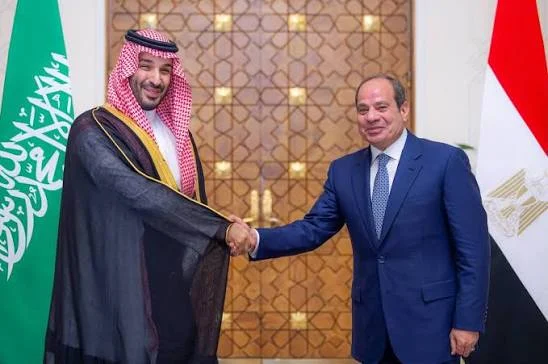
Egypt's parliament has postponed a vote on authorising potential military support for Saudi Arabia, with lawmakers expected to continue discussions on Monday amid ongoing attacks by Yemen's Ansarallah movement.
Reuters reported the postponement on Sunday, citing Egyptian lawmakers who confirmed that parliamentary proceedings would continue the following day.
Two members of parliament separately told AFP that the vote had been delayed to allow further debate.
One lawmaker said the session had been extended “to give all lawmakers the opportunity to speak and express their views”, while another confirmed that proceedings would continue on Monday “to allow all lawmakers to be heard”.
The parliamentary discussions follow President Abdel Fattah el-Sisi's request for authorisation to provide military assistance to Saudi Arabia if the kingdom formally seeks Egyptian involvement.
Earlier on Sunday, Egypt's National Defence Council, chaired by Sisi, pledged to provide Saudi Arabia with “all necessary and possible forms of support”, declaring that the kingdom's security was closely connected to Egyptian and wider Arab national security.
The council pledged support for Saudi Arabia's territorial integrity, resources, stability and Islamic holy sites, while also committing to intensified diplomatic efforts aimed at reducing regional tensions and pursuing peaceful solutions.
No parliamentary authorisation has yet been granted, and Egypt has not announced the deployment of military forces to Saudi Arabia.
What Military Support Could Pakistan Offer Saudi Arabia Against The Houthis?
Pakistan faces a difficult diplomatic and military balancing act as Saudi Arabia confronts escalating Houthi attacks, placing renewed attention on Islamabad's defence commitments to Riyadh while it continues to play a central role in negotiations involving Iran.
Pakistani security sources with knowledge of the situation have repeatedly told BPI News that the Makkah Joint Defence Agreement between Pakistan, Saudi Arabia and Türkiye was designed primarily as a defensive deterrent, rather than an arrangement intended to draw its members into offensive military campaigns. However, the escalation in Yemen has raised questions about how Islamabad can fulfil its obligations to Saudi Arabia without undermining its diplomatic relationship with Tehran.
The sources acknowledged the difficulty of Pakistan's position, particularly as Islamabad works to facilitate negotiations involving Iran while remaining committed to protecting Saudi Arabia under the defence agreement. They also criticised what they described as widespread misinformation in media coverage, arguing that speculative reports about Pakistani military operations have frequently been presented without knowledge of the arrangements.
Meanwhile, senior Houthi official Mohammed al-Bukhaiti has welcomed potential mediation by Pakistan and Türkiye, despite previously threatening military retaliation if either country joined Saudi-led operations against Yemen. His contrasting statements have added another dimension to Pakistan's position as both a potential mediator and a member of the defensive alliance.
Read More:
Iran Says Strait Of Hormuz Could Reopen Within Six Days If US Accepts Seven Conditions
Iran has renewed its offer to reopen the Strait of Hormuz within seven days, with Foreign Minister Abbas Araqchi urging Washington to accept Tehran's conditions following weeks of stalled negotiations.
Speaking to Iranian media on Sunday while attending an Organisation of Islamic Cooperation meeting in Baghdad, Araqchi confirmed that Iran's proposal, first presented in mid-September following the collapse of an interim ceasefire, remained on the table.
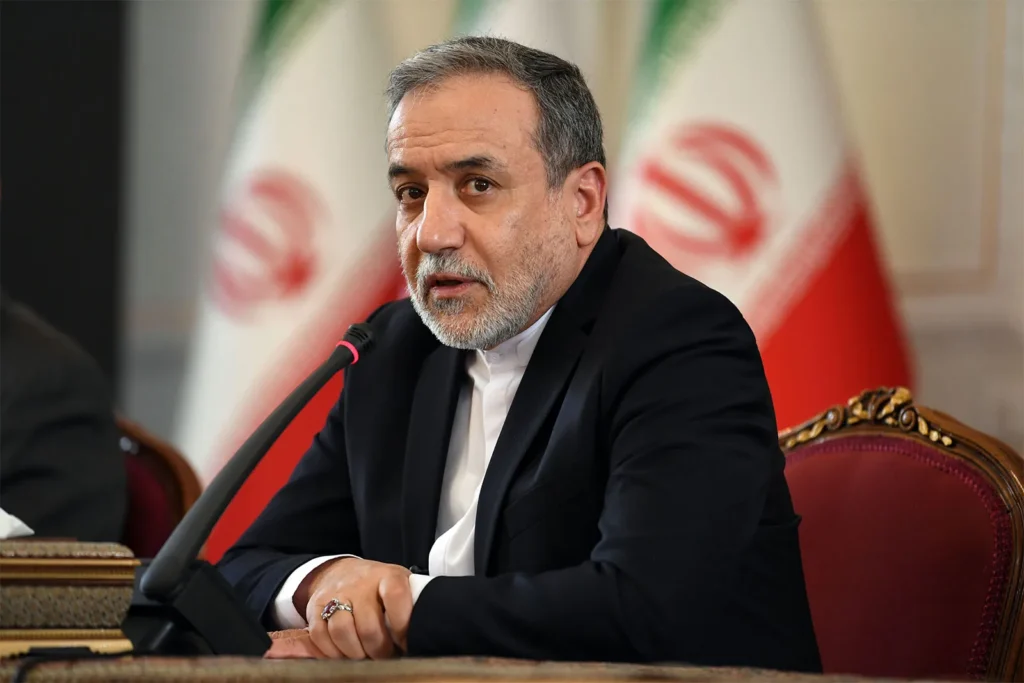
“Our situation is clear and based on the seven-days proposal presented to the US. They shared comments which we are reviewing, but our proposal is still on the table and if there is any honesty on the US part, which there isn't, the way to reopening the Strait of Hormuz is obvious,” Araqchi said.
Iran has outlined seven conditions for reopening the waterway, including lifting the American blockade on Iranian ports, removing US sanctions on Iranian oil exports and ending hostilities across regional conflict zones.
Araqchi said the strait could reopen within six days if Washington accepted Tehran's terms, with negotiations resuming the following day.
However, disagreements remain over whether Iran's nuclear programme should form part of the initial negotiations.
US Vice President JD Vance has insisted that Tehran must make a “meaningful” reduction in its uranium enrichment capacity to satisfy American demands and bring an end to the eight-month conflict.
Iran maintains that talks should initially focus on reopening the Strait of Hormuz and restoring maritime security, with broader issues addressed subsequently.
The waterway carried approximately one-fifth of global oil and liquefied natural gas trade before the conflict disrupted commercial shipping.
Saudi Arabia–Houthi Conflict: Latest Developments As Egypt Pledges Support And Further Attacks Reported
The conflict between Saudi Arabia and Yemen's Ansarallah movement has seen further reported missile and drone interceptions, the deaths of two Saudi military personnel and a pledge of support from Egypt, while fighting continues around the Yemeni city of Taiz.
Egypt Pledges Full Support To Saudi Arabia
Egypt's National Defence Council, chaired by President Abdel Fattah el-Sisi, met in Cairo on Sunday and pledged to provide Saudi Arabia with “all necessary and possible forms of support”.
The council expressed full solidarity with the kingdom, emphasising that Saudi Arabia's security was closely connected to Egyptian and wider Arab national security.
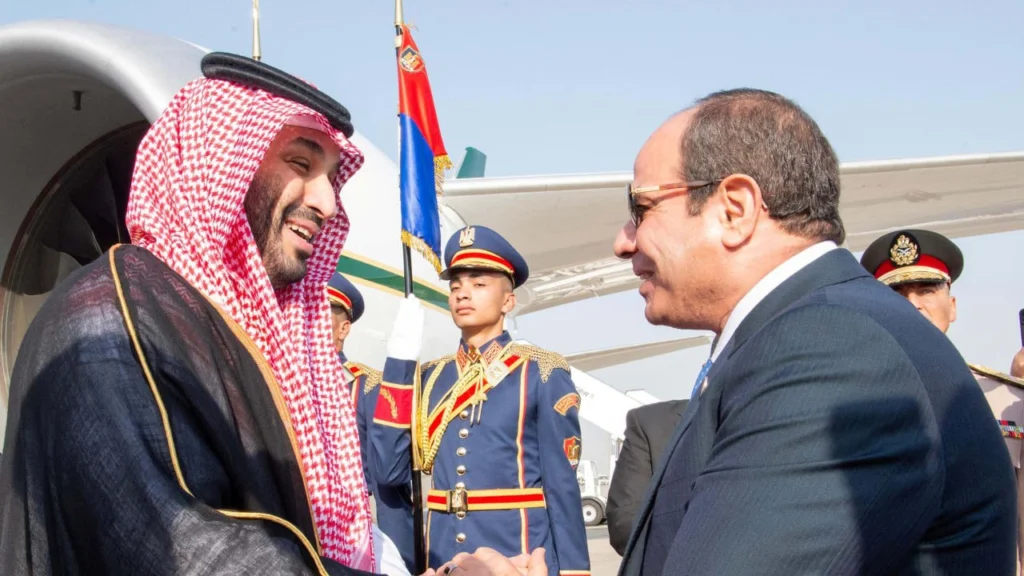
Egypt pledged support for the protection of Saudi Arabia's territorial integrity, resources, stability and Islamic holy sites, while also committing to intensified diplomatic efforts aimed at reducing regional tensions and pursuing peaceful solutions.
Sisi has also sought parliamentary authorisation for possible military assistance should Saudi Arabia formally request Egyptian involvement. No Egyptian military deployment has been confirmed.
Saudi Coalition Reports Five Missile And Drone Interceptions
The Saudi-led coalition says its air defence forces intercepted and destroyed two ballistic missiles launched by the Houthis towards Khamis Mushait in southwestern Saudi Arabia.
Coalition spokesman Turki Al-Maliki also reported the destruction of three drones, including two over the Riyadh region and another over the Eastern Province.
Saudi Civil Defence previously issued security alerts in Riyadh, Abha and Khamis Mushait before subsequently lifting the warnings.
Two Saudi Military Personnel Killed In Disputed Helicopter Incident
Two Saudi military personnel have died after an AH-6i helicopter crashed in Najran province, near the border with Yemen.
Saudi coalition officials attributed the crash to a technical malfunction.
However, Houthi military spokesman Brigadier General Yahya Saree claimed Ansarallah forces had shot down a Saudi helicopter.
The Houthis subsequently released footage purportedly showing an aircraft being struck by a missile. The circumstances surrounding the crash remain disputed, with no independent confirmation establishing the cause.
Houthi Forces Continue Operations Around Taiz
Fighting continues around Taiz, where Ansarallah forces have reportedly advanced towards Jabal Han and captured the villages of Ar Rujmah and Madarat.
Houthi fighters are also reported to be attempting to reach the Old Airport military camp as government-aligned forces contest their advances.
Control of Jabal Han remains uncertain, with no independent confirmation that Ansarallah forces have secured the entire mountain.
Saudi Arabia Intercepts Drone Over Riyadh As Houthis Claim To Have Shot Down Saudi Aircraft Over Yemen
Saudi-led coalition forces say they have intercepted and destroyed a drone over the Riyadh region, while Yemen's Ansarallah movement has separately announced the downing of a Saudi-operated reconnaissance aircraft over Hajjah province.
Colonel Turki Al-Maliki, official spokesman for the Coalition to Support Legitimacy in Yemen, confirmed the interception over Riyadh in a statement published through the coalition's official X account. The drone's origin and intended target were not disclosed.
The announcement follows an earlier statement from Al-Maliki that coalition forces had intercepted and destroyed two missiles launched by the Houthis towards Khamis Mushait in southwestern Saudi Arabia.
Meanwhile, Houthi military spokesman Brigadier General Yahya Saree said Ansarallah's air defence forces had shot down a Turkish-made Karayel armed reconnaissance drone operated by Saudi Arabia over Hajjah province in northwestern Yemen.
“Thanks to God's grace and support, our armed forces were able to shoot down an armed reconnaissance aircraft of the Karayel type, belonging to the Saudi enemy, while it was carrying out hostile activities in the airspace of Hajjah province,” Saree said.
He claimed the aircraft was destroyed using appropriate weaponry, marking the fourth Karayel drone shot down since the latest escalation and the seventh since the aircraft type began operating over Yemen.
The reported interceptions follow security alerts issued earlier by Saudi Civil Defence in Riyadh, Abha and Khamis Mushait. Authorities subsequently lifted the warnings across all three locations.
Houthis Claim To Have Shot Down Saudi-Operated Turkish Karayel Drone Over Yemen
Yemen's Ansarallah movement says its air defence forces have shot down a Turkish-made Karayel armed reconnaissance drone operated by Saudi Arabia while it was flying over Hajjah province in northwestern Yemen.
Houthi military spokesman Brigadier General Yahya Saree announced the operation, claiming the aircraft was conducting hostile reconnaissance activities when it was intercepted.
“Thanks to God's grace and support, our armed forces were able to shoot down an armed reconnaissance aircraft of the Karayel type, belonging to the Saudi enemy, while it was carrying out hostile activities in the airspace of Hajjah province,” Saree said.
He stated that the aircraft had been destroyed using appropriate weaponry but did not disclose the type of air defence system employed.
Saree claimed the latest incident marked the fourth Karayel drone shot down by Houthi forces since the current escalation began and the seventh since the aircraft type entered Yemeni airspace.
The Karayel is a Turkish-developed unmanned aerial vehicle capable of surveillance, reconnaissance and precision strikes. Saudi Arabia operates Turkish-made Karayel drones as part of its unmanned aerial fleet.
Houthi Official Welcomes Pakistani And Turkish Mediation Despite Earlier Threats Of Military Retaliation
Senior Houthi official Mohammed al-Bukhaiti has expressed support for possible mediation by Pakistan, Türkiye, Iran or Oman to help end the conflict between Yemen's Ansarallah movement and Saudi Arabia.
Speaking in an interview broadcast by Al-Araby TV, al-Bukhaiti, a member of Ansarallah's political bureau and governor of Dhamar, said the movement was willing to consider diplomatic initiatives involving regional countries.
“We welcome any mediation, whether Iranian, Omani, or even Turkish or Pakistani,” he said.
Al-Bukhaiti argued that ending the conflict and associated blockades would serve the mutual interests of Yemen and Saudi Arabia, indicating that the Houthis remained open to negotiations aimed at resolving the hostilities.
His latest remarks follow an earlier warning directed at Pakistan and Türkiye during an interview with the Iraqi television programme Another Reading.
“By God, if Türkiye and Pakistan become involved, we will strike them with an iron fist,” al-Bukhaiti said at the time, threatening military retaliation if either country joined Saudi-led operations against Yemen.
The earlier threat was reported in September, as Pakistan and Türkiye faced questions over their potential military involvement in the conflict following closer defence cooperation with Saudi Arabia.
Saudi Arabia Says Two Houthi Missiles Intercepted Over Khamis Mushait Following Security Alerts
Saudi-led coalition forces say they have intercepted and destroyed two missiles launched by Yemen's Ansarallah movement towards Khamis Mushait in southwestern Saudi Arabia.
Coalition spokesman Turki Al-Maliki announced the interceptions in a statement on X, identifying Khamis Mushait as the intended target of the missiles. The coalition's account has not been independently verified.
The announcement follows a series of security alerts issued by Saudi Civil Defence in Riyadh, Abha and Khamis Mushait earlier in the day.
Authorities subsequently lifted the warnings in all three locations, including Khamis Mushait, where the coalition now reports that two incoming missiles were intercepted.
The incident follows Houthi claims that Saudi warplanes conducted 53 airstrikes across Yemen during the previous 24 hours, targeting the capital Sana'a and the provinces of Taiz, Ibb, Lahij, Saada and Amran.
Houthi officials alleged that the strikes caused numerous civilian casualties, predominantly women and children. Those casualty claims have not been independently verified.
Reports Claim Senior UAE Security Officials Arrived In Tehran As BPI News Unable To Verify Visit
Unconfirmed reports have emerged suggesting that a VIP aircraft carrying senior United Arab Emirates security officials has landed in Tehran, Iran, amid ongoing regional tensions.
Independent researcher and OSINT analyst Babak Vahdad said he had received information from several open-source intelligence accounts indicating that a delegation of senior Emirati security officials had arrived in the Iranian capital.
Vahdad explicitly cautioned that the information had not been independently verified and should be treated with caution.
BPI News has been unable to corroborate the reports despite examining publicly available flight tracking data and consulting Pakistani security sources familiar with regional diplomatic and security negotiations.
The identity of the alleged delegation, the aircraft involved and the purpose of any potential visit remain unknown. No independent evidence has established that such a flight occurred or that senior Emirati security officials are currently in Tehran.
Houthis Capture Two Villages Near Taiz As Fighting Intensifies Around Jabal Han
Ansarallah forces have reportedly captured the villages of Ar Rujmah and Madarat northwest of Taiz, Yemen, as their fighters continue advancing towards Jabal Han and the Old Airport military camp.
The latest battlefield reports indicate that Houthi fighters are actively pushing onto Jabal Han, where footage has emerged reportedly showing strikes against Ansarallah positions on the mountain's northern slopes. The strikes have been attributed to Saudi and Saudi-backed Yemeni government forces, although their precise origin remains unverified.
Despite the advances, control of Jabal Han remains uncertain. Forces aligned with Yemen's internationally recognised government may still hold defensive positions on and around the mountain, preventing confirmation of a complete Houthi takeover.
Further north, Houthi fighters are reportedly attempting to reach Camp Mattar al-Qadim, the Old Airport military camp, following their reported capture of Ar Rujmah and Madarat.
The latest movements follow earlier reports that Ansarallah forces captured Jabal Al-Madraj and Madreei, with fighting continuing around the headquarters of the 35th Armoured Brigade and the northwestern approaches to Taiz.
US Navy Helicopter And Warship Tracked Off Pakistan's Coast Amid Arabian Sea Operations
A US Navy MH-60R Seahawk helicopter has been tracked conducting manoeuvres over the Arabian Sea southwest of Karachi, with available flight data indicating that the aircraft remained outside Pakistan's territorial waters.
Flight tracking records from Saturday, 17 October, identify the helicopter as registration 168103, callsign LW703, operating at approximately 500 feet above sea level and travelling at 150 km/h at one recorded point. Its flight path shows repeated changes in direction over waters off the Pakistani coastline.
Separately, a US Navy guided-missile destroyer has reportedly been identified through satellite imagery approximately 170 kilometres southwest of Karachi. Open-source analysts indicate that the warship was operating beyond Pakistan's 12-nautical-mile territorial sea and 24-nautical-mile contiguous zone. The vessel's identity has not been independently confirmed.
The reported movements coincide with continued American naval operations in the Arabian Sea amid the conflict with Iran. The USS George Washington Carrier Strike Group has been operating in the region, although there is no confirmed connection between the tracked helicopter, the reported destroyer and any particular operation against Iran.
US and Pakistani naval forces also participate in multinational maritime security activities, including counter-narcotics operations under the Combined Maritime Forces framework.
Pakistan's National Hydrographic Office has separately issued recent maritime warnings concerning naval exercises and live-weapons firing in waters off the Pakistani coast, although no connection to the American aircraft's movements has been established.
The helicopter's mission remains unknown, and the available tracking data provides no evidence of a violation of Pakistani airspace or territorial waters.
Security Alerts Lifted Across Riyadh, Abha And Khamis Mushait Following Earlier Warnings
Security alerts have reportedly been lifted in the Saudi Arabian capital Riyadh and the southwestern cities of Abha and Khamis Mushait following earlier warnings over possible incoming missile or drone threats.
The alerts were initially reported in all three locations, with Riyadh's warning subsequently lifted before similar updates emerged from Abha and Khamis Mushait.
The warnings followed claims by Yemen's Ansarallah movement that Saudi aircraft conducted 53 airstrikes across Yemen during the previous 24 hours, targeting Sana'a, Taiz, Ibb, Lahij, Saada and Amran.
Houthi officials alleged that the strikes caused numerous civilian casualties, predominantly women and children. Those claims remain independently unverified.
There has been no independent confirmation of missile or drone launches towards Saudi Arabia, any interceptions by Saudi air defences or whether the alerts were directly connected to the reported airstrikes in Yemen.
Security Alerts Reported In Riyadh, Abha And Khamis Mushait Amid Fears Of Houthi Retaliation
Security alerts have been reported in the Saudi Arabian cities of Riyadh, Abha and Khamis Mushait amid concerns over possible incoming missile or drone attacks from Yemen's Ansarallah movement.
The alerts follow allegations by Houthi officials that Saudi warplanes conducted 53 airstrikes across Yemen during the past 24 hours, targeting the capital Sana'a and the provinces of Taiz, Ibb, Lahij, Saada and Amran.
Houthi officials claim the bombardment caused numerous civilian casualties, with women and children accounting for most of those affected. The casualty figures have not been independently verified.
The reported alerts have raised the possibility of retaliatory Houthi attacks against Saudi Arabia.
Ansarallah Forces Advance into Northwestern Taiz as Fighting Intensifies Around Military Headquarters
Ansarallah forces have reportedly captured Jabal Al-Madraj and Madreei on the northwestern outskirts of Taiz, Yemen, as clashes continue around the headquarters of the 35th Armoured Brigade and the city's Old Airport area.
A battlefield assessment dated Saturday, 17 October, indicates that Ansarallah fighters have advanced towards several positions previously held by forces loyal to the internationally recognised Yemeni government.
Further west, Ansarallah forces may have secured positions on Jabal Han, although control of the mountain remains unclear.
Fighting is also continuing east of the Al-Hanjar checkpoint, where Ansarallah forces reportedly advanced earlier in the day before being forced to withdraw from some positions following counterattacks.
The accompanying battlefield map identifies several reported airstrike locations near Jabal Al-Madraj and the 35th Armoured Brigade headquarters. The identity of the aircraft involved, the extent of any damage and potential casualties have not been independently established.
France demands arrests after settlers allegedly assault French mayor in West Bank
France has called on Israel to arrest settlers accused of violently assaulting a French mayor during a visit to the occupied West Bank.
French Foreign Minister Jean-Noël Barrot said Bernard Baudoux, mayor of Aulnoye-Aymeries, was attacked by what he described as “extremist settlers” in the Palestinian village of Taybeh.
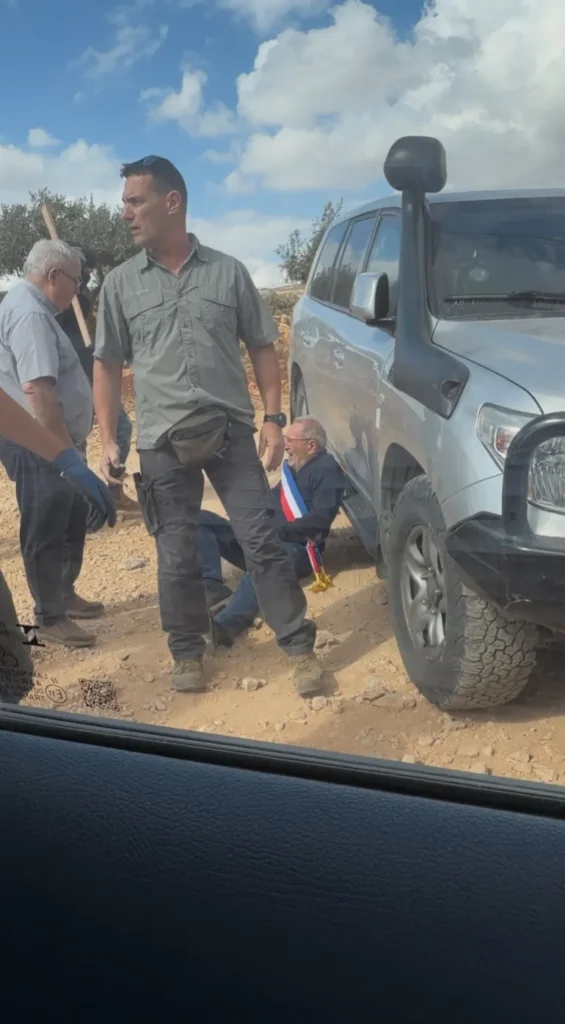
In a social media post on Saturday, Barrot condemned the assault and called for action against those responsible.
Israeli authorities “must urgently put an end to this criminal violence and ensure the safety of the civilian population”, he said.
What has happened so far in the Saudi Arabia–Houthi war?
Saudi Arabia and Yemen's Houthi movement have resumed major hostilities, with airstrikes, missile attacks and ground fighting reported across Yemen and Saudi Arabia.
The escalation follows the breakdown of a truce that had largely contained fighting since 2022.
Saudi Arabia launches major airstrikes across Yemen
Saudi warplanes have carried out strikes against Houthi-controlled areas, including the capital Sana'a and the provinces of Taiz, Ibb, Lahij, Saada and Amran.
The Houthis have accused Saudi Arabia of targeting civilian infrastructure and causing casualties, including women and children.
Houthi military officials have claimed that Saudi-led forces have conducted more than 2,500 air and missile attacks since the latest escalation began.
Houthis launch missile and drone attacks against Saudi Arabia
Houthi forces have launched missile and drone attacks targeting Saudi military installations, airports and energy infrastructure.
Saudi authorities have reported intercepting incoming projectiles, while some attacks have caused casualties and damage.
The exchanges have brought fighting beyond Yemen's borders, with both sides continuing military operations.
Ground fighting intensifies across Yemen
Saudi-backed Yemeni government forces and Houthi fighters have continued fighting across several fronts.
The Houthis retain control of Sana'a and significant parts of northern Yemen, while forces aligned with Yemen's internationally recognised government operate in other parts of the country.
Reports indicate renewed fighting around Taiz and other strategically important areas.
Red Sea shipping faces renewed threats
The conflict has raised concerns over shipping through the Red Sea and Bab el-Mandeb Strait, one of the world's most important maritime routes.
The Houthis have previously targeted commercial vessels using missiles and drones, disrupting international shipping.
Further military activity around Yemen's western coastline has increased concerns about the safety of vessels navigating the region.
Regional powers respond to the escalation
Saudi Arabia's military operations have prompted diplomatic activity across the Middle East, with regional governments assessing the consequences of renewed fighting.
Iran's relationship with the Houthis remains a major factor in the conflict, while Saudi Arabia and its regional partners continue to monitor threats to their territory and infrastructure.
Civilian casualties and humanitarian concerns
Years of conflict have left Yemen facing one of the world's most severe humanitarian crises.
Renewed airstrikes and ground fighting have added to concerns over civilian casualties, displacement and access to essential supplies.
Humanitarian organisations continue to warn about the impact of military operations on hospitals, food supplies and displaced families.