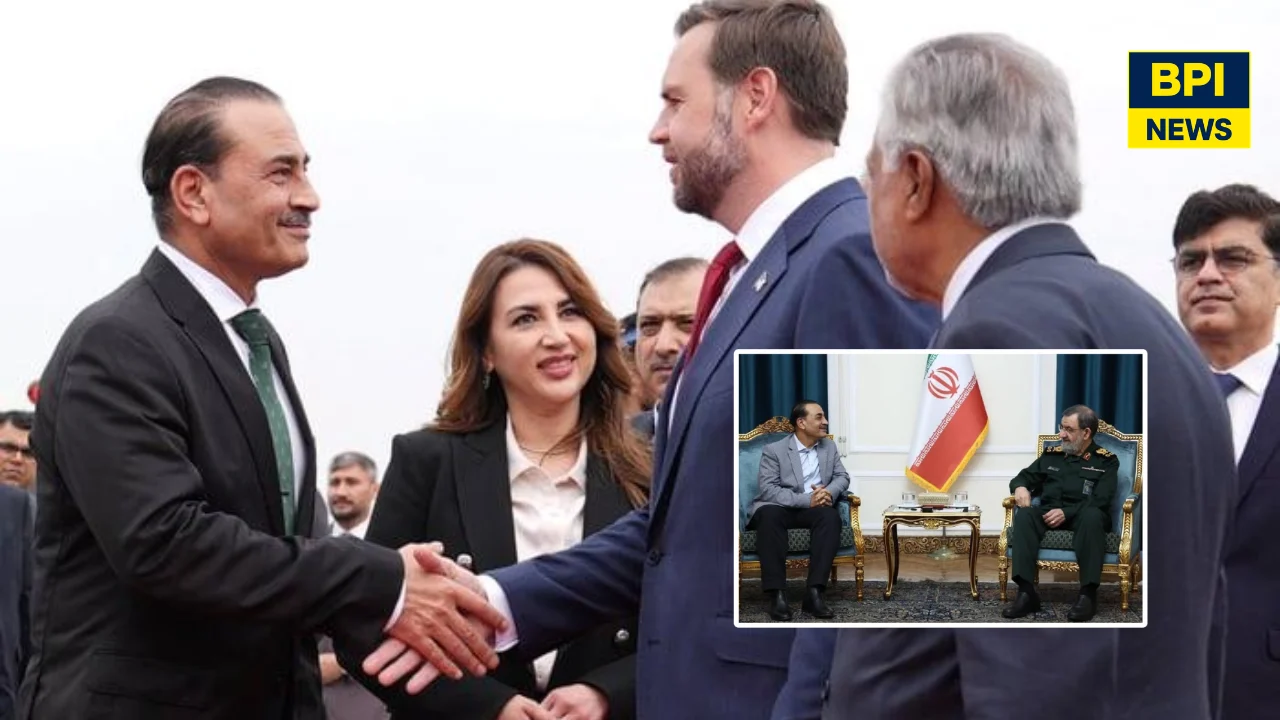
US Vice President JD Vance has remained in constant contact with Pakistani and Qatari mediators as Washington attempts to secure a new ceasefire with Iran and reopen negotiations over Tehran’s nuclear programme, two Pakistani security sources familiar with the negotiations have told BPI News.
The sources, who have provided BPI News with information throughout previous stages of the US-Iran negotiations, said discussions are now focused on whether a working-level technical meeting between American and Iranian officials can be arranged in the coming days. However, no venue has yet been agreed and one senior Pakistani security source said Islamabad increasingly appears unlikely to host the meeting despite Pakistan’s preference for talks to return to the capital.
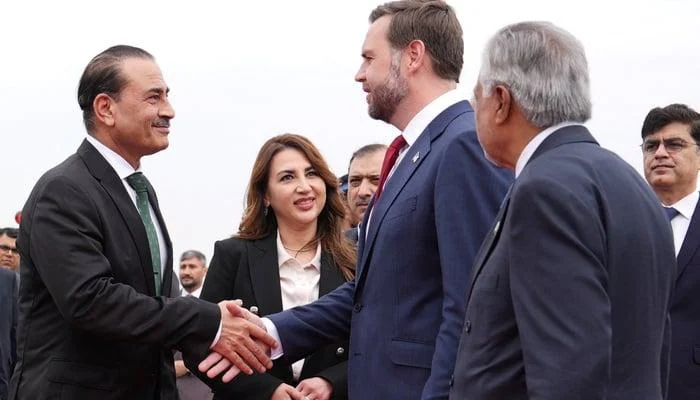
“Pakistan would obviously prefer Islamabad, but at the moment it looks unlikely,” one of the sources told BPI News.
The more senior source said that, from Pakistan’s perspective, another venue may ultimately be preferable because the security measures required for a high-level US-Iran meeting would risk imposing further disruption on Islamabad at a time when households and businesses are already under considerable economic pressure.
The source argued that the prestige attached to hosting another major diplomatic meeting had to be balanced against the economic consequences of shutting roads, restricting movement and disrupting commercial activity across the federal capital.
That concern comes as Pakistan continues to recover from a prolonged economic crisis. The macroeconomic picture has improved, with growth returning and foreign-exchange reserves strengthening, but the benefits have not been felt evenly. High prices, weak real wages, limited job creation and increased poverty continue to place pressure on large parts of the population, while energy and transport costs remain particularly sensitive.
The World Bank estimates that around 70 million Pakistanis are now living in poverty under the national measure it uses for current assessments, while real wages have fallen over recent years and employment growth has struggled to keep pace with the millions of people entering the workforce annually. For that reason, the senior source argued that avoiding another extensive lockdown of Islamabad could be economically preferable even if Pakistan continues to play a central role in the negotiations.
Vance Personally Driving The Latest Diplomatic Push
The information provided to BPI News is consistent with wider reporting that Vance has taken an unusually direct role in the latest effort to prevent renewed escalation between Washington and Tehran.
Vance has been speaking almost daily with Qatar’s Prime Minister Sheikh Mohammed bin Abdulrahman Al-Thani, Pakistan’s Army Chief Field Marshal Asim Munir and other mediators as the United States explores whether a new ceasefire and nuclear negotiating framework can be established.
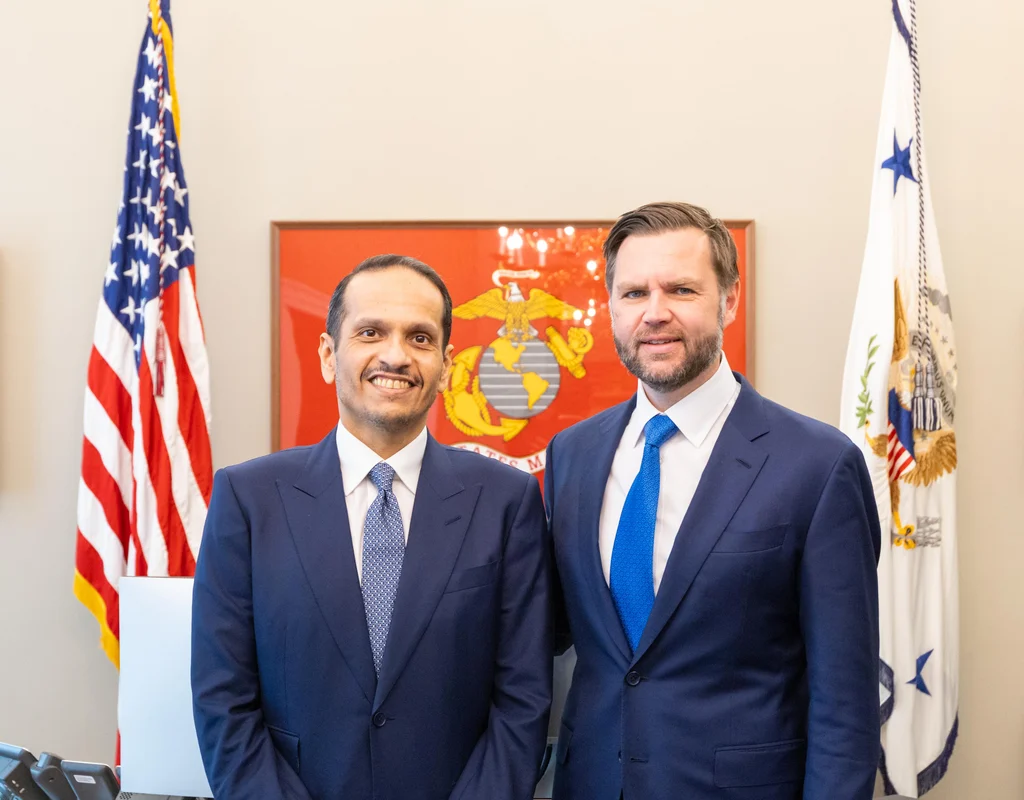
US Vice President JD Vance arriving in Pakistan for US-Iran diplomatic talks in Islamabad in April 2026.
White House envoy Steve Witkoff and Jared Kushner, President Donald Trump’s adviser and son-in-law, are also involved in the discussions.
The possibility of a working-level technical meeting has been under active discussion, but BPI News understands no final location has been agreed and the meeting itself has not yet materialised.
Vance’s personal involvement places the latest diplomatic effort at the highest level of the Trump administration and reflects his longstanding preference for pursuing a negotiated settlement with Iran rather than allowing the conflict to expand again.
He has already played a significant role in earlier rounds of diplomacy. Vance led the American negotiating team during an April summit in Islamabad and was subsequently involved in talks that produced the US-Iran memorandum of understanding reached in June. He later led the American delegation during direct talks with Iran in Switzerland.
That diplomatic process later collapsed after renewed Iranian Revolutionary Guard attacks on shipping, but Pakistan and Qatar continued to operate as important channels between Washington and Tehran.
Pakistan Remains A Key US-Iran Intermediary
Pakistan has emerged as one of the most important intermediaries in the US-Iran confrontation, with Field Marshal Asim Munir playing a particularly prominent role in Islamabad’s diplomatic efforts.
Munir has travelled to Tehran twice in recent weeks and has met senior Iranian political and security officials as Pakistan attempts to prevent a wider regional escalation. Pakistan’s military has publicly described itself as cautiously optimistic about mediation efforts while warning that outside actors could still derail progress.
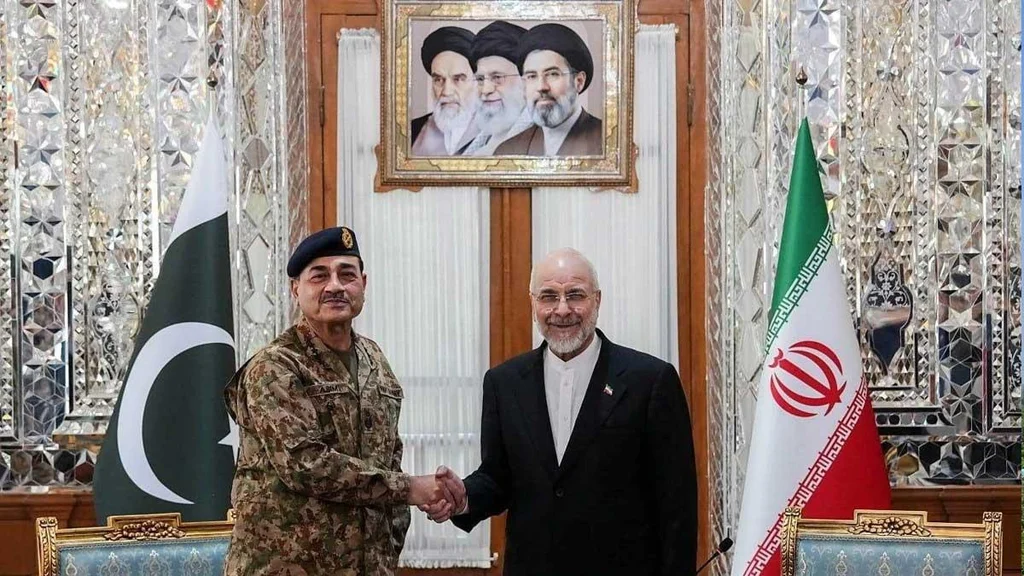
BPI News’s two security sources said Vance’s contact with Pakistani mediators has remained regular and sustained rather than occasional, reinforcing the extent to which Islamabad remains involved regardless of where the next physical meeting is eventually held.
One source said Pakistan would still prefer Islamabad because hosting another round of talks would reinforce the country’s role as a principal mediator, but acknowledged that practical considerations may now favour another location.
Possible alternatives have not been confirmed.
Qatar is also maintaining an active role. Doha has continued exchanging proposals between Washington and Tehran and has publicly said both sides remain engaged with the negotiating process despite continued military tension.
No Venue Agreed For Possible Technical Talks
The immediate diplomatic question is whether the United States and Iran can move beyond indirect mediation and establish a technical meeting capable of preparing the ground for renewed formal negotiations.
BPI News understands that Pakistani and Qatari mediators have discussed the possibility with Vance, but no venue has been finalised.
The senior Pakistani security source said Islamabad would face substantial logistical and security requirements if it hosted another major round of talks, potentially including road closures, restricted movement and security zones affecting businesses and residents.
Islamabad has repeatedly experienced major disruption during high-level diplomatic events, political protests and security emergencies, with key roads sometimes closed and movement between Rawalpindi and the capital severely restricted.
For an economy still dealing with the legacy of inflation and weak household purchasing power, the source argued that even relatively short periods of disruption carry a cost that should not be ignored.
Pakistan’s economic recovery remains fragile despite stronger headline indicators. Inflation has moderated from previous peaks, growth has improved and foreign reserves have increased, but the cost-of-living burden remains substantial. Millions of households continue to face pressure from electricity bills, fuel prices, food costs and weak wage growth, while the labour market has struggled to create enough good-quality jobs for a rapidly growing population.
The senior source therefore argued that Pakistan could continue exercising diplomatic influence without necessarily insisting that every stage of the negotiations take place in Islamabad.
Trump Allows Diplomacy To Continue While Military Pressure Remains
President Donald Trump is currently allowing the diplomatic process to continue while Washington assesses whether an agreement with Tehran remains possible.
Trump has publicly confirmed that the United States is talking to Iran, while Vance has indicated that the administration believes there remains a potential path towards a settlement if Tehran accepts verifiable restrictions on its nuclear programme.
However, diplomacy is continuing alongside significant military pressure.
The United States carried out a strike on an anti-aircraft missile launcher on Qeshm Island after Washington said the system fired towards a US fighter aircraft. Trump subsequently confirmed the action.
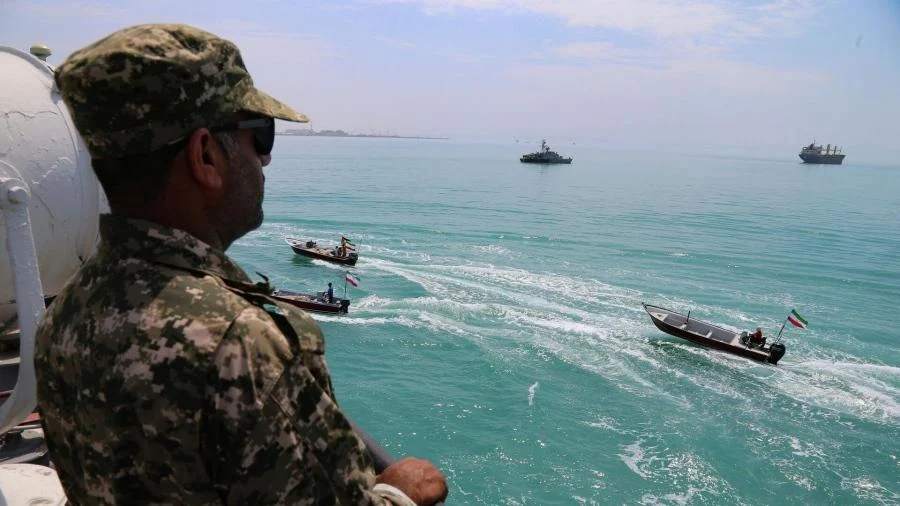
The incident demonstrates the fragility of the current negotiating environment. A single military confrontation could again undermine the diplomatic process being managed through Pakistan, Qatar and other regional intermediaries.
Qatar’s leadership has publicly said it continues to work with Washington and Tehran to bridge outstanding differences and reduce the risk of further escalation.
Why Vance’s Role Matters
Vance has consistently been one of the more sceptical voices inside Trump’s circle regarding a prolonged conflict with Iran and has argued for diplomatic alternatives.
His role has become even more important following the US midterm elections, after he linked the war to Republican electoral losses and intensified efforts to find a route back towards negotiations.
The latest discussions therefore represent more than routine diplomatic communication. They involve the Vice President personally engaging almost daily with two of the principal intermediary states and exploring whether the United States and Iran can return to technical negotiations.
For Pakistan, the process offers both diplomatic opportunity and practical challenges.
Islamabad has become increasingly important as a channel between Washington and Tehran and has developed access to both sides that few countries possess. However, the senior Pakistani security source who spoke to BPI News argued that maintaining that influence does not necessarily require Pakistan to host the next meeting physically.
BPI News Analysis
The most significant element of the latest diplomatic push is the degree to which JD Vance appears personally invested in keeping negotiations alive. His regular contact with Field Marshal Asim Munir and Qatar’s leadership places Pakistan and Qatar at the centre of an effort being handled at the highest level of the American administration.
For Pakistan, hosting another round in Islamabad would carry obvious diplomatic prestige, particularly after the capital previously hosted US-Iran talks. However, the concern raised by the senior security source reflects a broader domestic reality that can easily be overlooked when Pakistan’s growing diplomatic influence is discussed.
Pakistan has achieved greater international relevance through its mediation role at the same time as millions of its own citizens continue to deal with a difficult economic environment. Real wages have been squeezed, poverty has increased and energy costs remain a serious burden for households and businesses. In that context, the disruption caused by extensive security restrictions in Islamabad is not merely an inconvenience.
The more important measure of Pakistan’s diplomatic influence may therefore be whether Washington and Tehran continue to rely on Islamabad as an intermediary regardless of where negotiations physically take place.
BPI News understands that Vance’s contact with Pakistani mediators remains constant, that a working-level technical meeting continues to be discussed and that Islamabad has not been selected as the venue at this stage.