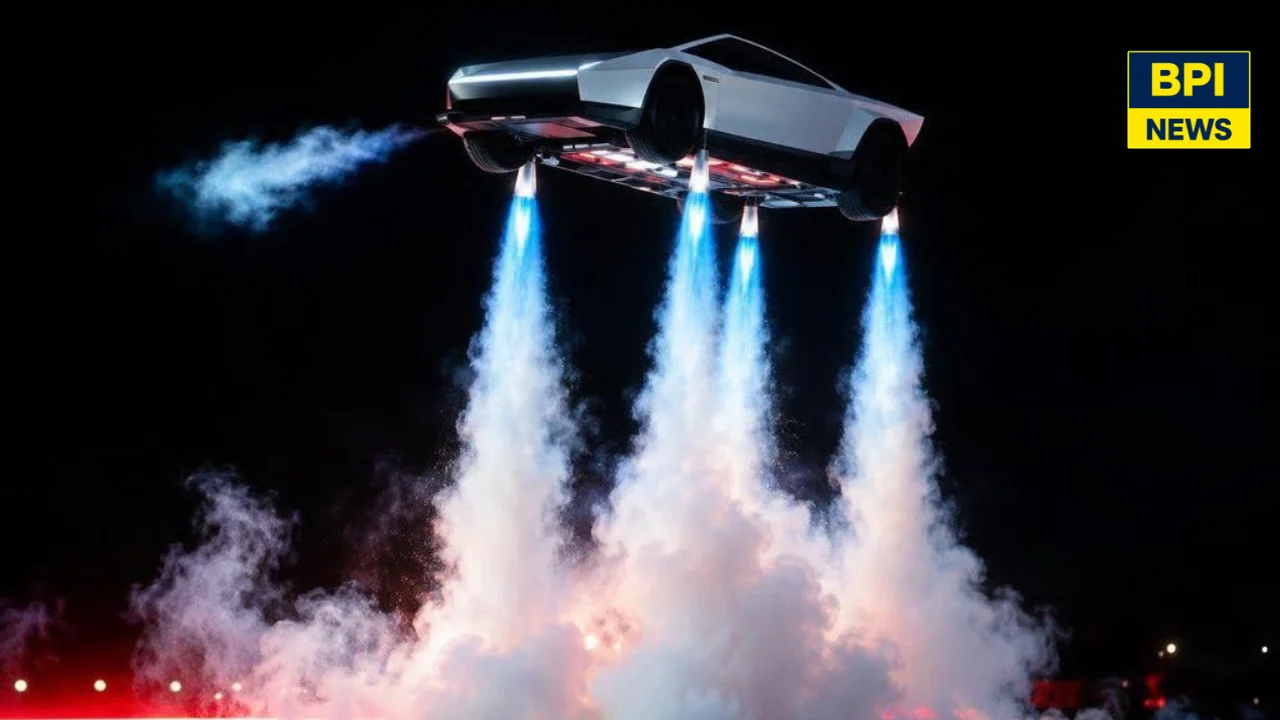
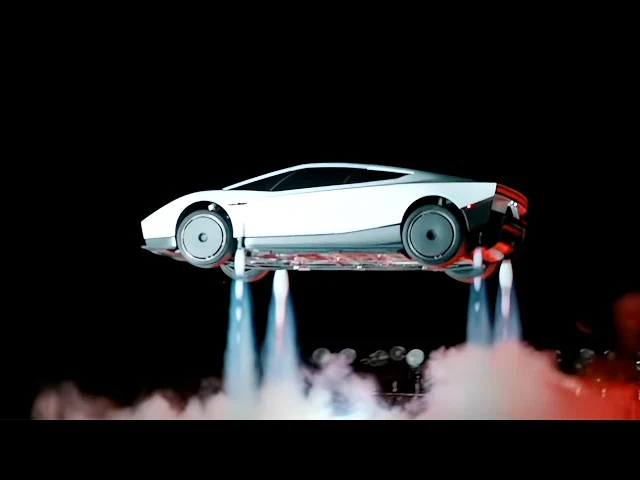
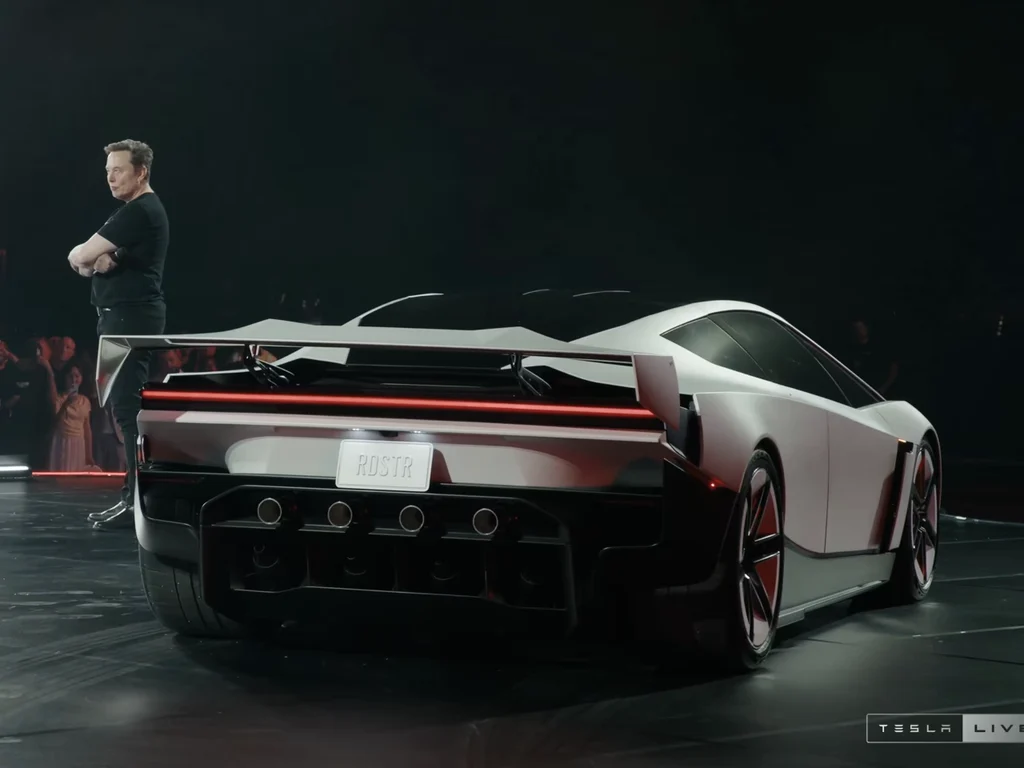
Tesla has produced one of the most extraordinary automotive demonstrations in recent memory: a Roadster climbing a huge curved ramp, remaining attached while completely upside down, leaving the structure, rotating through the air and landing back on its wheels.
Another demonstration showed the car travelling through the air above a line of Tesla vehicles.
Elon Musk subsequently declared that “the future does have flying cars”.
The spectacle immediately produced two completely opposite reactions.
For supporters, Tesla had just demonstrated a genuine flying car using technology developed with SpaceX.
For sceptics, the entire thing looked impossible.
One widely circulated reaction argued that nobody could throw thousands of kilograms through the air using compressed-air thrusters and suggested the Roadster was effectively “a balloon filled with helium dressed up as a car”.
Others questioned how the car remained stuck to the ramp while inverted without an obvious rocket firing in the opposite direction.
After examining the engineering Tesla says sits underneath the Roadster, neither objection actually demonstrates that the stunt was fake.
The physics is possible.
What Tesla has not yet demonstrated is something quite different: that the spectacular prototype seen in Texas can become a practical, repeatable, safe and legally usable production car.
That distinction matters.
Tesla says production is now targeted for 2028 eight years after the original production date attached to the second-generation Roadster.
First: Was The Car Really Flying?
It depends what is meant by flying.
The Roadster unquestionably became airborne during Tesla’s demonstration and appeared to actively control its orientation rather than simply following the uncontrolled trajectory of a jumping car.
But this was not flight in the conventional aeronautical sense.
There were no wings providing sustained lift.
There were no rotors supporting the vehicle like a helicopter or eVTOL.
The car did not demonstrate prolonged cruising or sustained stationary hovering.
What Tesla demonstrated was closer to a rocket-assisted controlled jump: stored compressed gas produces thrust for a short period, allowing a vehicle to leave the surface, alter its attitude and return to the ground.
That does not make it unimpressive.
It simply makes “flying car” a much more generous description than “a car capable of controlled short-duration airborne manoeuvres”.
The Helium Balloon Theory Does Not Work
The idea that Tesla secretly replaced the Roadster with a helium-filled shell sounds attractive because it would explain why something so heavy appeared to move so easily through the air.
The problem is basic buoyancy.
At sea level, one cubic metre of helium provides only a little over one kilogram of useful lift once the weight of the helium itself is subtracted from the displaced air.
Even assuming the Roadster prototype weighed only around 1,800kg, lifting it purely through helium buoyancy would require roughly 1,700 cubic metres of helium.
At two tonnes, it would require close to 1,900 cubic metres.
Put that volume into a spherical balloon and it would be approximately 15 metres across.
The entire Roadster body contains only a tiny fraction of that volume.
Even if every empty cavity inside the car were filled with helium, the useful lift would be measured in kilograms, not tonnes.
So unless an enormous balloon was hidden somewhere outside the vehicle, helium cannot explain what happened.
The “helium car” explanation is therefore considerably less physically plausible than Tesla’s explanation.
How Can A Car Stay Upside Down Without A Rocket Pushing It Onto The Ramp?
This is where the demonstration looks impossible until the suction system is understood.
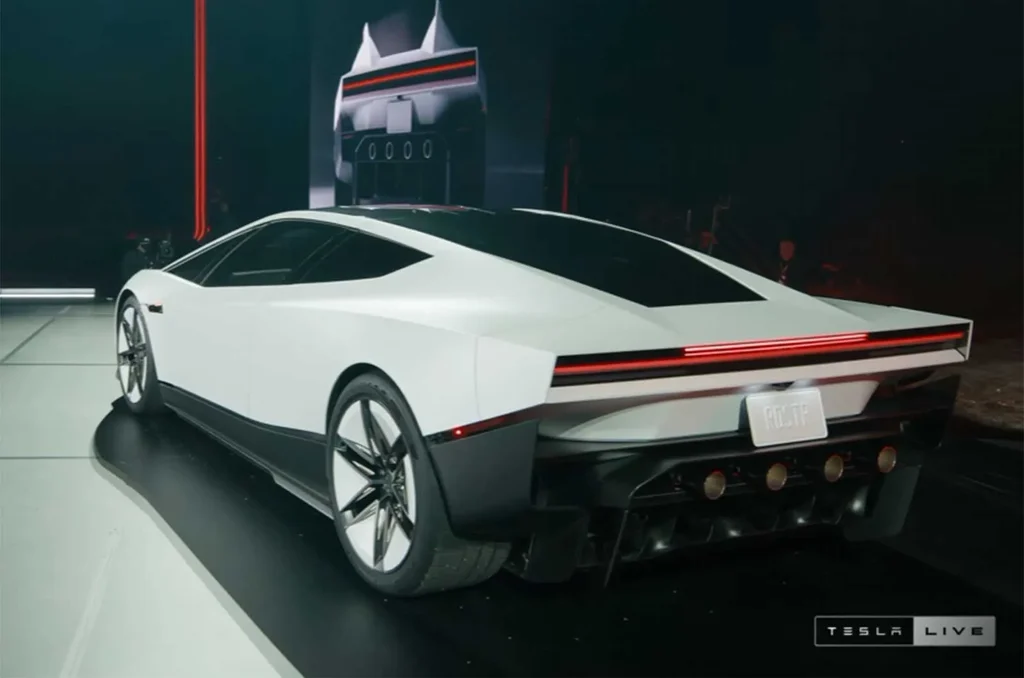
Tesla says the Roadster uses a powerful active fan system beneath and towards the rear of the car.
The concept is not science fiction.
Tesla was granted a patent for an electrically driven fan system designed to draw air from beneath the car, reduce pressure underneath and create downforce independently of vehicle speed.
In simple terms, the fans turn the underside of the vehicle into an enormous vacuum cleaner.
If pressure beneath the car is reduced sufficiently, normal atmospheric pressure on the opposite side pushes the vehicle against the surface.
That force does not care whether the road is below the car.
If the car is inverted, sufficiently strong suction can still hold it against the ceiling.
There therefore does not need to be an obvious thruster continuously firing upwards while the Roadster is inverted.
The ramp itself becomes the surface against which the suction system is working.
This Technology Already Exists
Tesla did not invent the underlying principle.
In 1970, the extraordinary Chaparral 2J racing car used rear fans and skirts to reduce pressure beneath its chassis, generating significant downforce even while travelling slowly.
Unlike a conventional wing, which becomes more effective as speed increases, fan-generated suction can work from a standstill.
More recently, Britain’s McMurtry Automotive has taken the idea much further.
Its electric Spéirling uses twin high-speed fans and a sealed region beneath the chassis to generate up to 2,000kg of downforce from 0mph.
McMurtry openly describes the system as effectively pulling the car onto the road with a controlled vacuum.
So a car possessing enough suction to hold itself upside down is not a violation of physics.
The real engineering question is whether Tesla’s system can reliably produce that force outside a purpose-built demonstration environment.
The Ramp Matters
Tesla’s demonstration used a specially constructed, smooth ramp.
That is important.
A suction car works best when the gap between the underside and surface can be controlled.
Real roads are covered with imperfections:
potholes;
drainage channels;
stones;
road markings;
changes in camber;
standing water;
debris;
and sudden variations in surface height.
Every leak allows atmospheric air back into the low-pressure area beneath the vehicle.
The fans then have to work harder to maintain the same downforce.
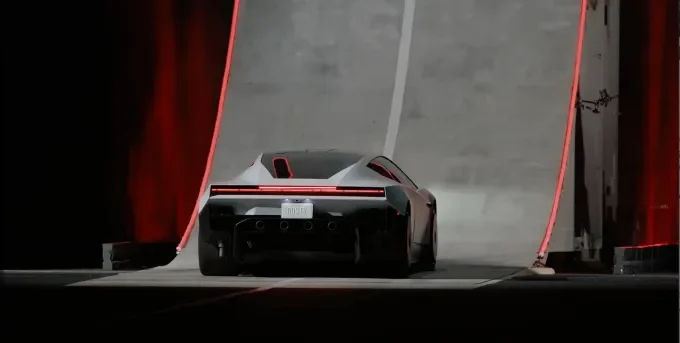
Driving upside down on a purpose-built ramp is therefore a fascinating demonstration of what the system can achieve under controlled conditions.
It does not mean the Roadster could casually drive upside down through a tunnel.
The Maths Behind The Suction Is Surprisingly Plausible
Assume, purely for illustration, a two-tonne Roadster.
Gravity pulls that vehicle down with a force of roughly 19.6 kilonewtons.
If Tesla created an effective suction area of approximately four square metres underneath the car, a pressure difference of only about 5 kilopascals would produce around 20kN of force.
Atmospheric pressure at sea level is about 101kPa.
So the pressure under the vehicle does not have to approach a perfect vacuum.
A pressure deficit of only several per cent of atmospheric pressure across a sufficiently large area can equal the vehicle’s weight.
That is how the apparently impossible upside-down section can work without a rocket visibly firing the whole time.
Then The Ramp Ends
Suction has one enormous limitation.
It needs a nearby surface.
The moment the Roadster leaves the ramp, there is no road against which the low-pressure zone can pull the vehicle.
At that point another system has to take over.
That is where SpaceX-derived compressed-gas thrusters enter the story.
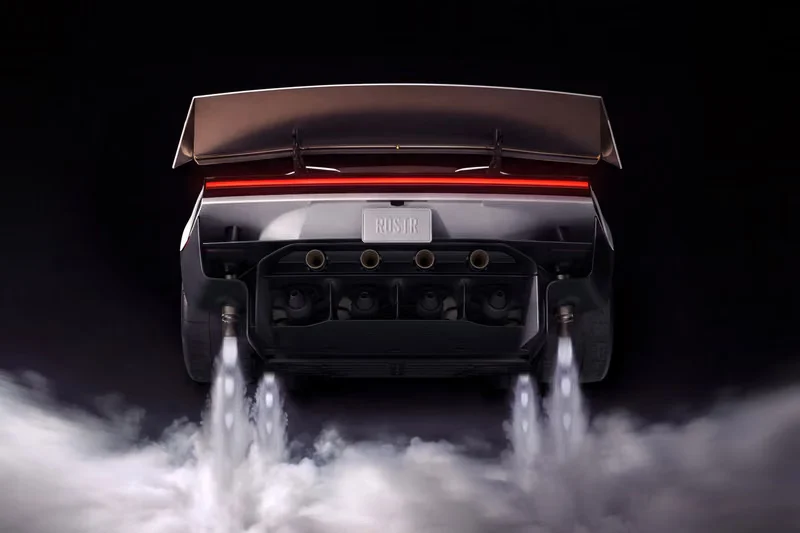
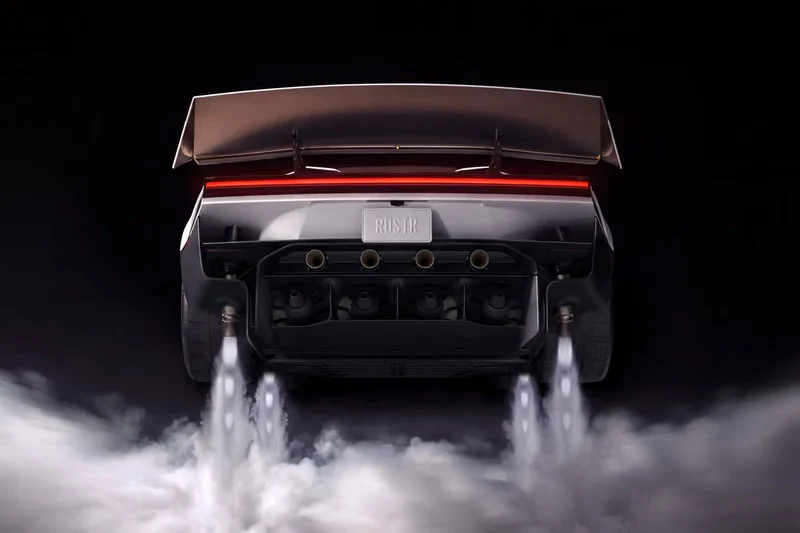
Tesla says the Roadster carries two pressure vessels with a combined capacity of 600 litres, containing approximately 250kg of compressed air, feeding 10 nozzles around the vehicle.
Musk says there are primary thrusters at the rear and attitude-control thrusters that can control the car’s orientation.
The principle is simply Newton’s third law.
Throw a large mass of air very rapidly in one direction and the car moves in the other.
That is exactly how a cold-gas spacecraft thruster works.
Can Compressed Air Really Move A Two-Tonne Car?
Yes — briefly.
This is where many of the reactions online underestimate just how much energy can be stored in very highly compressed gas.
The system Tesla describes is not comparable with the air coming from a household compressor.
Hundreds of kilograms of gas packed into a 600-litre volume implies enormous pressure.
Reports from the demonstration put combined rear thrust at more than 80 kilonewtons, although Tesla has not provided independent test data verifying that figure.
For comparison, a two-tonne car weighs roughly 20kN.
An 80kN thrust system therefore produces force equivalent to roughly four times the vehicle’s weight.
The claim is not inherently physically impossible.
The 0-60 Claim Also Gives Us A Useful Check
Tesla demonstrated what it described as a 0-60mph run in 0.81 seconds.
Reaching 60mph in 0.81 seconds requires an average acceleration of about 33 metres per second squared, or roughly 3.4g.
For a two-tonne vehicle, that requires an average forward force of about 66kN, before allowing for other losses.
An 80kN rear-thrust system would therefore fall into roughly the right order of magnitude.
That does not independently prove Tesla achieved 0.81 seconds.
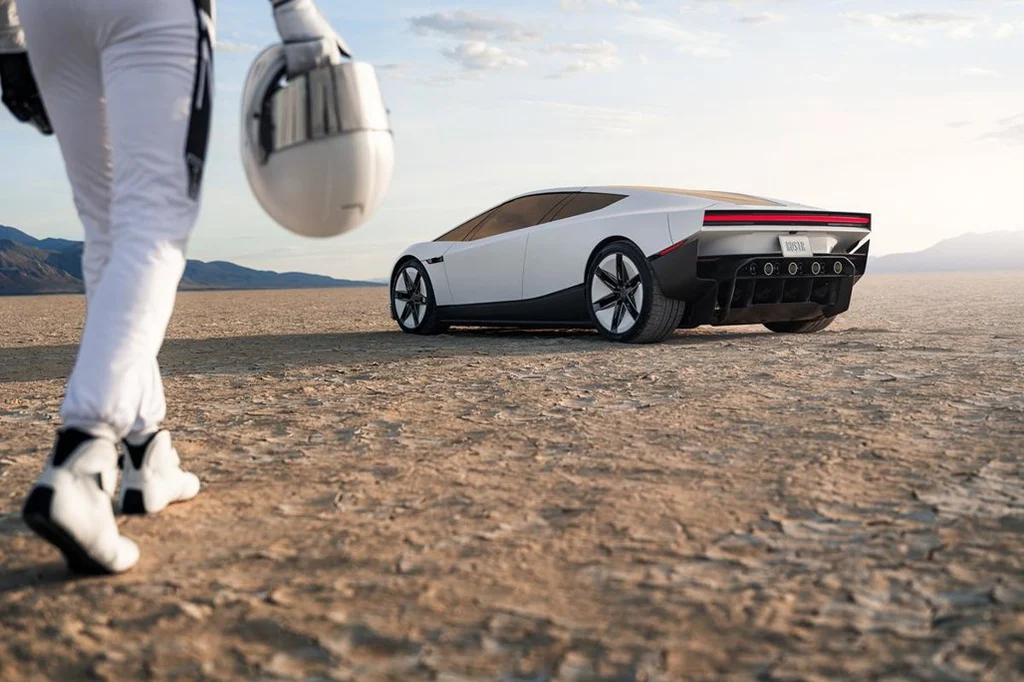
No independent timing organisation has yet verified the run.
But the claimed acceleration and the claimed thrust are at least broadly compatible with each other.
Why The Car Cannot Fly For Very Long
Here is the part that gets lost when the Roadster is described simply as a “flying car”.
Compressed gas is finite.
If a roughly two-tonne vehicle needs approximately 20kN of upward thrust merely to cancel gravity, it consumes its stored momentum rapidly.
Using reasonable cold-gas exhaust-velocity assumptions, 250kg of compressed air might theoretically sustain enough thrust to support a two-tonne vehicle for only a matter of seconds.
Higher thrust used to accelerate upwards, rotate the vehicle or soften a landing consumes the supply faster still.
This is precisely why cold-gas thrusters make sense for attitude control on spacecraft but are not normally used as the main propulsion system for an aircraft.
The Roadster can potentially jump, rotate and briefly support itself.
That is enormously different from cruising across a city through the air.
What The Dark Demonstration Does And Does Not Prove
Scepticism about the footage itself is understandable.
Tesla staged the demonstration outdoors at night.
The car was white against an extremely dark background.
The cabin glass appeared virtually opaque in much of the footage.
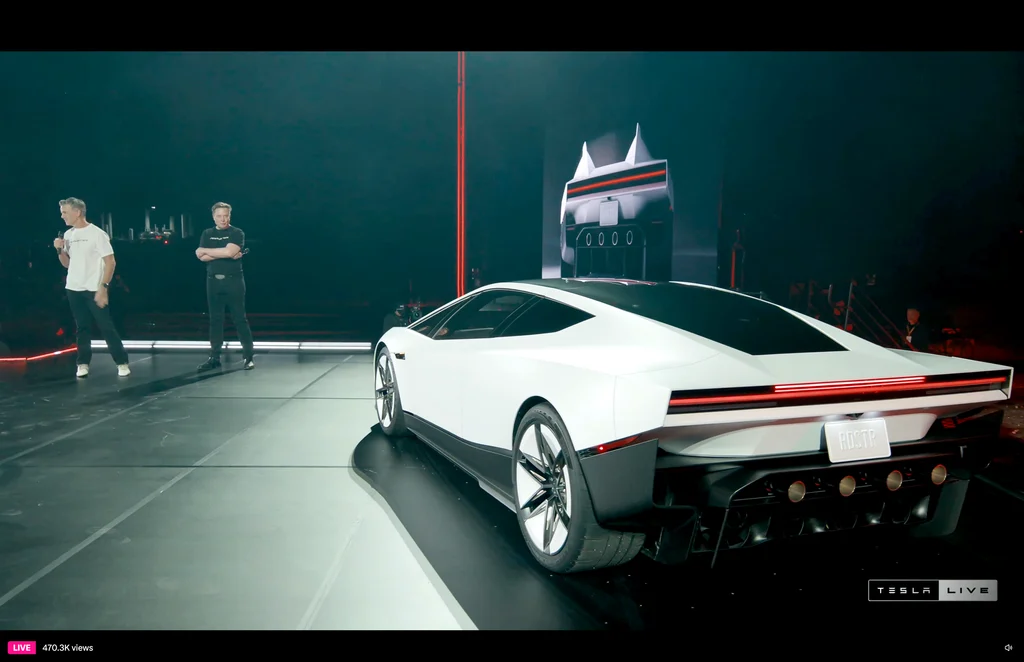
Underbody details were difficult to distinguish.
The theatrical lighting made the event visually spectacular but also made forensic examination of the vehicle much harder than a daylight engineering demonstration would have been.
That is a legitimate criticism.
It is not proof of deception.
Tesla also openly said the car was unmanned.
So the blacked-out appearance of the cabin cannot by itself be treated as evidence that Tesla was secretly concealing the lack of a driver.
They already told everyone there wasn’t one.
Could There Still Have Been Wires?
A hidden support system is theoretically possible in almost any staged demonstration.
But there is currently no public evidence proving one was used here.
No obvious tether is visible in the widely circulated footage.
The demonstration was performed before an audience and broadcast live.
Visible gas plumes and the behaviour of the vehicle are consistent with a thrust-based system.
Tesla also has an independently verifiable patent for active fan-generated downforce and has publicly described the compressed-air hardware.
That makes a simple “car hanging from invisible wires” explanation less convincing than the actual engineering explanation.
But Tesla could eliminate most of the speculation very easily.
What Would Prove It Beyond Reasonable Doubt?
Forget another cinematic night-time launch.
Put the Roadster on a test ground in daylight.
Have independent journalists and engineers inspect it.
Weigh the complete vehicle.
Publish the pressure-vessel specifications.
Measure nozzle thrust.
Measure the fan downforce.
Show the compressor recharge time.
Let independent cameras film the underside.
Perform the manoeuvre repeatedly rather than once.
Show an unedited take from multiple fixed positions.
And, if Tesla wants to call it a flying car, demonstrate a controlled take-off and stationary hover from flat ground without the custom ramp.
That would turn a remarkable product demonstration into independently verifiable engineering.
Tesla has not yet done that.
A Stunt Prototype Is Not Necessarily A Production Roadster
This may be the single most important distinction.
A manufacturer can construct an extraordinary prototype that performs one highly controlled stunt.
Building thousands of customer cars capable of doing the same thing safely for years is an entirely different engineering task.
Tesla’s new Roadster programme now appears to contain multiple configurations, including road-focused and more extreme thruster-equipped versions.
The Roadster being presented online as a production “flying Tesla” is therefore the most extreme configuration.
It is not simply the ordinary Roadster every buyer will receive.
The Roadster Was Supposed To Arrive In 2020
The second-generation Roadster was first unveiled in November 2017.
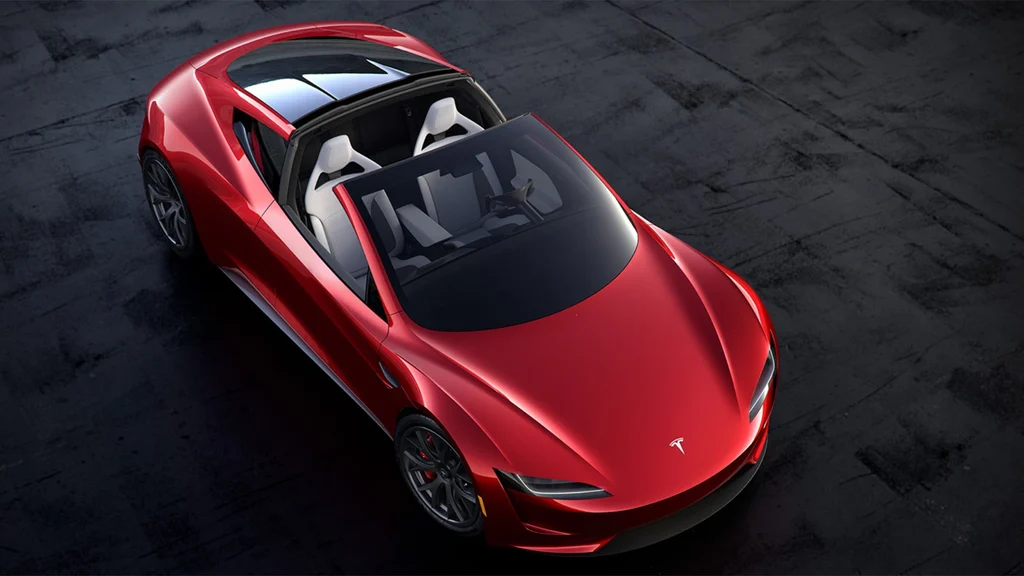
Tesla advertised startling figures for the time:
0-60mph in 1.9 seconds;
more than 250mph;
around 620 miles of range;
and seating for four.
Production was supposed to begin in 2020.
It did not.
By 2021, Musk had pushed the launch to 2023.
Later targets moved again.
The reveal itself was repeatedly delayed before finally taking place in 2026.
Tesla is now targeting 2028 production.
That would put the car eight years behind its original production target.
This Is Barely The Same Roadster Anymore
It is technically the same second-generation Roadster programme.
Engineering-wise, however, it has changed enormously.
The original vehicle was pitched as a four-seat battery-electric hypercar.
The newer programme now includes extreme configurations with compressed-air thrusters and active suction technology.
So it would be misleading to say Tesla simply spent years perfecting the exact car shown in 2017.
The design goals have evolved significantly.
Musk’s Timelines Have A History
This does not mean Tesla never delivers ambitious products.
The Cybertruck exists.
The Tesla Semi exists.
Advanced driver-assistance systems exist.
But the dates Musk attaches to products have repeatedly proved much less reliable than the underlying ambition.
The Cybertruck was unveiled in 2019 with production originally expected in late 2021.
Deliveries eventually began later.
The Tesla Semi was unveiled in 2017 with production targeted for 2019.
Limited deliveries came years afterwards.
Musk has also repeatedly made aggressive predictions around autonomous driving and robotaxis that did not arrive on the originally stated schedule.
The lesson is not that everything Musk announces is fictional.
It is that a Tesla production date should not be confused with a guaranteed delivery schedule.
Then There Is Safety
The engineering needed to make this Roadster spectacular also creates risks that conventional cars do not have.
Tesla says the flight system stores approximately 250kg of air inside ultra-high-pressure vessels.
Pressure vessels can be engineered very safely.
But integrating them into a road vehicle introduces crash scenarios.
A production car would need to survive severe frontal, side and rear impacts without a damaged pressure vessel rupturing or releasing its contents dangerously.
The tanks would require crash isolation, pressure relief, monitoring and containment.
The connections and valves feeding the thrusters would need similar protection.
The Exhaust Is Potentially A Hazard In Its Own Right
A thruster powerful enough to accelerate a roughly two-tonne car at several g cannot be treated like a decorative exhaust pipe.
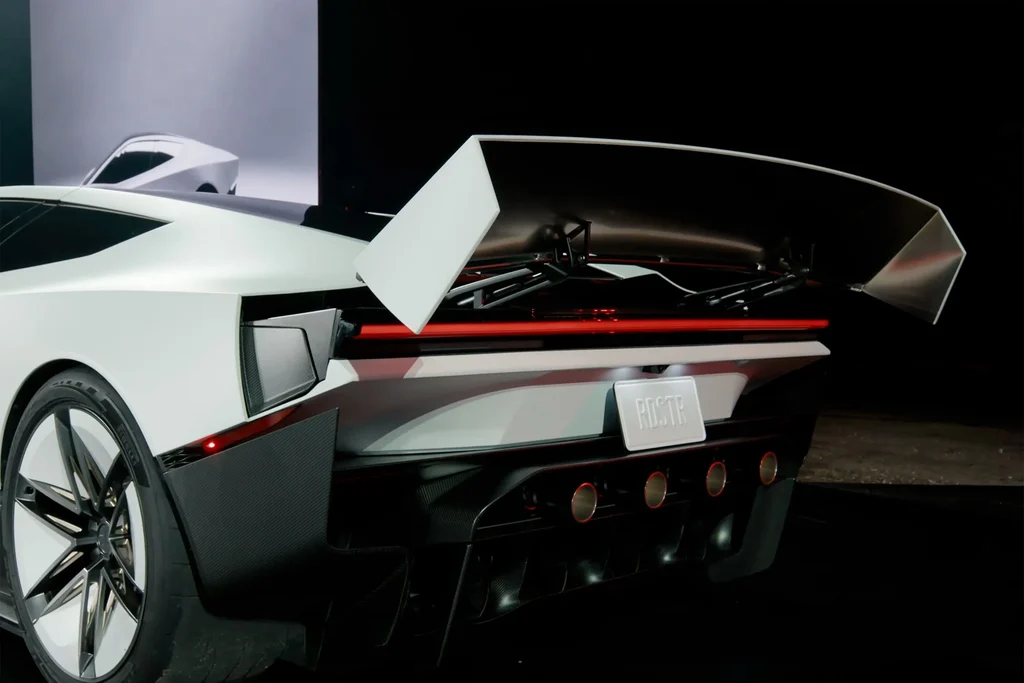
Fire one of those nozzles near:
a pedestrian;
a cyclist;
a motorcycle;
another vehicle;
loose gravel;
standing water;
or roadside debris,
and the exhaust itself becomes a safety consideration.
The system would need software and hardware interlocks preventing dangerous firings when people or objects are positioned near a nozzle.
Suction Creates Another Problem: Debris
Anything capable of moving enormous quantities of air underneath a vehicle can ingest stones, dirt, rubber and other material.
Tesla would need to stop road debris damaging the fans, destroying a seal or being expelled towards vehicles behind it.
A fan failure at normal road speed could reduce grip unexpectedly.
A fan failure while the vehicle was actually inverted would be considerably more serious.
Sub-One-Second Acceleration Is Also Not A Normal Road-Car Problem
A 0-60mph time of 0.81 seconds corresponds to approximately 3.4g average acceleration.
That is not merely “very quick”.
It represents an entirely different operating environment from normal road driving.
Objects inside the cabin become projectiles.
Head and neck restraint becomes more important.
A throttle error becomes much more consequential.
A car can travel from stationary to motorway speed before a nearby pedestrian has even processed what has happened.
Such performance makes sense on a controlled track.
Its usefulness on a public street is considerably harder to defend.
Tesla Did Not Put A Human Inside The Demonstration Car
That detail deserves attention.
The company responsible for building the prototype considered the aerial demonstration risky enough not to place a driver inside it.
That was a sensible engineering decision.
It also illustrates the distance between demonstrating a machine remotely at a test site and handing one to a customer.
Before anyone performs the same manoeuvre with a human occupant, Tesla would need to demonstrate predictable thrust, redundant attitude control, survivable landing loads, fault tolerance and safe behaviour following a partial system failure.
What happens if one nozzle does not open halfway through a roll?
What happens if one pressure tank loses pressure?
What happens if the control computer reboots?
What happens if the fan seal fails just as the car reaches the inverted section?
A production flight-capable machine must answer those questions before the customer ever discovers the answer personally.
The Cybertruck Comparison Needs One Important Correction
It is often said that the Cybertruck “failed European safety tests”.
That is not technically what happened.
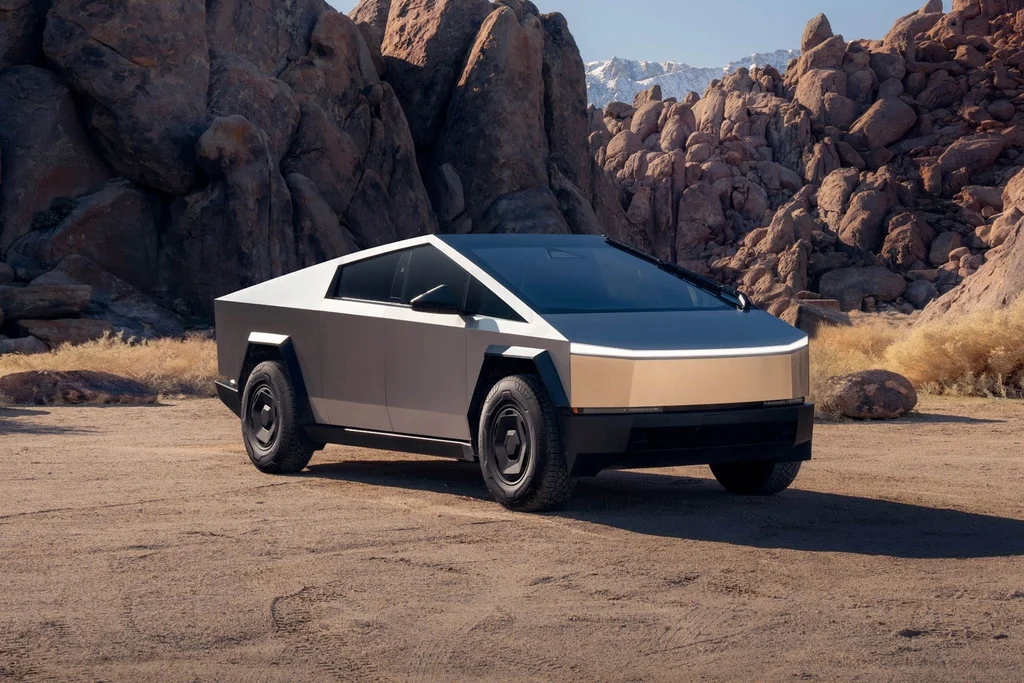
Tesla has not submitted the Cybertruck for normal EU-wide whole-vehicle type approval, and Euro NCAP has not crash-tested it as a European-market vehicle.
The problem is that European experts have raised significant questions about whether its rigid stainless-steel structure, sharp geometry, mass and pedestrian-impact characteristics could satisfy European requirements.
A Cybertruck has been individually approved in Europe after modifications, but that is not the same as EU-wide type approval.
If The Cybertruck Has Problems In Europe, What Happens To A Rocket Roadster?
The ordinary Roadster could theoretically be engineered to meet European type-approval requirements.
It should not automatically be declared illegal before certification has even begun.
The extreme thruster-equipped version is a different matter.
A vehicle carrying ultra-high-pressure tanks and externally firing thrust nozzles would present regulators with questions normal homologation tests were never designed around.
Pedestrian safety is only the beginning.
There would be noise.
Exhaust velocity.
Pressure-vessel crashworthiness.
Debris projection.
Software control.
Ground clearance.
Visibility.
Emergency shutdown systems.
And potentially an even more fundamental question:
At what point does a road vehicle capable of intentionally leaving the ground become an aircraft?
That regulatory problem may prove more difficult than the engineering.
BPI NEWS ANALYSIS, SO WAS IT REAL?
There are really three separate questions.
Did a physical Tesla prototype perform the stunt?
The available evidence strongly indicates yes.
It happened during a live event before spectators, multiple recordings exist, the vehicle’s behaviour is consistent with active suction followed by compressed-gas thrust, and Tesla has disclosed hardware capable in principle of producing those effects.
There is currently no evidence establishing the popular helium-balloon theory, and the basic physics of helium makes that explanation implausible.
Is Tesla’s engineering explanation physically possible?
Yes.
Fan-generated downforce is established technology.
A pressure difference beneath a sufficiently large vehicle floor can hold a car upside down.
Cold-gas thrusters can generate enormous short-duration force.
Hundreds of kilograms of highly compressed air provide enough impulse to throw a vehicle into the air and manipulate its orientation for several seconds.
None of that breaks the laws of physics.
Has Tesla proved it has a production flying car?
No.
What Tesla has demonstrated is an extraordinary unmanned prototype performing controlled stunts on a custom structure at a private test facility.
The demonstration was conducted at night.
The vehicle was not independently weighed.
The thruster output has not been independently measured.
The pressure data have not been published in full.
The endurance of the flight system remains unclear.
Its recharge time remains unclear.
Its behaviour on ordinary roads remains unknown.
And the company that originally said the second-generation Roadster would arrive in 2020 is now talking about 2028 production.
That does not make the Roadster fake.
It makes the most accurate description much less sensational than “Tesla launches flying car”.
Tesla has demonstrated that it can make a car briefly behave like a rocket.
Whether it can turn that spectacle into a safe vehicle customers can actually buy, insure, register and use is the part of the demonstration that has yet to happen.