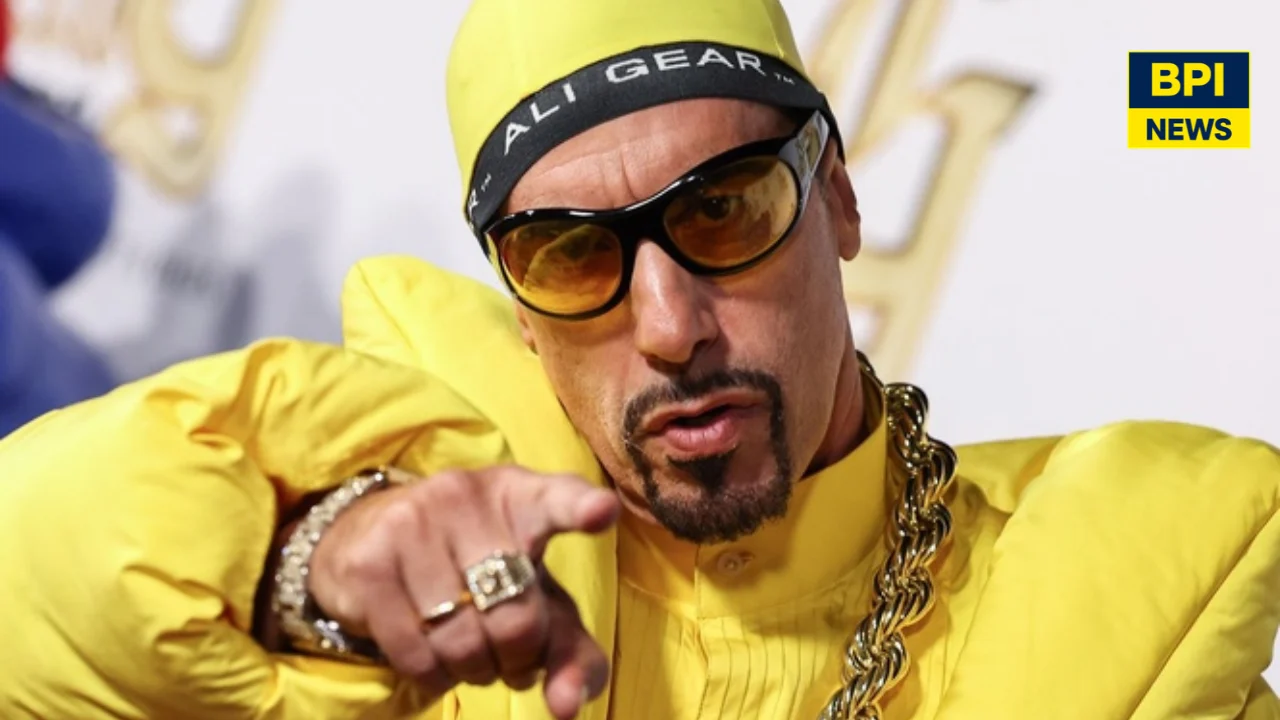
Sacha Baron Cohen has brought Ali G back nearly three decades after the character first became a British cultural phenomenon, but the reception to Ali G: Who Iz I? suggests nostalgia has not been enough to make the joke work again.
The film opened in the UK and Ireland with around £1.3 million from 458 cinemas, placing third at the box office. That would not normally be disastrous for a comedy, but the comparison with Ali G’s first theatrical outing is uncomfortable. Ali G Indahouse opened with around £3.2 million in Britain in 2002 and eventually grossed more than £10 million in the UK alone. Worldwide, the original film made more than $23 million.
The new film has so far generated roughly $2.1 million internationally according to Box Office Mojo, with most of that coming from Britain. It moved onto Amazon Prime Video just five days after its cinema release.

There is no reliable way to calculate how much money has actually been lost because Amazon MGM has not publicly disclosed the film’s production or marketing budget, and the studio has said the release delivered against its internal goals. It would therefore be wrong to claim a specific multi-million-pound loss.
What can be said is that, theatrically, the comeback is operating at a fraction of the level Ali G achieved when the character was at his peak, even before adjusting the 2002 figures for more than two decades of inflation.
The critical reaction has been equally bruising. The film has sat at around 40 per cent positive reviews on Rotten Tomatoes, while its Metacritic score has remained in the high 30s, indicating generally unfavourable reviews.
Empire said long stretches were simply not very funny. Variety described the film as cumbersome and less relevant than it imagines itself to be. TheWrap argued that the bigger problem was not that Ali G remained offensive, but that the character no longer generated much of a reaction at all.
That may ultimately be the central problem with the comeback.
The world around Ali G has changed more than Ali G has.
A Character Built For The Late 1990s
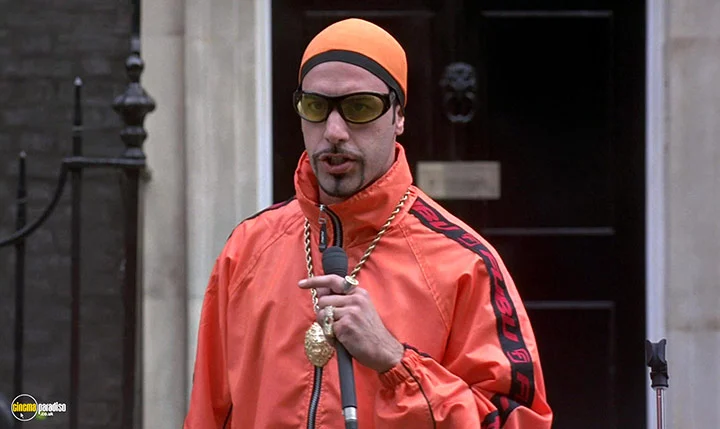
Ali G first appeared in 1998, at a time when Baron Cohen’s fake interviewer could sit opposite politicians, academics and public figures who genuinely had no idea what they were dealing with.
The comedy depended heavily on that imbalance.
Ali G presented himself as a deeply ignorant suburban youth who believed he understood Black music, Jamaican culture, politics, sex and almost everything else while repeatedly exposing how little he actually knew. His interview subjects often attempted to answer ridiculous questions seriously, creating the awkwardness that made the character effective.
Hamza, from Bradford, told BPI News that this was the only period in which the character really worked for him.
“Ali G was funny for about five minutes back in the late 90s when he was interviewing unsuspecting people who had no idea what was going on. For me, it was already dead by the second series. Who is encouraging him to bring this back nearly 30 years later?”
That criticism goes to the heart of the new film’s problem.
Sacha Baron Cohen is now one of the most recognisable comic performers in the world. The hidden-camera mechanism that made Ali G unusual is much harder to reproduce because audiences and potential targets understand Baron Cohen’s methods.
The character itself has also remained largely frozen.
The yellow tracksuits, exaggerated slang, faux-Jamaican mannerisms, hip-hop affectations and deliberately mangled language were provocative at the end of the 1990s.
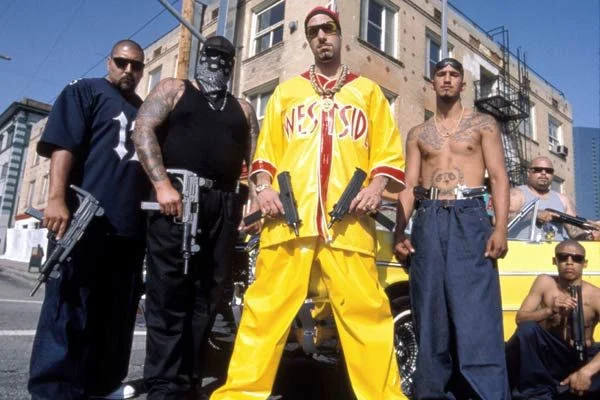
In 2026, Baron Cohen is 55 years old and still returning to essentially the same character.
Hafsah, from Birmingham, described the premise more bluntly.
“You’re asking us to watch an Ali G movie in 2026 like it’s still 2000. That’s the problem. The world moved on.”
The Racial Argument Has Changed Too
Ali G was always defended on the basis that the character was a satire of a white suburban man appropriating Black culture rather than a parody of Black people themselves.
Baron Cohen continues to make that argument.
He has said Ali G was created as a vehicle to expose prejudice, ignorance and stupidity, arguing that the fact the character now looks outdated and problematic is precisely why he wanted to revive him.
Some Black writers and comedians involved with the new film have also defended the satire.
But the criticism has become harder to dismiss because the character’s imagery has developed a life beyond Baron Cohen’s original intention.
Ali G’s exaggerated Jamaican-influenced speech, Rastafarian references, streetwear and catchphrases have been repeated for decades by people who are not necessarily engaging with the sophisticated satirical explanation behind them.
Critics including Black British comedians have argued that whatever the original intention, the character can now reinforce stereotypes rather than undermine them.
Labour MP Paulette Hamilton publicly described the character as racist, while singer and presenter Jordan Stephens has also criticised the comeback.
Adam, 28, from Bow, told BPI News he had enjoyed the original material but believes the character belongs to a different cultural moment.
“I did find the first movie funny, but the character has obvious racial undertones and the world has moved on. The idea that the backlash is just antisemitism feels like an excuse for not accepting that maybe people simply do not find you as funny as you think they should.”
That distinction matters because criticism of Ali G cannot automatically be treated as criticism of Baron Cohen’s Jewish identity.
What Sacha Baron Cohen Actually Said About Antisemitism
Baron Cohen has argued that some of the organised campaign against the film fits into a broader environment in which prominent Jewish people are being targeted and misrepresented.
Speaking about calls to boycott the film, he said he was not surprised that prominent Jews were being targeted and described what he saw as a wider trend of Jews being portrayed in particular ways and silenced.
He also rejected the suggestion that the controversy was a direct consequence of a supposed pro-Israel political position, saying he had barely spoken publicly about Israel beyond calling for the release of hostages following the October 7 attacks.
That is different from saying that Ali G: Who Iz I? failed at the box office because audiences are antisemitic.
There is no public evidence demonstrating that antisemitism explains the film’s weak theatrical performance, and the available critical response provides several much simpler explanations: many reviewers thought the film was inconsistent, dated, overlong or simply not funny enough.
There certainly has been an organised boycott campaign, and antisemitism is a real and serious problem that has risen sharply in many countries.
But criticism of one particular comedy character cannot be dismissed wholesale through that lens.
Some people object to Ali G because they believe the character relies on racial stereotypes.
Some dislike Baron Cohen.
Some oppose his politics or assume political positions he says he does not hold.
Others simply do not think the movie is very good.
Those are different things, and collapsing all of them together weakens rather than strengthens the argument against genuine antisemitism.
Nafisa, 35, from Ilford, told BPI News she viewed the comeback less as a political controversy and more as an attempt to revive a character whose moment had passed.
“To me it feels like a pathetic attempt to hold on to fame by bringing back something that belonged to another era. I don’t think people refusing to watch it automatically means there is some deeper political reason. Sometimes audiences just move on.”
Staines Has Literally Tried To Move On
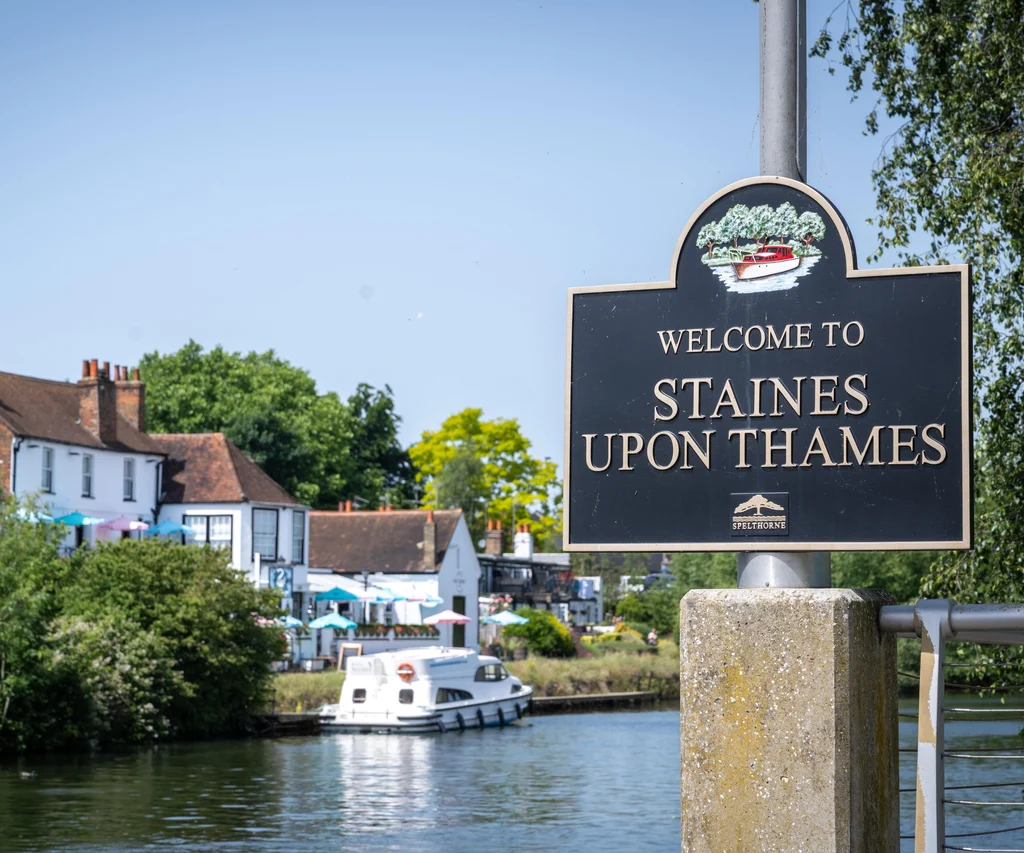
Few places illustrate Ali G’s strange cultural afterlife better than Staines.
The character repeatedly presented himself as the leader of the fictional “West Staines Massif”, turning an ordinary Surrey commuter town into an international comedy reference.
For years, Staines became synonymous with Ali G.
In 2012, the town formally changed its name to Staines-upon-Thames as part of an effort to improve its image and emphasise its riverside location.
It would be an exaggeration to claim the council changed the name solely because of Ali G. Councillor Colin Davis, who championed the change, said at the time that the town’s image problems went back further and that the new name was intended to highlight its location on the Thames.
But Ali G was undeniably part of the discussion.
The BBC reported at the time that councillors wanted to move beyond the town’s association with the character, while some residents complained that Staines had become internationally known through a joke they did not particularly want.
More recently, a proposal for an Ali G statue in the town was rejected despite support from some local businesses.
Even the town that provided Ali G with his fictional identity has spent years debating how much it wants to remain associated with him.
The Comeback Also Arrives With Baggage Around Baron Cohen Himself
The film has also arrived after several difficult years for Baron Cohen personally.
In 2024, actress Rebel Wilson made allegations in her memoir Rebel Rising concerning her experience working with Baron Cohen on the 2016 film Grimsby, known internationally as The Brothers Grimsby.
Wilson alleged that she felt bullied, humiliated and uncomfortable during production and had previously spoken publicly about pressure she said she experienced to perform nude material.
The UK edition of her memoir was published with passages concerning Baron Cohen redacted for legal reasons.
Baron Cohen has strongly denied her allegations.
His representatives described the claims as “demonstrably false” and said they were contradicted by contemporaneous documents, footage and eyewitness accounts from the production.
The allegations therefore remain disputed and should not be presented as established fact.
They nevertheless form part of the wider context surrounding a performer whose comedy has long depended on making people uncomfortable, pushing boundaries and creating situations in which participants do not always understand what is happening around them.
The cultural tolerance for that type of comedy has changed substantially since Ali G first appeared.
The Original Was A Product Of Its Time
This does not mean Ali G was never funny.
For millions of viewers, he was.
The original television interviews produced genuinely memorable moments because Baron Cohen was exceptionally quick at improvising around people who believed they were participating in serious discussions.
Ali G Indahouse then arrived in cinemas at exactly the moment when the character was culturally dominant.
It opened at number one in Britain in March 2002, taking more than £3.2 million in its first weekend and ultimately grossing more than £10 million in the UK.
The new film opened with roughly 40 per cent of that original weekend gross in nominal terms, before inflation is even considered.
That difference cannot be explained entirely by the modern shift towards streaming because the film was still launched into 458 UK and Irish cinemas.
Nor can critical disappointment be blamed entirely on political opposition.
Even positive reviews frequently acknowledge that Ali G works better in short bursts than across an entire feature film.
The irony is that this was arguably true 25 years ago as well.
A 55-Year-Old Man Playing The Same Joke
There is also an unavoidable visual element to the comeback.
Baron Cohen is now 55.
Ali G was originally funny partly because he represented a particular type of ridiculous young suburban man desperately trying to inhabit a culture he did not understand.
Seeing that character still dressing, speaking and behaving almost identically in middle age may be deliberately absurd, but it also exposes how little the basic joke has evolved.
Baron Cohen argues that this is intentional.
The film places Ali G into contemporary America and attempts to use his stupidity to expose conspiracy theories, polarisation, racism, political extremism and social-media misinformation.
That is an intellectually defensible concept.
The problem is that satire still has to be funny.
A character cannot survive purely because the creator can explain what the joke is supposed to mean.
The Audience Reaction May Be Simpler Than The Politics
The temptation surrounding Ali G: Who Iz I? is to turn every reaction into a culture-war referendum.
Supporters can argue that critics have become too sensitive to satire.
Opponents can argue that Ali G should never have returned because the character perpetuates racist imagery.
Campaigners can call for boycotts.
Baron Cohen can warn about antisemitism and efforts to silence Jewish artists.
All of those arguments can exist simultaneously.
But the box-office numbers and critical reviews suggest another possibility that is considerably less dramatic.
The character may simply no longer command the audience he once did.
The first Ali G film arrived when millions of people quoted the character and television audiences still encountered his interviews as something genuinely unusual.
The second has arrived in a media environment saturated with prank videos, influencers, fake interviews, rage bait, deliberately ignorant online personalities and performers whose entire careers depend on saying outrageous things to strangers.
In some ways, the internet became Ali G.
That leaves Baron Cohen trying to resurrect a character whose original innovation has been copied, absorbed and normalised by the culture around him.
BPI News Analysis
Ali G’s return raises a broader question about nostalgia in entertainment.
Not everything that worked 25 years ago needs to be revived.
Comedy is particularly vulnerable because humour depends heavily on cultural context. Language changes, social attitudes change, audiences change and the targets of satire change.
Ali G emerged from late-1990s Britain and became enormous because the character felt dangerous, unpredictable and new.
In 2026, he feels familiar.
For some viewers he remains funny, and the film has defenders who argue that Baron Cohen is still using absurdity to expose prejudice and stupidity.
But the overwhelmingly mixed-to-negative critical response suggests that many audiences and reviewers are no longer persuaded by the old formula.
The financial picture should also be described accurately. There is no public production budget, meaning nobody outside Amazon can credibly calculate the film’s final profit or loss. The movie’s approximately $2.1 million theatrical gross is dramatically below the original film’s performance, but Prime Video viewing figures will ultimately form part of Amazon’s commercial calculation.
What cannot be measured away is the cultural reaction.
Nearly 30 years after Ali G first appeared, Baron Cohen is still defending the same fundamental character against many of the same questions about race, cultural appropriation and where satire ends and stereotype begins.
This time, however, the audience response feels different.
Ali G once mocked a world that did not know what to make of him.
The modern world knows exactly what Ali G is.
A growing number of people simply no longer find it funny.