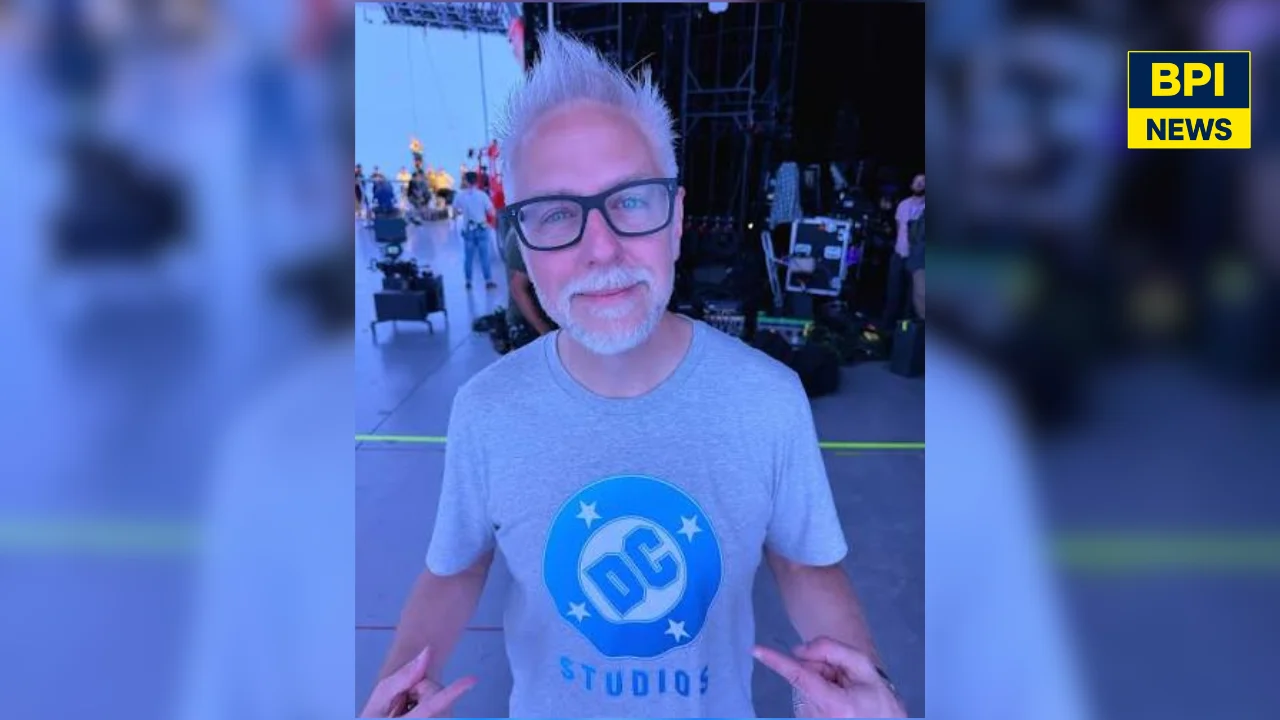
The DC Universe is undergoing another major reset at the top, with James Gunn and Peter Safran stepping down as the executives responsible for rebuilding the superhero franchise just four years after being appointed to lead DC Studios.
Jeremy Latcham, a former senior Marvel Studios executive who worked closely with Kevin Feige during the formative years of the Marvel Cinematic Universe, has been appointed president and chief creative officer of DC Studios.
The leadership change takes effect on December 1 and represents one of the biggest creative shake-ups since Gunn and Safran were originally brought in to rebuild DC around a single interconnected film and television universe.
Their departure does not mean the existing DC Universe is being immediately abandoned. Gunn and Safran will continue working creatively on several projects already in development, but responsibility for DC’s overall film, television and animation strategy will now move to Latcham.
For a franchise which has spent years attempting to establish a stable long-term direction, the reboot has effectively acquired another reboot at executive level.
Gunn And Safran Were Supposed To Provide Stability
Gunn and Safran took control of DC Studios in 2022 following years of uncertainty surrounding Warner Bros.’ superhero properties.
Their task was to replace the fragmented approach that followed the decline of the Zack Snyder-led DC Extended Universe with a coordinated franchise spanning films, television, animation and gaming.
They announced an ambitious slate built around a new Superman, Batman and other major DC characters, with Gunn repeatedly stressing that stories would be planned as part of a wider interconnected universe.
That strategy produced projects including Superman, Supergirl, Clayface, Peacemaker, Lanterns and Creature Commandos.
Gunn and Safran had spoken about plans extending across roughly a decade.
Now, less than halfway through that intended period, someone else will be responsible for deciding how those plans develop.
Jeremy Latcham Comes From Marvel’s Early Success
Latcham brings considerable superhero experience to the role.
He joined Marvel Studios in 2004 and eventually became senior vice-president of production and development, working closely with Kevin Feige during the period in which Marvel transformed itself from an independent film producer into Hollywood’s dominant superhero studio.
His credits include Iron Man, Iron Man 2, The Avengers, Avengers: Age of Ultron, Guardians of the Galaxy and Spider-Man: Homecoming.
He also previously worked with Gunn on the first Guardians of the Galaxy, the film which helped establish Gunn as one of Hollywood’s leading blockbuster directors.
Under the new structure, Latcham will oversee DC’s film, television and animation pipeline, including production, talent and wider creative strategy.
He will report through Skydance’s motion picture leadership rather than directly to the company’s chief executive in the way Gunn and Safran initially did under Warner Bros. Discovery.
Skydance Takeover Changes DC Again
The departure comes shortly after David Ellison’s Skydance completed its takeover of Warner Bros. Discovery.
When Skydance unveiled its leadership structure in October, Gunn and Safran were initially retained as heads of DC Studios, suggesting their positions had survived the merger.
That assurance has lasted little more than a month.
Skydance said Gunn and Safran had helped reset DC’s foundations and praised the creative slate developed under their leadership.
The company has presented Latcham’s appointment as a continuation rather than an outright rejection of their work, but the change inevitably gives a new executive significant influence over what receives priority, what changes and what eventually reaches audiences.
What Happens To Gunn’s DC Universe?
The biggest question is whether the existing DC Universe will continue largely as planned or gradually change direction under Latcham.
There is currently no indication that Skydance intends to scrap Gunn and Safran’s entire continuity or immediately restart major characters such as Superman.
Several projects are too advanced for that.
Gunn’s Man of Tomorrow, the follow-up to his Superman film, is already in post-production and planned for release next year.
The television project The People v. Gorilla Grodd is also in post-production, while Gunn and Safran remain producers on The Batman: Part II, which is scheduled for 2028.
Gunn has also revealed that he is writing another unannounced DC film.
Those projects suggest that the transition will initially be gradual rather than another immediate clean break.
Gunn Returning To Full-Time Creative Work
Gunn has indicated that one reason for stepping away from the executive position is his preference for writing and directing rather than the corporate demands of running a major studio.
He previously acknowledged that the executive side of his DC role could be difficult and said Safran had absorbed much of the corporate workload.
The intention now is for both men to return their attention more fully to creative work.
Gunn built his reputation through films including Marvel’s Guardians of the Galaxy trilogy before moving into DC with The Suicide Squad, Peacemaker and eventually Superman.
Safran has meanwhile produced numerous DC and horror films and is expected to remain attached to projects already established under their leadership.
Not Every Part Of The DC Reboot Has Worked
The Gunn-Safran era has produced mixed commercial results.
Their Superman reboot successfully introduced the central character around which the new DC continuity was designed.
Other projects, including Peacemaker and The Penguin, helped establish television as a significant part of DC’s wider output.
However, not everything performed as expected.
Supergirl became a major commercial disappointment despite being positioned as one of the important early films in the new universe.
Clayface, by contrast, received strong reviews and performed more successfully.
The mixed results arrived at the same time as Warner Bros. itself underwent another corporate transformation, culminating in the Skydance takeover.
The Reboot Is Now Being Rebuilt From Above
The significance of Latcham’s appointment is therefore less that DC has announced another complete cinematic reboot and more that the people controlling the existing reboot have changed.
Gunn and Safran originally arrived promising consistency after years in which DC repeatedly changed direction.
Their replacement after four years means Latcham now inherits characters, films and television series conceived under someone else’s long-term strategy.
Some will almost certainly continue unchanged. Others may be reshaped, delayed or abandoned as Latcham and Skydance decide what their version of DC should look like.
For audiences who have already lived through the Snyder era, its collapse, the transitional Warner Bros. period and Gunn and Safran’s subsequent reset, DC is once again entering a new chapter before the previous one has fully played out.